August 3, 2026
"Only Foreigners Go to the Front. No Russian Goes There." African POWs Describe Life and Death Inside Russia's Military.
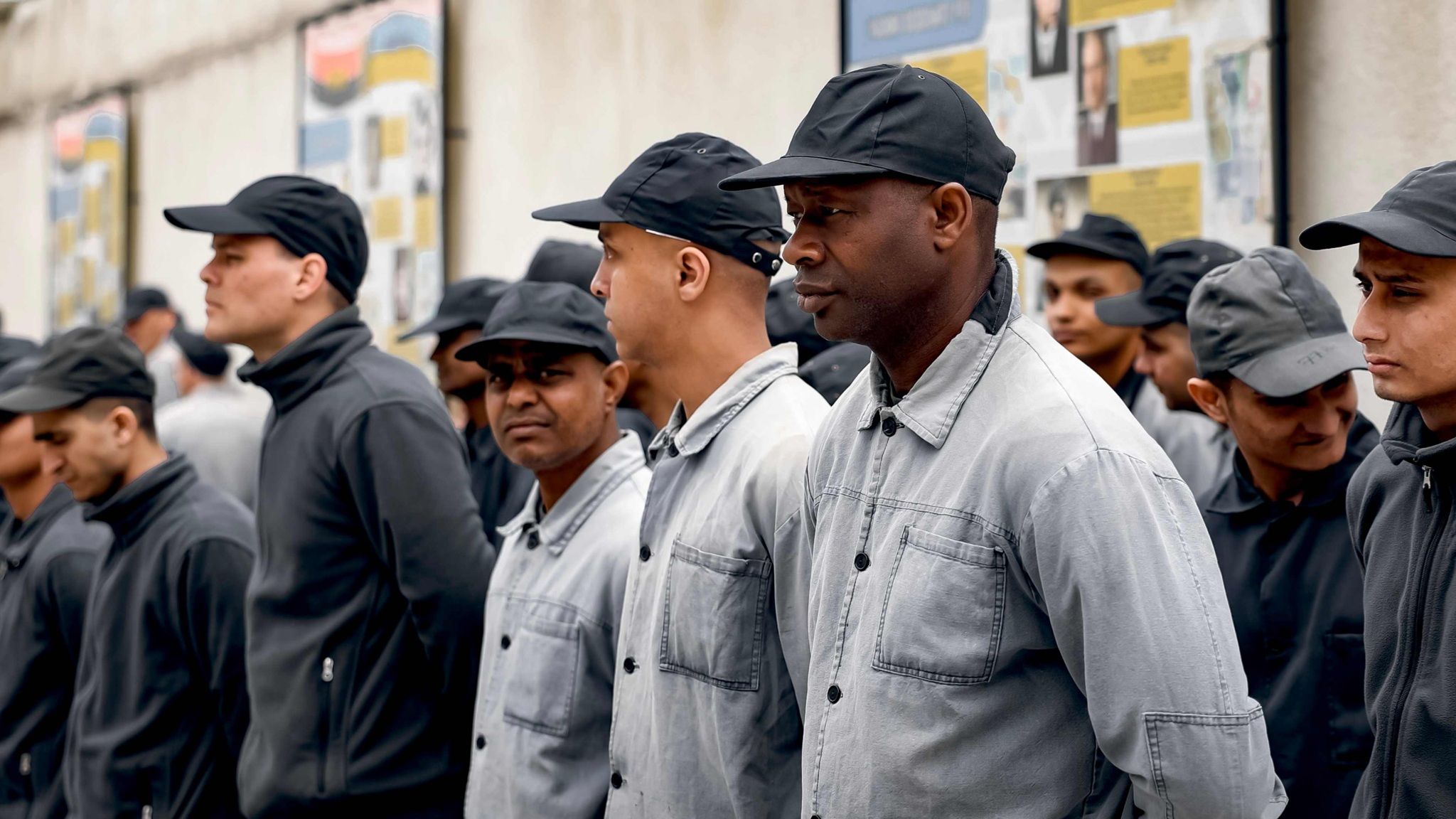
A military prison south of Lviv, Ukraine holds around 600 prisoners of war. Among them, researcher Greg Mills interviewed a dozen African nationals for the Daily Maverick in August 2026 - a Zimbabwean farmer, Kenyan athletes and engineers, a Ugandan medical technician - each with a strikingly similar story of how they ended up there.
They are, as Mills notes, the lucky ones. More than 3,500 foreign nationals from over 40 countries are reported to have died fighting for Russia between February 2022 and July 2026. NATO officials estimate that approximately 24,000 foreign mercenaries from 44 countries are currently fighting with Russian forces, the majority believed to come from Africa.
The men in Lviv got out alive. Their accounts describe what the others walked into. Names have been abbreviated to protect their identities.
The Recruitment
The methods varied by country and circumstance, but the end result was identical.
TT (37), a farmer from Masvingo, Zimbabwe, was recruited via Facebook by a man calling himself "Mohammed Mohammed" - real name Ivan - with promises of electrical engineering training in Kenya, a $20,000 signing bonus and a $2,500 monthly salary. His passage to Russia ran through Nairobi's Jomo Kenyatta International Airport, where he obtained his Russian visa from what he described as a Kenyan official, without ever leaving the airport building. He then flew Istanbul to Russia.
FNN (35), from Kiambu County, Kenya, had previously worked as a security guard in Qatar. Back in Nairobi, a contact directed him to an agency called Global Face. He collected his visa from the agency, flew Nairobi to St Petersburg via Istanbul on August 11, 2025, and was met with the same processing pipeline.
KE (35) is a marathon runner who trained in Iten - Kenya's high-altitude hub for world-class distance runners. He specialised in the 3,000m and had been denied visas to compete in Spain and Poland. In July 2025, someone reached out to him on Facebook with an invitation to compete in Russia. He sent a passport photo. A week later, his electronic visa was ready. He arrived thinking he was going to race.
JK (41), from Kenya, a telecommunications engineer, signed up for what he was told would be a job and a passport. He was promised 1.2 million roubles (~$13,200 USD) as a signing fee and 230,000 roubles (~$2,530 USD) per month.
GK (26) was a medical technician in Kampala, Uganda, when he met a Russian tourist and fell in love. She offered to help him find a job and lend him money to travel to Russia. He thought he was going to work in a hospital.
On Arrival
In every case, the sequence that followed was identical. A bank account was opened in the recruit's name. Their phone was taken. A contract written entirely in Russian was placed in front of them and they were made to sign it. Their passports and identity documents were confiscated.
Training lasted between one week and four weeks - far shorter than promised. The recruits were told they would not be going to the front. Most received a portion of the promised bonus, credited to the Russian bank account they could not access. Salaries were not paid.
FNN attempted to clarify with his Russian handlers that he was expecting a security guard role. KE, the marathon runner, arrived genuinely not knowing a war was on. When he was eventually taken to the front line in Ukraine, he refused to fight, telling his commanders they had not paid his 200,000 rouble bonus. He was sent anyway.
The Front Line
The drone reality that African governments and media have begun reporting comes through in every account from Lviv - but with a specificity that statistics cannot convey.
TT, the Zimbabwean, described the advance with three others - a Colombian, a Tajik and a Kazakh. They set off with four magazines, three bottles of water and some nuts. The drones prevented movement of more than a few metres at a time. Every few metres there were dead bodies - thousands of them. Food ran out in three days. The men searched the bags of dead soldiers for anything to eat or drink. What should have been a three-day journey took 25 days. By the time TT reached his position, his three colleagues were dead.
JK, the engineer, was hit in the neck by a drone on his second day at the front. His job was to carry a generator and Starlink terminal through the battlefield. When his Russian comrade was killed, he carried on alone and installed the equipment.
FNN's Russian commander was blown up by a landmine, losing his foot. FNN carried the man to a drone resupply point and then was ordered back to the front.
GK was hit by a drone on his fourth day, wounded in the neck, legs and arms. He walked for five days, without food or water, before surrendering.
Across their accounts, one detail recurs. TT said it plainly: "Only foreigners go to the front. No Russian goes there."
He had seen seven other Zimbabweans on the Russian side during this time. He said none of them are still alive.
The Moment of Surrender
All five men described the moment of surrender in similar terms - intense fear, then unexpected treatment.
TT heard a large Ukrainian drone and ran through trees before spotting troops 500 metres away. He pulled out his Russian flag to identify himself, then noticed their yellow armbands. He put down his gun and helmet. "I was very, very scared," he said, "but nothing bad happened to me." Four days after his capture, his captors discovered it was his birthday and sang to him.
KE stepped on a landmine. It did not take his leg. He shed his backpack and weapon and lay down, then took shelter in a destroyed building where he surrendered. "Everywhere I was passing dead bodies," he said. "You are going, but you know you are dying."
JK was sheltering with a Russian in a basement near Kupyansk when a Ukrainian soldier appeared. He expected to be killed. Instead he was given food, water and warm clothes.
FNN shot five shots into the air, handed over his weapon, and surrendered on November 22, 2025.
What Russia Is Doing and Why
The economic logic Russia is operating on is clear. FPV drones now cost as little as $350 and can kill a soldier whose monthly salary alone costs $2,000. The compensation package to a Russian soldier's family in the event of death runs to approximately 15 million roubles (~$165,000 USD). With 1.4 million Russian casualties across the conflict, the financial pressure to find cheaper alternatives has become acute.
Foreign recruits cost less, come with no domestic political consequences when killed, and - as the Lviv POWs confirm - are sent to the most dangerous positions while Russian soldiers hold back. That is not a coincidence. It is a system.
Russia has recruited from Kenya, Zimbabwe, Uganda, Cameroon, Ghana, Cuba, India, Bangladesh, Bolivia, Panama, Chile, and dozens of other countries. The method is always a job offer. The destination is always the front.
The Message From Lviv
KE, the Kenyan marathon runner who has been in Ukrainian captivity the longest of any Kenyan POW, put it simply: "People should not sign these contracts. You will never finish it. It is a contract of death."
JK agreed: "Don't go and fight. It's a death sentence."
TT's message was directed at the continent: "I want to tell African people not to risk their lives. The Russians are very cruel. No one is surviving, no chance, never, ever."
None of the five men received full payment for their service. Their salaries remain locked in Russian bank accounts they cannot access. The bonuses were paid partially, if at all. The jobs they were promised do not exist.
The Lucky Survivors
The prisoners of warr who gave accounts for this material are alive. They receive appropriate healthcare and nutrition, their detention conditions are monitored by the Red Cross representatives and human rights organizations. Anyone willing to surrender to Ukraine's Armed Forces can contact the "I Want to Live" project - find out more here.
Source: Daily Maverick