July 11, 2026
Moses Told His Mother He Was Going to Johannesburg. She Found Out He Died in Russia's Army
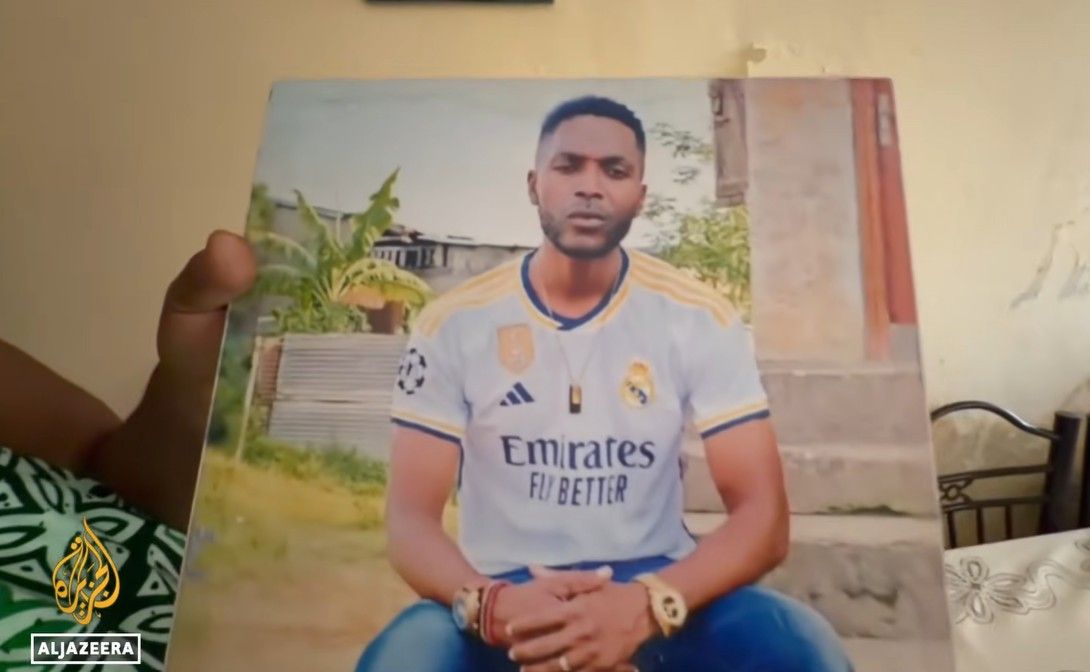
Regine is a Cameroonian mother waiting for her son's remains to be sent home. Her son Moses left his pregnant wife and their child, telling them he had gone to Johannesburg for work. Weeks later, a photo arrived - not from South Africa but from the front line in Ukraine. He was fighting for Russia, he told his mother, for the money. Then the messages stopped. A year later, another Cameroonian fighter informed the family that Moses had been shot by Ukrainian forces while running for cover.
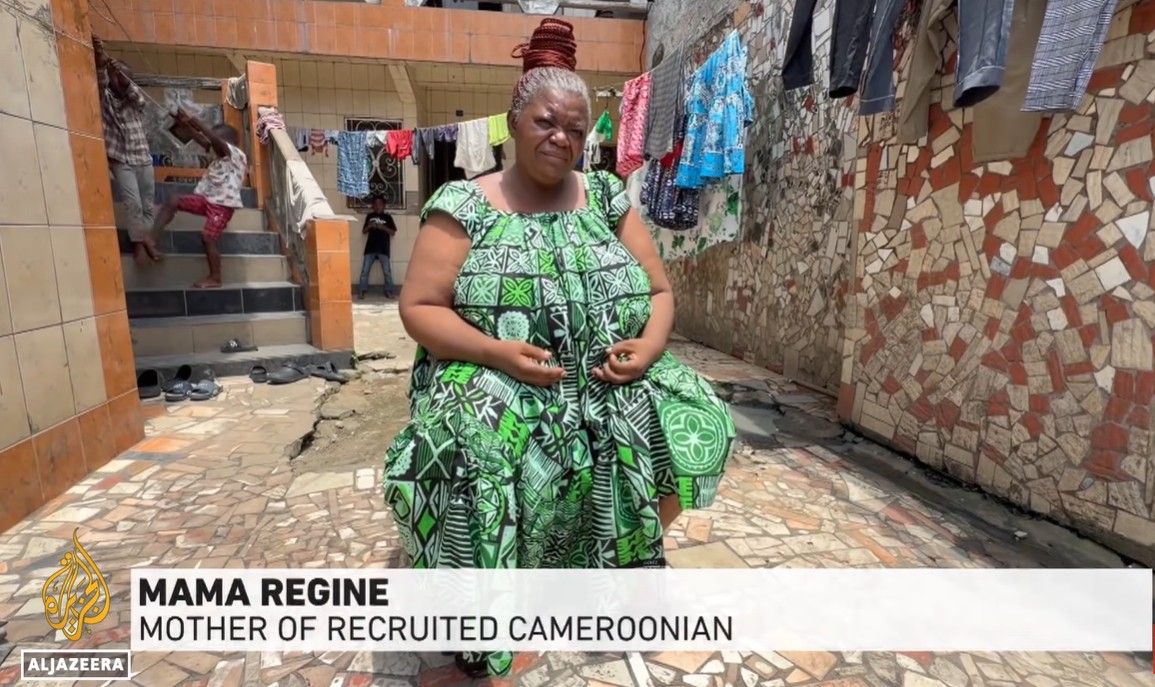
His body has not come home.
Al Jazeera's recent report on Africans fighting in Russia - produced by Nicholas Hawk and Alazer Dwella from Cameroon - features Regine's account alongside a claim from a former Russian officer that directly contradicts what she, and hundreds of families like hers, describe.
"The Recruitment Networks Don't Exist"
Sergey Eledinov, a former Russian officer who says he served in both Europe and Africa, told Al Jazeera that Russia has no need to recruit on the continent.
"All these stories about Russian houses or recruitment networks across Africa - they are simply not true. They don't exist. There is no need for that. Offer them money and people come to us on their own."
According to Eledinov, Africans come to him offering their services. The process, as he describes it, is simple: agree to the terms, accept the pay, find your own way to Russia. He put the base payment at roughly $3,000, with combat bonuses on top. "Even by European standards," he said, "that's good money. For many Africans it's a very attractive offer."
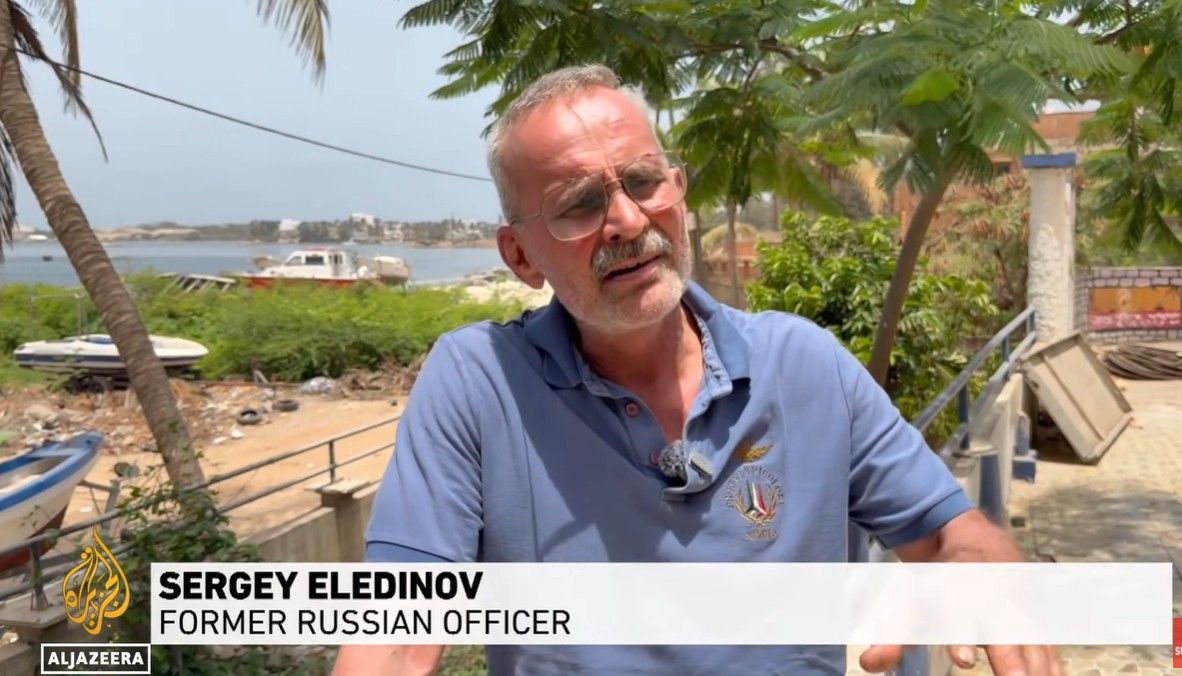
This framing - Africans as willing economic migrants who choose war freely and knowingly - is the version of events Russia and its proxies consistently put forward. It is also directly contradicted by the documented testimony of recruits from across the continent.
What Recruits Actually Say
The pattern documented across multiple countries and multiple years, is consistent: recruiters approach targets with offers of civilian employment, not military contracts. The word "war" is not part of the pitch. By the time recruits understand what they have signed, they are already inside Russia.
In Cameroon, a 19-year-old centre-back named Mevoungu Mbe Stevys Astride - who played for Canon Yaoundé's reserve squad and had represented Cameroon at U17 level - was approached at a city championship with an offer of a trial at FC Ural, a Russian professional club. He flew to Russia. The documents he was told to sign were in Russian, with no translation provided. He was told they were a trial agreement. They were a military contract. He spent a year in a storm unit as a mortar operator, was wounded three times, and watched a friend die. His full account is here.
In Kenya, Samuel Maina Kariuki spent nearly eight years in the Kenya Air Force as a helicopter pilot - 186 flight hours across seven aircraft types. He is a trained military man who served in Somalia. He knows what a battlefield looks like. A recruiter offered him a mall security position - the kind of contract African professionals regularly take in the Gulf. He went to Nairobi, signed paperwork that matched exactly what he had been told, and flew to St. Petersburg. In Russia, he discovered that the signing bonus written into his contract had been routed not to him but to the recruiter, and that the recruiter was listed as his next of kin. He was taken to military barracks and told the contracts had already been signed. His battalion of 150 men was destroyed in its first major operation near Kostiantynivka - six came back alive. He survived by lying motionless behind a fallen tree for six days. He still has shrapnel in his neck and three fragments in his right thigh that he cannot afford to have removed. His account is here.
In Bangladesh, thirty workers left on 24 April 2026 through three licensed recruiting agencies with full government clearance from the Bureau of Manpower, Employment and Training. They were not going to war - they were going to work. Bangladesh's Expatriates' Welfare Minister confirmed in Parliament on 9 July 2026 that four of the thirty are now dead after being coerced into military service. That case is documented here.
The number of testimonials confirming the pattern is growing. If you got a story about recruiters scamming you or someone you know into joining Russia's army - mail us at contact@stoprussianrecruiters.org
The Actual Scale
Ukraine states that nearly 3,000 Africans from 35 countries are currently fighting in Russia's armed forces. At least 485 Africans were killed in Russia's army since February 2022 - a figure drawn from verified data, not estimates. The real number is higher.
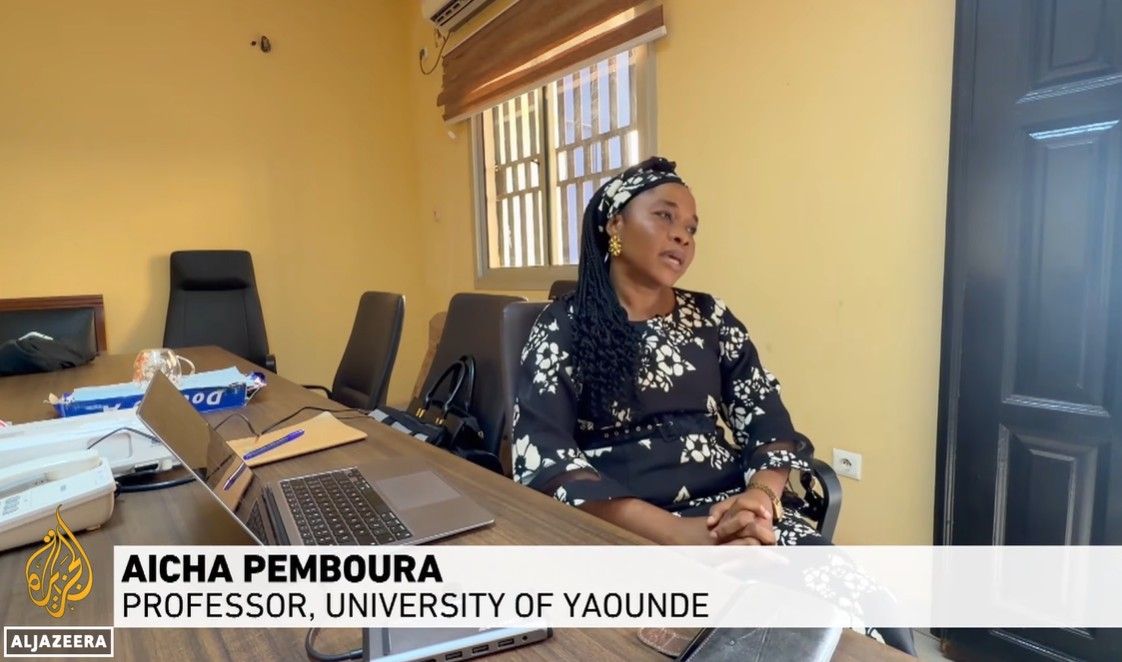
Professor Aicha Pemboura, who spoke to Al Jazeera as a researcher of the phenomenon, acknowledged that some African fighters arrive from armed group backgrounds - but she was clear they are not the whole picture. "There are young Africans from all kinds of backgrounds, some with valuable skills and education, leaving for this uncertain journey," she said. "Every one of them is a loss for Africa."
Yet Another African Deceived and Killed
Moses left his pregnant wife and his son. He told them he was going to Johannesburg for work. He ended up on a front line in Ukraine, fighting for Russia. Then he was shot. Then he was dead. Then a stranger on Telegram told his mother.
"I want to warn other families," Regina said. "Don't let your children go to Russia. It's a one-way journey. A journey with no return."
Regine is still waiting for his body.
How to Get Out Alive
The "I Want to Live" project offers help to Russia's army soldiers who want to safely escape the battlefield. Act now before it's too late - here is the guideline.
Source: Al Jazeera