August 14, 2026
He Fought for Russia in Ukraine. Back Home in Belgrade, He Became a Contract Killer for a Drug Cartel.
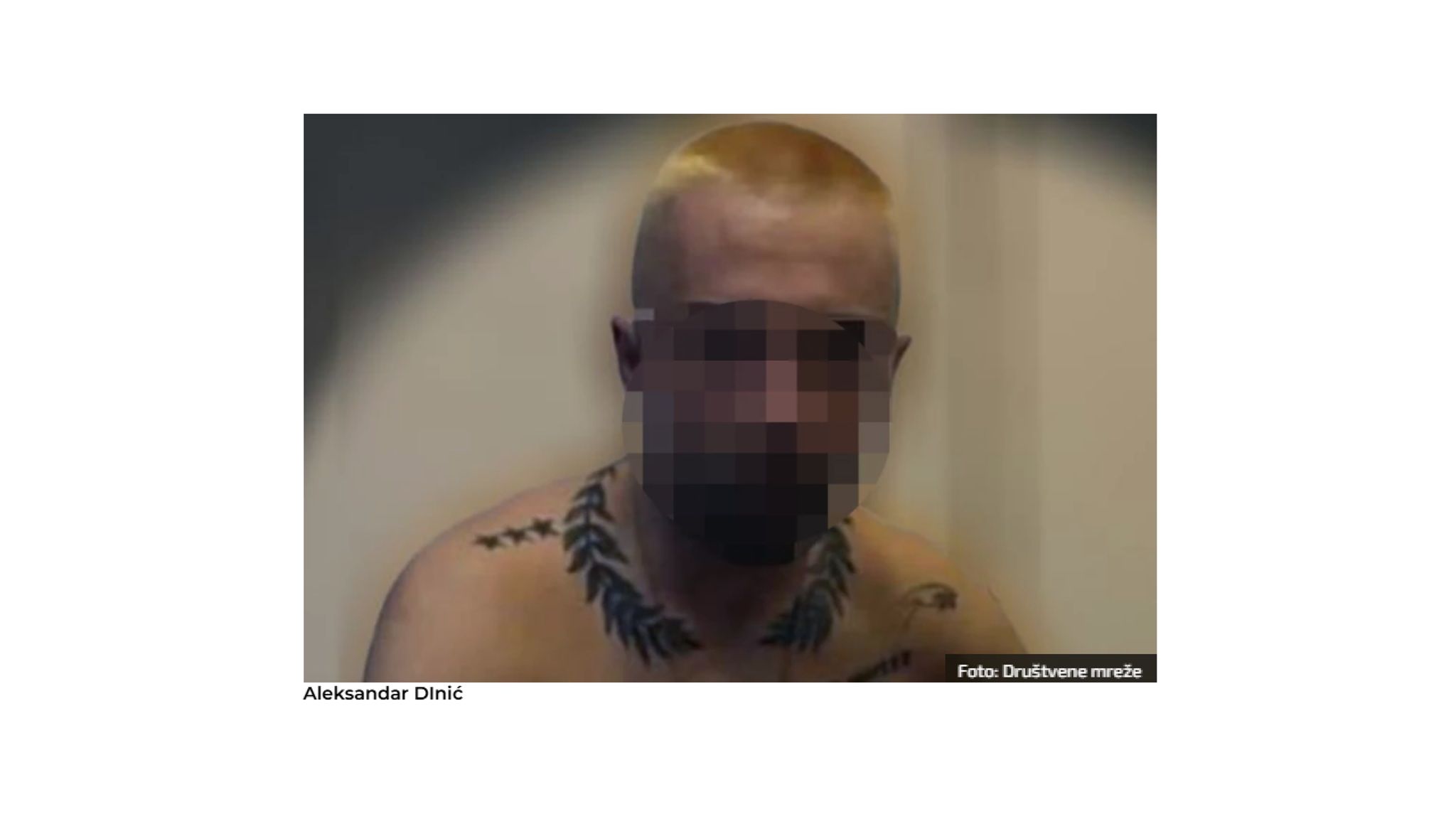
Aleksandar Dinic from Serbia, 35, kept a bullet from the war in Ukraine as a souvenir. Police found it among his belongings in January 2026, when they arrested him on suspicion of murder.
His alleged victim - a 43-year-old man connected to a Balkan drug cartel and on trial for smuggling 324 kilograms of cocaine from South America to Europe - was shot dead on January 16 at the foot of Mount Avala, on the outskirts of Belgrade.
Organised crime prosecutors in Belgrade suspect Dinic was hired as a contract killer by the Montenegro-based Kavac criminal clan, according to case files seen by the Balkan Investigative Reporting Network (BIRN). The clan offered him 100,000 euros (~$108,000 USD) for the job.
The Pipeline Russia Built
Dinic is a petty criminal with a record of drug and theft convictions. He is also a veteran of Russia's proxy war in eastern Ukraine, where his name appears in the Myrotvorets database as a fighter in an illegal armed formation operating in the Luhansk region - added in August 2015. His social media activity suggests his involvement dates to 2014.
Russia has long drawn from the criminal underclass to staff its military operations, offering combat roles to men who have nothing to lose and the skills - or willingness - to kill. What that combination produces when those men come home is now visible in Belgrade.
Under Serbian law, fighting as a mercenary in a foreign conflict is a criminal offence carrying up to five years in prison. Dinic was never prosecuted. He came back to Serbia untouched by the justice system, carrying whatever the war had put inside him, and spent the next several years cycling through betting shops, food delivery jobs and gas stations.
"He described the war in Ukraine to me as a slaughterhouse and a deception," said one of Dinic's former lawyers, speaking anonymously to BIRN. "I don't think he ever recovered from that period of his life. He became an even lonelier person, living an increasingly chaotic life. He frequently changed apartments and jobs. His moods changed constantly, and he used marijuana almost every day, sometimes other drugs as well, and often drank heavily."
Dinic himself put it plainly when asked how he felt after returning from Ukraine: "For the first four months after I came back, I was almost never sober. I was drunk most of the time, trying to come to terms with myself. I suppose some of it is still there."
How He Was Hired
Dinic needed money. Working at a betting shop, he told his marijuana dealer he was looking for other work. The dealer made an introduction.
A member of the Kavac clan - one side of a gang war that has killed dozens of people across Montenegro, Serbia, Turkey, Austria, Greece, Spain and other countries since 2015 - offered Dinic the job. The Kavac-Skaljari feud began after 300 kilograms of cocaine disappeared from an apartment in Valencia, Spain, and has since spread across Europe.
Dinic had no prior involvement in the gang war. What he had was proven combat experience and a need for cash. That was enough.
His target was Zivko Bakic, a man under house arrest and wearing an ankle tag, permitted one hour outside each day. Dinic spent days in the woods near the Belgrade suburb of Sopot studying Bakic's routine. On one occasion, his car got stuck in snow and Bakic - unaware of what was coming - stopped to help him.
The next day, at the same spot, Dinic fired seven rounds from a Heckler & Koch submachine gun and drove away along icy roads with his Siberian Husky, Lana. He was eventually arrested while walking the dog - the only reason he ever left the safe house the Kavac clan had rented for him.
A Pattern, Not an Exception
Serbian prosecutors' data covering 2014 to April 2026 show 60 criminal cases opened under the offence of participating in a foreign war. At least 23 of those cases have been initiated since 2022, the year Russia launched its full-scale invasion of Ukraine. Three convictions based on plea agreements have been recorded since 2022.
The Dinic case is not an anomaly. It is a demonstration of what happens when a state systematically recruits men with criminal histories, trains them to kill under fire, sends them into one of the most brutal conflicts in modern European history - and then has no mechanism to contain them when they return. Russia does not bear the domestic consequences of what it creates by luring foreigners into its army. The countries those men come home to do.
Source: Balkan Insight