July 13, 2026
Kamal and Sourav Made It Out of Donetsk Region Frontline. Russia Was Not Done with Them.
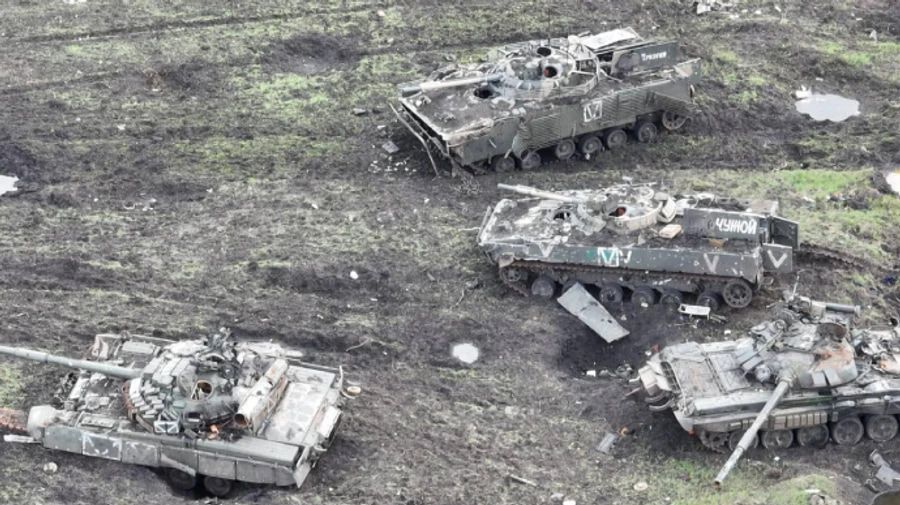
Kamal Hossain and Md Sourav Molla had made it out - two of the 30 Bangladeshis who were scammed into Russia's army by a local agency.
The two Bangladeshis had fled the front line in Donetsk, reached a market, and found a phone. They called BRAC (Bangladesh Rural Advancement Committee) - Bangladesh's largest development organisation, which runs a migration support programme for workers abroad. They told BRAC they were near Stepanovka in Donetsk. They had no valid documents. They needed help.
BRAC immediately contacted the Bangladesh Embassy in Moscow and passed on their phone number, WhatsApp, and passport information. BRAC also reached out to the International Committee of the Red Cross and other international rescue channels. The Red Cross told that in areas under Russian military control, they had no access and no ability to intervene.
The next day, BRAC learned what had happened. A Russian commander had spotted Kamal and Sourav in the market. He alerted the nearest checkpoint. An army vehicle arrived and took them away.
"We still do not know whether they are alive or dead," said Shariful Islam Hasan, associate director of BRAC's migration programme.
The Drone Factory That Was a Front Line
Kamal and Sourav were two of 30 Bangladeshis who left for Russia on 24 April 2026 with work visas and manpower clearance from Bangladesh's Bureau of Manpower, Employment and Training. They had gone through Jalal-E-Noor International Ltd, a licensed recruiting agency, to work at a company called Pro-Technologis Limited Liability in Orenburg.
They had been promised work at a drone factory
When the Bangladesh Embassy in Moscow raised concerns about the group in May, the recruiting agency and the Russian company both gave verbal assurances: the workers would not be sent to war. They would work at the drone factory in Orenburg. The embassy tried to inspect the facility to verify this. It could not - the facility was inside a special economic zone requiring prior approval from Russia's Federal Security Service to enter.
By the time a family member called the embassy on 18 May to report that workers were being held at a training centre in Donetsk with their phones seized, it was too late for most of them. The embassy sent a formal diplomatic note - a note verbale - to the Russian foreign ministry on 25 May, requesting an investigation. Four of the thirty are now confirmed dead. Two others are missing after being recaptured following their escape. Twenty-four remain somewhere inside Russia.
A Warning That Came Too Late
The Bangladesh Embassy in Moscow had flagged concerns about this group as early as 5 May - before the men reached the front. The embassy's labour wing noted that it had not attested any documents for Jalal-E-Noor International Ltd for this placement. A review of the paperwork found errors and inconsistencies. Parts of the attestation process were left pending due to suspicion.
A separate agency, M/S RS International, had submitted a demand paper in March seeking to send 70 more workers to the same Russian company. The embassy's concerns about that submission were also documented.
The warnings did not stop the deployment. The men left on 24 April.
Bangladesh's Expatriates' Welfare and Overseas Employment Minister Ariful Haque Choudhury confirmed the deaths and the circumstances in Parliament on 9 July 2026. He said the ministry had sent a letter to the Moscow embassy on 15 June - nearly two months after the workers had departed - asking it to take steps to rescue the workers and arrange their return.
The ministry has recommended strict legal action against the Bangladeshi recruiting agency involved, and has called for the agency and the Russian company to cover the cost of repatriating all workers at their own expense.
The Drone Factory Cover Story
The promise of factory work in Russia as a pretext for something else is not unique to this case. Russia's Alabuga Special Economic Zone in Tatarstan has been separately documented as a destination where foreign nationals - particularly young African women - were recruited under the guise of civilian employment and put to work assembling Shahed-type kamikaze drones used against Ukraine.
Michel Guy France Awana Ateba, a Cameroonian-French national sanctioned by the UK in May 2026, recruited Africans - primarily from Cameroon - into that programme. He boasted of paying passport fees for more than 40 recruits.
Whether the Bangladeshis were headed for a drone factory, a military facility, or somewhere else entirely, the source article does not establish. What is established is that they were told one thing in Dhaka and found themselves in Donetsk.
What Families Were Told
Shariful Islam Hasan of BRAC described the pattern: "Many Bangladeshis are now trapped in the Russia-Ukraine war. They went to Russia with promises of good payments and Russian citizenship. But now they neither get paid nor can leave the country."
He also noted that many Bangladeshis cannot read Russian and rely entirely on brokers and recruiters when signing documents. "They are told to sign agreements for work. After reaching there, they realise the agreement has connected them to the war."
Kamal Hossain and Sourav Molla had Bangladeshi passports, Russian work visas, and BMET EC cards listing Russia as their destination - all issued on 27 April 2026. Every document was in order. The process worked exactly as it was supposed to. They still ended up in Donetsk.
What Is Known Now
Four Bangladeshis from the group of 30 are confirmed dead. Two - Kamal and Sourav - contacted BRAC after escaping the front line and were subsequently recaptured. Their current status is unknown. Twenty-four others remain in Russia.
This is the second time in recent months that the Bangladeshi case has moved through official channels - first the parliament statement, now detailed reporting on the embassy's prior warnings and the failed rescue attempt. The trail of documents is clear: the agency names, the Russian company, the diplomatic notes, the warnings that were not acted on in time.
How to Get Help
If your relative is inside the Russian military system and looking for a way out, contact "I Want to Live". The project offers Russia's army servicemen safe escape options. For those considering employment in Russia - stay away to avoid coercion to military service. This example is one of the many documented on this site.
Source: Daily Star