July 14, 2026
BBC Count: At Least 3,589 Foreign Nationals Killed Fighting for Russia in Ukraine
A joint investigation by BBC Russian Service and Mediazona, conducted with a team of volunteers, has confirmed at least 3,589 foreign nationals killed while fighting for Russia in Ukraine since the full-scale invasion began in February 2022. They came from more than 40 countries - from Ecuador and the United States to Vietnam and Sri Lanka.
The figure comes from a running list of 233,033 confirmed Russian military dead. Of those, 1,285 are confirmed foreign nationals, verified through open sources: official government announcements, relatives' social media posts, and photographs of graves and military memorials. A further 2,304 are North Korean soldiers, killed during Ukraine's Kursk incursion in August 2024 and identified by BBC Korea Service analysts through satellite imagery and official photographs of a new military memorial in Pyongyang.
The real number, the investigators note, is almost certainly much higher. Ukrainian data and Western intelligence assessments were not used in the count.
By Country: Confirmed Foreign Dead
The breakdown by country, based on BBC/Mediazona data, is as follows. North Korean deaths were confirmed through satellite imagery and photographs of a new military memorial in Pyongyang; all others through open civilian sources.
| Country | Number of killed |
| Afghanistan | 1 |
| Armenia | 43 |
| Azerbaijan | 108 |
| Belarus | 99 |
| Bosnia | 1 |
| Bulgaria | 1 |
| Central African Republic | 1 |
| China | 5 |
| Cuba | 20 |
| Ecuador | 1 |
| Egypt | 5 |
| Estonia | 1 |
| Ethiopia | 1 |
| Gambia | 2 |
| Georgia | 189 |
| Hungary | 1 |
| India | 6 |
| Iraq | 1 |
| Italy | 2 |
| Kazakhstan | 67 |
| Kenya | 4 |
| Kyrgyzstan | 89 |
| Moldova | 70 |
| Nepal | 72 |
| North Korea | 2,304 |
| Poland | 1 |
| Serbia | 13 |
| Sri Lanka | 7 |
| Tajikistan | 199 |
| Tanzania | 1 |
| Togo | 1 |
| Tunisia | 1 |
| Turkmenistan | 26 |
| Uganda | 1 |
| Ukraine † | 25 |
| USA | 3 |
| Uzbekistan | 229 |
| Vietnam | 1 |
| Yemen | 4 |
| Zambia | 1 |
| Total | 3,607 |
The BBC/Mediazona list includes 25 Ukrainian citizens registered in Ukrainian-controlled territory at the start of the full-scale invasion. The source notes that the majority were recruited from prisons. Residents of Crimea, Donetsk, Luhansk, Kherson, and Zaporizhzhia oblasts fighting for Russia are counted separately and are not reflected in these figures. We note that under international humanitarian law, an invading power is prohibited from conscripting civilians from the territory it occupies - making the presence of Ukrainians in this list a potential war crimes issue regardless of how they were recruited.
Editorial note: BBC Russian Service states its published total as 3,589. The country-by-country data published within the same investigation adds up to 3,607 - a difference of 18. The discrepancy is not explained in the source material. Both figures are presented here; the table reflects the per-country data as published.
24,000 Currently Serving
NATO estimates that approximately 24,000 foreign mercenaries from 44 countries are currently fighting in Russia's forces - a figure shared with BBC Russian Service by a senior alliance official at the July Ankara summit. The majority, he said, are from African countries.
"Probably hundreds of Africans have signed contracts. Some voluntarily, others under coercion," the official said.
Edson Came for a Security Job. He Was Dead Within a Week of Reaching the Front.
Edson Kamwesigye, 45, was from Uganda. He had spent years working as a security guard on American facilities in Iraq and Afghanistan during the 2000s - one of more than 30,000 Ugandans who found well-paid contract security work after the September 11 attacks, according to Uganda Radio Network. When US forces withdrew from those countries in 2021, those contracts ended. Edson returned home.
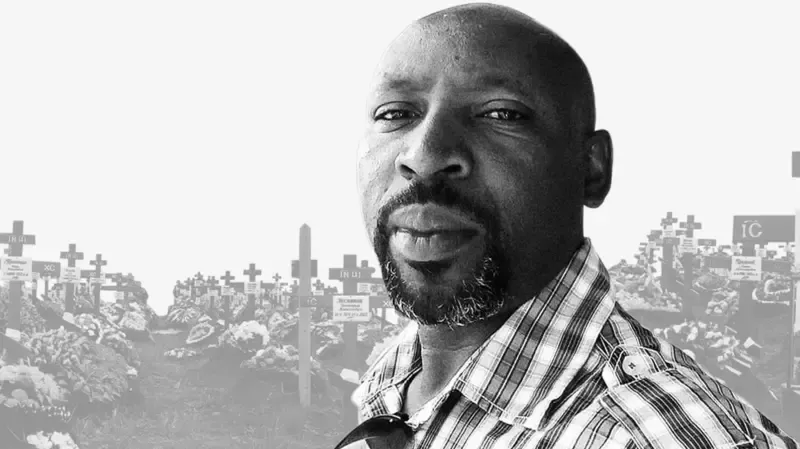
In Uganda he drove taxis, tried farming, and struggled to earn enough for his family and two children. In December 2025 he told his wife, Carolina Mikuza, that he was going to Russia to work as a security guard. On 16 January 2026, he called her from Russia. He was not doing security work. He was at a military training camp. He would be going to the front.
"He asked us to pray for him, because he was undergoing military training and would soon be sent to the front," Mikuza told Germany's Taz newspaper.
A week later, Edson was killed near Kupyansk in Kharkiv Oblast. Carolina Mikuza is still trying to have his body returned. By June 2026, two more Ugandans had been killed fighting for Russia. Their bodies have not been returned either.
Three Waves of Recruitment
Analysing the backgrounds and geographies of confirmed foreign dead, the BBC investigation identifies three distinct phases of foreign recruitment into Russia's forces.
Phase one (mid-2022 to end-2023) was built on Russia's prison system. Prisoners - primarily from former Soviet states, especially Central Asia - were offered freedom in exchange for six or twelve months of combat service. Wagner Group ran the programme first; Russia's Ministry of Defence took it over. More than half of confirmed Tajik and Uzbek deaths in the BBC/Mediazona list are men who went to the front directly from Russian prisons.
Phase two (2024 to mid-2025) followed Russia's significant increase in contract signing bonuses at the start of 2024. Active recruitment began reaching much further: Cuba, Nepal, India, Sri Lanka, Yemen. Some recruits signed knowingly, understanding they were joining the military. Others believed they were going to study or work in construction, and ended up on the front through deception.
Phase three (mid-2025 onwards) has targeted labour migrants from former Soviet countries already inside Russia. According to human rights lawyers and a report by the International Federation for Human Rights (FIDH), migrants are being coerced into signing Ministry of Defence contracts under threats - or offered incentives such as the lifting of entry bans, fast-tracked citizenship, or the annulment of deportation orders. A Reuters investigation published in March 2026 documented the intensification of recruitment efforts targeting citizens of low-income African countries during the same period.
A Small Share of a Very Large Number
Despite the scale, foreign nationals remain a small fraction of Russia's total confirmed losses. Of the 233,033 Russian military dead whose names BBC and Mediazona have verified, foreigners - including North Korean troops - account for less than 2%.
Foreign recruitment cannot substitute for Russian citizens as the main source of military manpower. But as the number of Russians willing to sign contracts voluntarily gradually declines, the Kremlin will likely be forced to look further and harder for replacements. The BBC Russian Service and Mediazona continue to update the list every two weeks.
The Real African Toll Is Far Higher
The BBC/Mediazona data confirms 12 sub-Saharan African deaths across 8 countries. This figure almost certainly reflects the limits of open-source verification in those countries - not the actual scale of loss.
Data published by Ukraine's I Want to Live project, covered previously on this site, has confirmed 485 Africans killed across 40 countries - more than 40 times the number BBC/Mediazona have been able to verify. The gap is not a contradiction: BBC/Mediazona explicitly note that their methodology excludes Ukrainian data and that real figures are significantly higher. For African deaths specifically, the open sources they rely on - obituaries, regional government announcements, grave photographs - are far less consistently published than in former Soviet countries.
The 485 figure is itself a floor, not a ceiling.
Source: BBC Russian Service