August 25, 2026
DW Africa Link Covered Cameroonian Recruitment Into Russia's Military. Here Are the Key Takeaways.
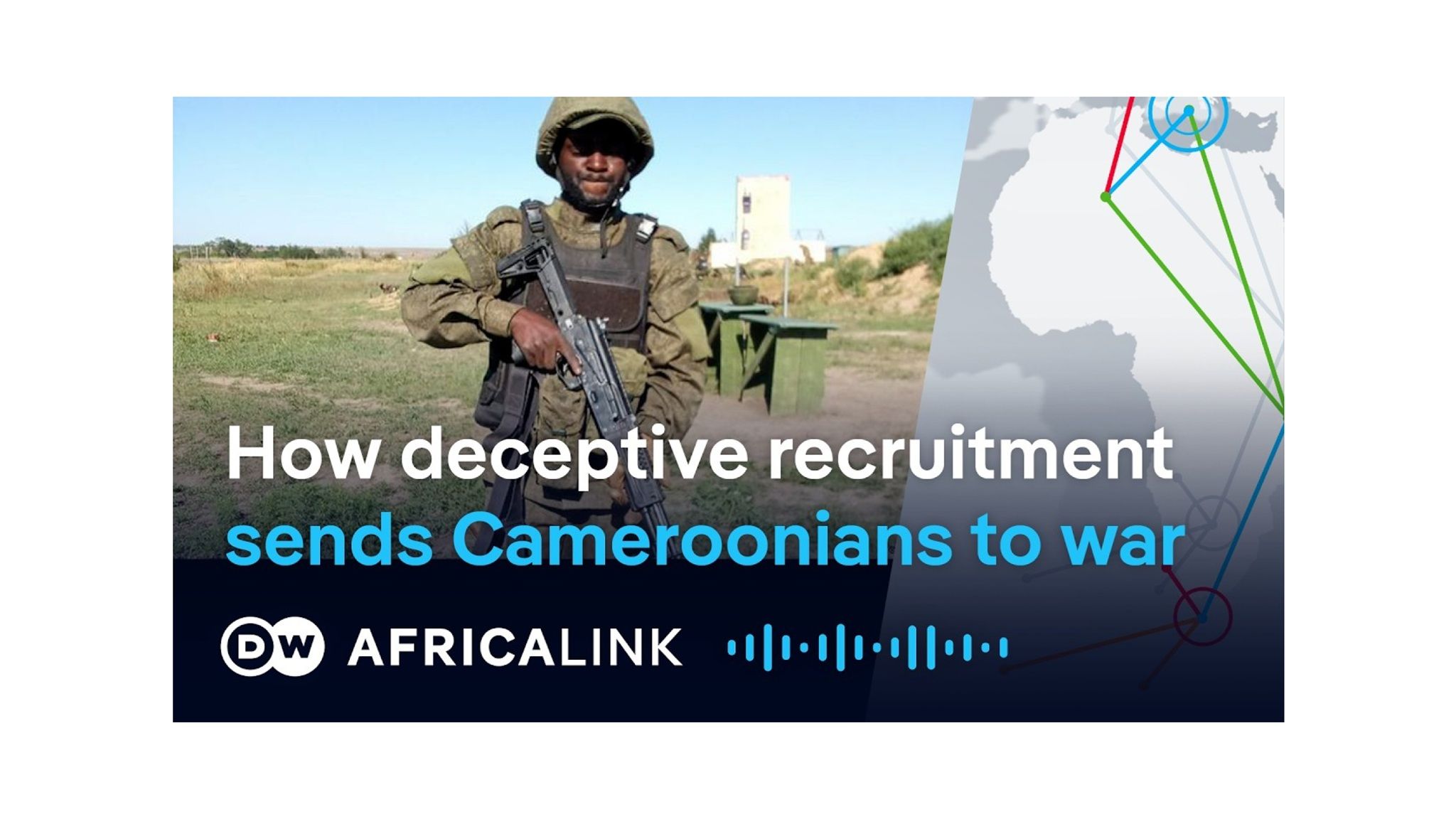
DW's Africa Link podcast dedicated an episode to the recruitment of Cameroonians into Russia's military - why it keeps happening, what families are going through, and what governments can do. Guests included Dr. Banjo Herman, lecturer at the University of Bamenda and political analyst, and a DW correspondent reporting from Bamenda, Cameroon.
The full podcast:
Key Takeaways
The numbers are higher than the government admits. Ukrainian officials estimated nearly 3,000 citizens from several African countries had fought or were fighting for Russia as of May 2026. Cameroon officially confirmed the deaths of 16 of its nationals serving with Russia. Analysts interviewed by DW say the actual toll is higher - evidenced by grieving families and reporting from multiple outlets that the government figures do not reflect.
See also: Top 5 African countries ranked by number of confirmed casualties in Russia's army
Two factors drive recruitment: desperation and deception. Recruits believe they are travelling for construction jobs, security work, or studies. Some leave thinking they are joining a cultural or educational exchange programme - Alabuga and the African Initiative were cited specifically. The promise is large sums of money - one analyst noted offers of 3 million CFA francs (~$5,000 USD) per month - and Russian nationality within 6 months. Once in Russia, they are sent to the front.
Families are left without information or compensation. Contact breaks off once recruits arrive. One case documented by DW's correspondent: a 35-year-old Cameroonian whose family only learned of his death three years later, through a friend who had also been in the army. Mothers are raising grandchildren alone. No government compensation has been provided.
The Cameroonian government has no official policy. Analysts described the government's response as reactive and insufficient. It has not issued a clear official policy statement on recruitment. The Cameroonian ambassador to Russia attended Russia's first international security forum in Moscow. The government renewed its military cooperation agreement with Russia in 2014-2015 - while the war in Ukraine was already underway.
Knowing the risk does not stop people from going. Citizens interviewed by DW acknowledged the dangers but said desperation overrides caution. "If I die, I die" was one sentiment reported. As long as the economic conditions that drive recruitment remain unchanged, warnings alone will not be enough.
Analysts recommend: diplomatic engagement with Russia to pressure sanctioning of recruitment groups operating on its behalf; economic reform to create opportunities at home; and an official government policy - not just condemnations - on foreign recruitment.