September 27, 2026
Russia Told Him He'd Be a Drone Operator. He Ended Up in an Assault Unit Four Days From Being Wounded.
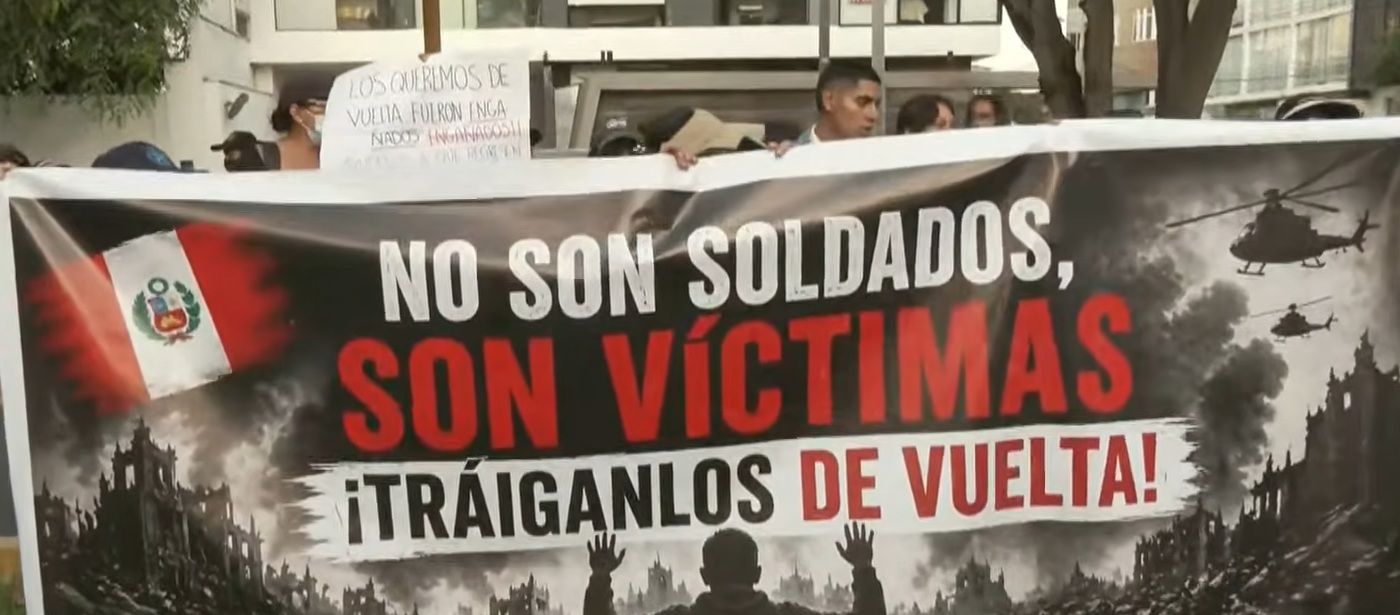
Carlos Lenski Davila Vela, a 36-year-old Peruvian from Pucallpa, was recruited into Russia's armed forces this year, wounded within days of reaching the front in Ukraine, and later escaped from a Russian hospital to make his way home, according to reporting by Eva Hartog for POLITICO Magazine, published September 25.
Four Days on the Front
Davila Vela told POLITICO he can't name the Ukrainian village Russia sent him to help capture in a storm assault, or any nearby town, but he can walk through the operation in detail: where the drones appeared, the tree line he sheltered in, and the spot, meters away, where a 19-year-old Kazakh recruit was killed. He was hit by shrapnel in the foot and radioed for help to a 23-year-old Colombian recruit going by the callsign Puma, using his own callsign, Cash: "Puma, Puma... This is Cash. I'm alive, but I'm hurt." He had been on the front line for four days.
The Trip That Wasn't a Trip
According to POLITICO, Davila Vela's journey began in May with a flight out of Lima, traveling with another Peruvian recruit he barely knew; a recruiter had instructed the pair to pose as friends on a tourist trip through Paris and Istanbul en route to Moscow, then to be upfront about their real plan to join Russia's military once they reached Russian passport control. Two men in civilian clothes met them at the Moscow airport with cash in rubles. Over four months in Russia and occupied Ukraine, Davila Vela estimates he encountered roughly 80 Latin American recruits, from Colombia, Panama, Bolivia, El Salvador, and Argentina - and says almost all of them are now dead or missing.
A Growing Share From Latin America
POLITICO reports that Russia's foreign-recruitment pipeline, once concentrated in Central Asia, Africa, and Southeast Asia, has shifted toward Latin America as diplomatic pressure has closed off recruitment in roughly four dozen other countries, according to Ukrainian officials cited in the piece. Peruvians are now the third-largest group of Latin American prisoners of war held by Ukraine, and Ukrainian authorities estimate Russia's ranks include some 29,000 foreign recruits overall. Peru's foreign ministry said in August it was aware of 459 Peruvians fighting for Russia, including 11 dead and 114 missing - a count relatives of the missing say is far too low.
A Government That Looked Away
After Peru elected President Keiko Fujimori in July, relatives of missing recruits wrote asking her to intervene, and were invited in August to a closed-door meeting with Peru's foreign minister and Russia's ambassador, POLITICO reports. Six days later, the Russian embassy posted publicly that the men had joined voluntarily and that Moscow "highly valued" their "contribution." Neither the Russian embassy nor Peru's foreign ministry responded to POLITICO's request for comment.
See also: Russian embassies around the world are denying they are taking part in predatory recruitment
Buying His Way Out
POLITICO reports that only four Peruvian recruits are known to have escaped Russia's army so far, relying on an informal network: contacts who charge a fee to confirm a missing recruit's status, or others willing to help wounded recruits slip out of hospitals. Davila Vela was one of the four. He used part of his signing bonus to pay two Russian men, one a former Wagner mercenary, roughly 1.2 million rubles to drive him from a hospital in Stary Oskol to Peru's embassy in Moscow, which put him on a flight home to Lima the same day.
What He Says Now
Davila Vela told POLITICO he'd been promised a role as a drone operator away from active combat, but was instead placed in an assault unit alongside mobilized Russian soldiers, some elderly or ill. Asked what he would tell Ukrainians about why he'd come to fight against them, he struggled to answer, eventually saying he thanks God for letting him get wounded so he could leave without killing anyone. He says he's now trying to warn other Peruvians on TikTok, though he doesn't expect it to slow a recruitment pipeline that increasingly uses AI-generated ads and chatbots. Based on what he saw of assault units at the front, he tells families searching for missing relatives that many recruits are wounded or killed within four or five days of being sent into battle.
If Your Relative Went to Russia and Went Quiet
Peruvians and other foreign nationals still serving in Russia's armed forces who want out have a safe option through Ukraine's "I Want to Live" project. Reach out now before it's too late.