July 26, 2026
12,919 Central Asians in Russia's Army: Why the Region Can No Longer Stay Silent
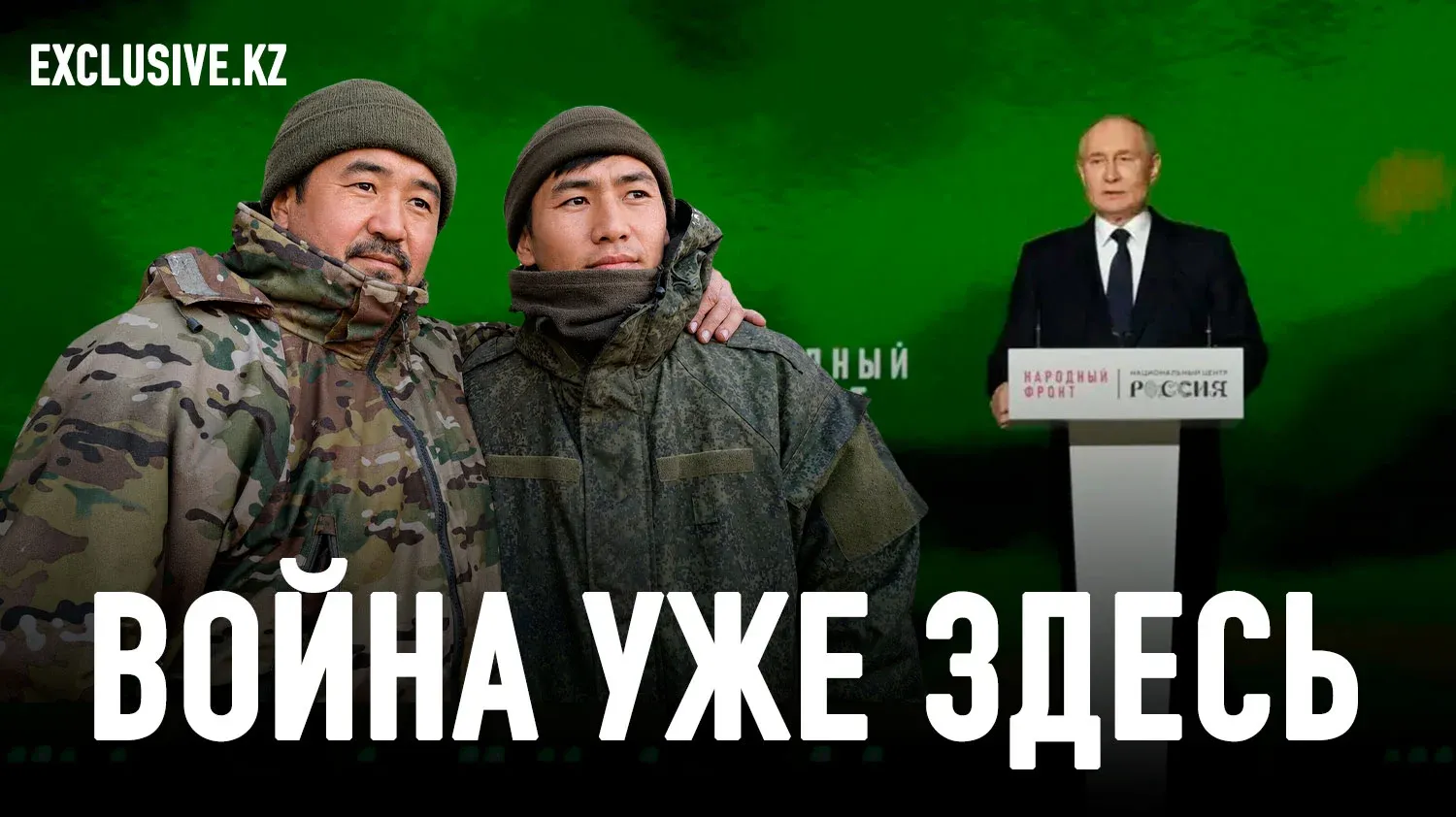
By May 2026, the number of Central Asian citizens identified as having signed contracts with Russia's Ministry of Defence had reached 12,919. Broken down by country: 4,955 from Uzbekistan, 3,489 from Tajikistan, 2,420 from Kazakhstan, 1,474 from Kyrgyzstan, and 581 from Turkmenistan.
These figures are incomplete by design. Russia does not disclose this data. A portion of Central Asian recruits already hold Russian citizenship and do not appear in their home countries' statistics. But even these numbers, writes Kazakh analyst Adil Turdukulov in exclusive.kz, are sufficient to establish that this is not a collection of individual cases. It is a systemic problem for the entire region.
How They Get There
Turdukulov identifies three paths into Russia's military for Central Asians. Some signed contracts for money. Others were promised citizenship. A third group faced a choice between prison and the front - coerced into military service from within Russia's detention system.
Behind each path lies a set of structural vulnerabilities: economic dependence on Russia's labour market, fear of police, undocumented status, debt, legal precarity, and the sense that there is no other way out. The pitch varies - fast passport, criminal record cleared, payments impossible to earn at home - but the mechanism is the same. Russia treats the economic vulnerability of Central Asian migrants as a military resource.
Cannon Fodder Logic
What awaits many of them at the front is not the safe rear service they were promised. After minimal training, recruits are frequently sent to the most dangerous sections of the line. In the logic of what Russian soldiers call "meat assaults," foreign contract fighters are expendable: easier to recruit, easier to intimidate, easier to deploy where Russia's own losses are heaviest. Turdukulov is direct: for Russia's military system, the life of a Central Asian recruit is worth even less than the life of a Russian citizen.
There is also a specific legal trap for Central Asians captured by Ukrainian forces. For Ukraine, they are prisoners of war - they fought in Russia's ranks. For Russia, they are often not fully "theirs." In prisoner exchanges, Moscow prioritises those it considers more valuable. Foreign contract fighters, even those who fought for Russia, can find themselves in a legal and diplomatic dead end with no one pushing for their return.
The Silence That Isn't Neutral
Central Asian governments have not been entirely passive. Kazakhstan opens criminal cases for participation in foreign armed conflicts. Kyrgyzstan, Uzbekistan, and others have laws criminalising mercenary service. But prosecuting individuals who have already returned does not stop the recruitment mechanism itself. It punishes those who came back. It leaves untouched those who recruit, deceive, pressure, and exploit migrants' dependence.
On the diplomatic level, governments have proved willing to protest when their citizens face xenophobia or humiliation in Russia - calling in Russian diplomats, reacting to high-profile incidents of violence. But recruitment into Russia's army has barely become the subject of open diplomatic conversation. States will protect their citizens from street violence, Turdukulov argues, but avoid the direct conversation when those same citizens are being pulled into a war.
This is not neutral. "Silence does not reduce the risks," he writes. "It makes them deeper."
Three Threats
Turdukulov identifies three consequences the region is already accumulating.
The first is human: citizens dying in a war that has nothing to do with their country's security or their family's future. Families often do not know where their relatives are, whether they are alive, whether they have been captured, whether they appear on any exchange list. After the publication of casualty lists and interviews with prisoners, relatives have begun searching through journalists, human rights defenders, and Ukrainian structures - because no state system exists to help them.
The second is sovereign. If another country is mass-enrolling Central Asian citizens in its war, and regional governments do not raise this publicly, the signal it sends is dangerous: the life of a migrant is less protected than political caution toward Moscow. That erodes citizens' trust in their own institutions.
The third will arrive after the war. Some participants will come home - with trauma, with combat experience, with criminal records, with the sense of having been completely discarded. Without structured support, they become vulnerable to criminal, radical, or violent networks. Turdukulov notes the region has already experienced severe crises - the January events in Kazakhstan, the Karakalpakstan conflict, the Kyrgyz-Tajik border clashes. People returning from war could become an additional source of instability.
The Numbers the Region Ignores
One detail stands out. In 2025, 458 Kyrgyz citizens died abroad - the largest number of bodies returned from Russia. The official circumstances of these deaths were not disclosed. Not every such death is necessarily connected to the war. But the opacity itself is revealing: when a state does not know - or will not say - why its citizens are dying abroad at that rate, it becomes not just a statistical question but a question of accountability.
What Can Be Done
Turdukulov argues for action on two levels.
Domestically: embassies and consulates in Russia should warn migrants directly about the risks of signing military contracts. That information needs to reach people in national languages, through social media, migrant communities, mosques, diaspora organisations, lawyers, bloggers, and independent media. Hotlines and clear instructions for families need to exist before relatives disappear, not after. And programmes for returnees - psychological support, legal assistance, social reintegration - should be built now, not improvised when the problem becomes impossible to ignore.
Externally: Central Asian governments need to raise recruitment with Moscow directly - not only labour quotas, remittances, passports, and trade, but the enlistment of their citizens. This can be the subject of diplomatic notes, bilateral consultations, parliamentary hearings, and migration negotiations. Working channels with Ukraine on prisoners, lists, deaths, and exchanges also matter. This does not mean taking sides in the war. It means protecting citizens and obtaining information about them.
There are examples of what works. In 2025 and 2026, Ukrainian structures reported that recruitment of foreigners into Russia's army had been stopped or significantly reduced in dozens of countries - through work with governments, media, civil society, and families. The same is possible in Central Asia.
"The war has already entered Central Asia through our citizens," Turdukulov concludes. "The question is whether the region will recognise this as its own problem before the consequences fully come home."
Source: Exclusive.kz