July 18, 2026
Kenyan Was Offered a Driving Job in Russia. He Ended Up on Ukraine's Front Line. He Got Out by Pretending to Be Mad.
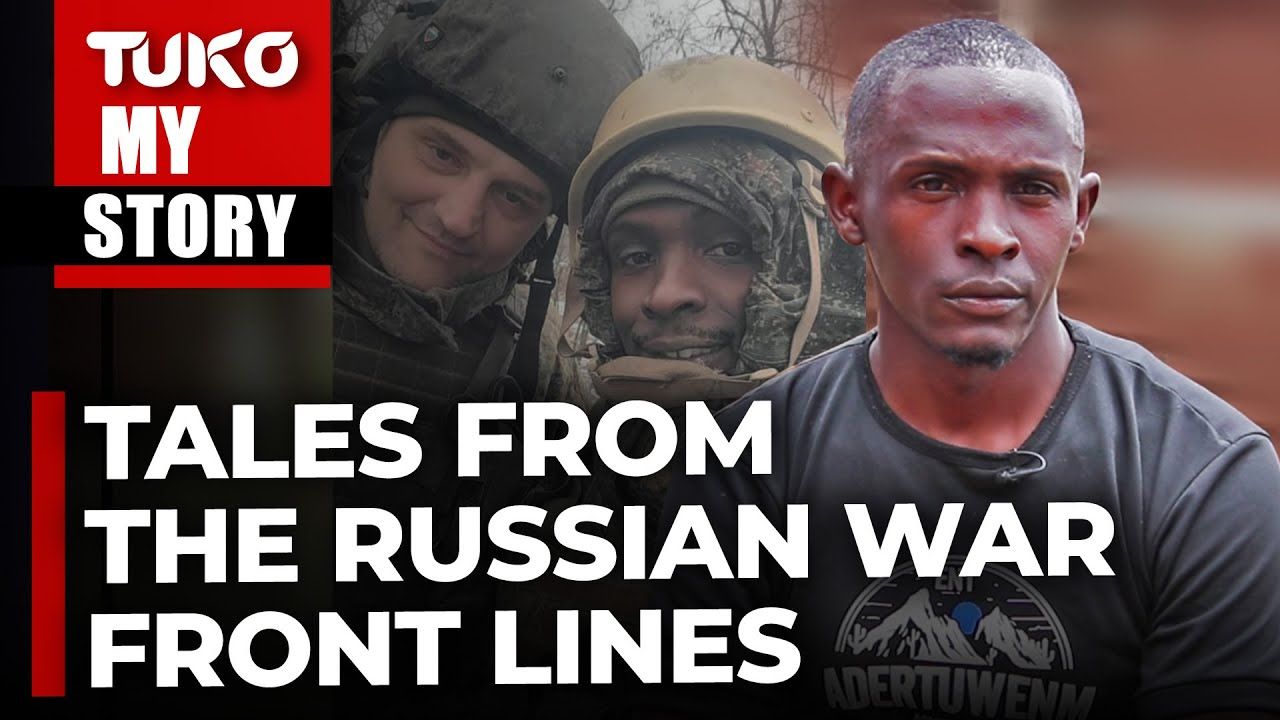
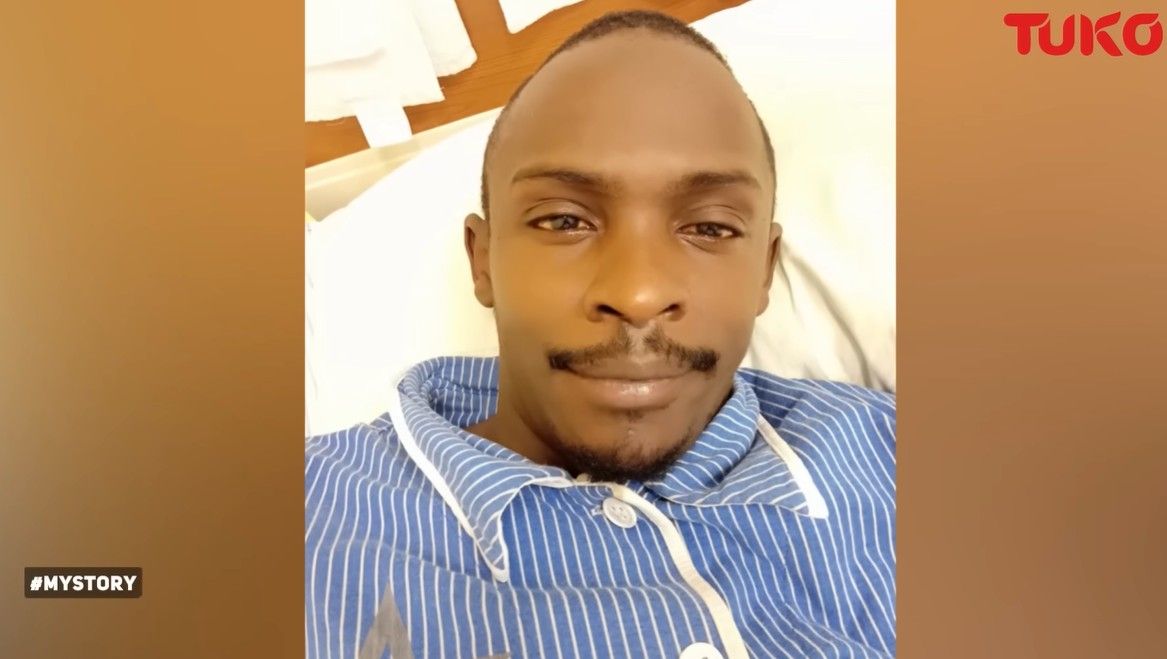
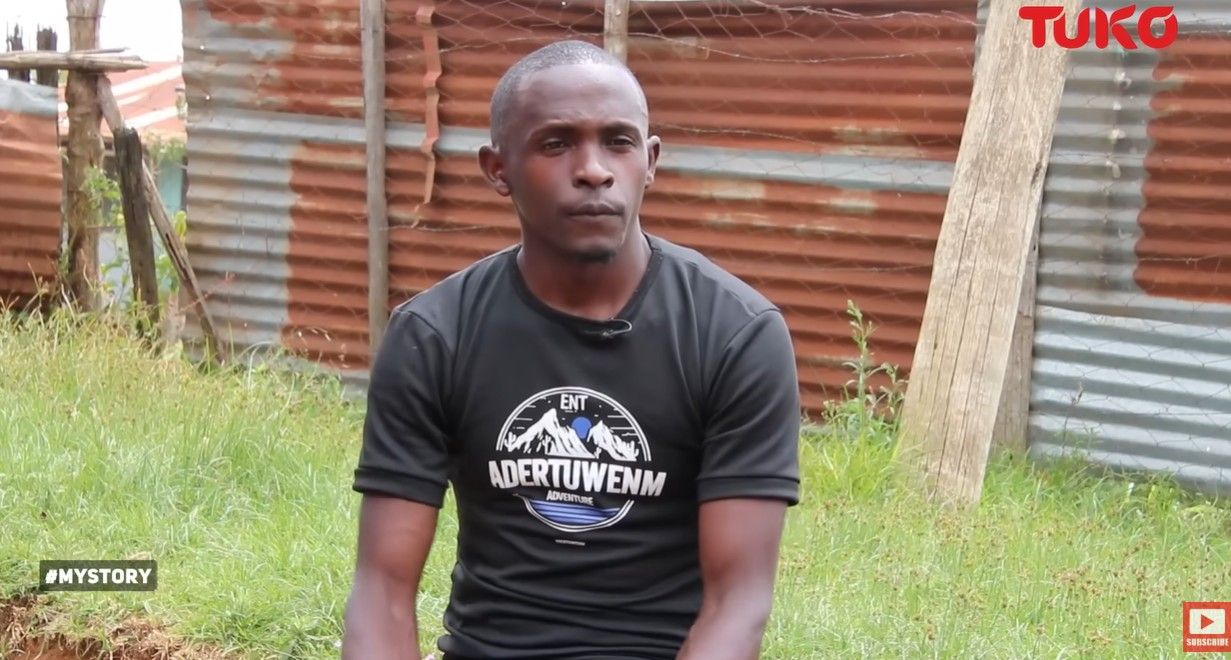
Dankan Sheege is a Kenyan father of one — a wife and a one-year-old child. He went to Russia in October 2025 believing he was going to drive trucks for a logistics company. He came back from Russia just over a week before this interview was recorded, published by TUKO. He has no money, cannot keep food down, has open wounds on his feet, and his mother is in debt.
But he survived. He describes himself as one of the luckiest people in the world.
"I Came for a Driving Job"
A Kenyan employment agent offered him a driver position in Dubai - 70,000 shillings (~$540) a month. When the Dubai visa stalled, the agent called back with an alternative. Russia. The salary: 330,000 rubles (~$3,700) per month, plus accommodation and food.
"For me I thought - at least I'll go and support our family. I told him, okay, let's apply."
Within a week he had a Russian visa. Tickets were issued the same day he confirmed he was ready. He flew via Turkey to Moscow and was met at the airport by the agent, who took his phone, downloaded a translation app - the Russians spoke no English - and drove him to his accommodation.
It was a military barrack.
See also: Russia Turned a Former Kenyan Military Pilot Into Cannon Fodder. Samuel Maina Kariuki Escaped Twice.
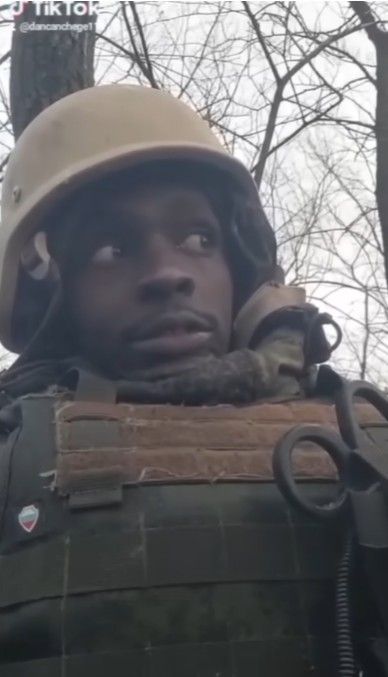
He was told he would undergo seven days of training to learn to drive on the left-hand side of the road, then begin transporting goods from China. On day four they put him in a truck with around twenty people - Russians and Chinese - and drove to a training camp. At the gate, bags were checked. Inside, they walked through a building and came out the other side wearing full Russian military combat uniforms. Their civilian clothes were packed away and later burned.
"I began thinking - this driving job I came for - why must I be in uniform?"
At the camp he met Ugandans who had also been brought under various pretexts. When he told them he had come as a driver, they said: "They are deceiving you. All of us here came with different job promises. This is military." There was no translator. Commanders spoke only Russian. Everyone followed whoever was walking in front of them. He was issued an AK-47 and four magazines. It was the first time he had ever held a weapon.
The Front Line
After training he was deployed inside Ukraine. Missions were conducted in groups of six, with forty metres between each soldier to limit casualties from a single drone strike.
"The thing I encounter on the ground is dead bodies. Dead bodies. Dead bodies. Dead bodies. Dead bodies. Dead bodies. Nothing else. So many dead bodies. Thousands. Thousands of dead bodies. Thousands and thousands of dead bodies."
See also: 485 Africans killed in Russia's army - the list
Those dead were Russian soldiers. In the red zone there was no evacuation possible. Food was delivered by drone - a small amount intended to last a week. There was rarely enough water.
"There are some Kenyans there who drank their own urine. They urinated into a bottle and were able to drink that urine because they were so thirsty and you can't be brought water. So you're still doing war but they don't care about you."
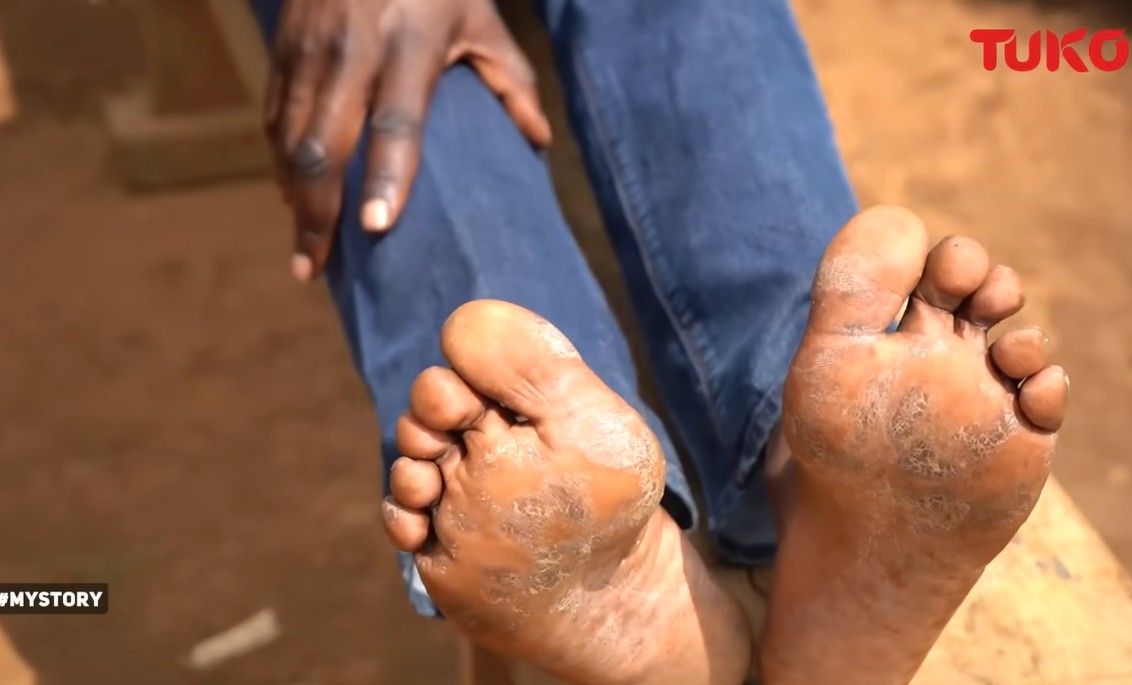
He was hit by a magnetic landmine. It destroyed his boots and left deep sores on both feet - wounds that were still open when he returned to Kenya. At his group's assigned building, others in their company were killed or had limbs blown off. He watched them die. No one came.
"If you get very serious injuries - you'll just die."
He understood that escape was not an option he could simply state. If a soldier refused a mission, the commander could direct a drone strike to the porthole where he was sheltering.
"If you refuse to fight, they send a drone with a bomb to come to where you are and kill you. There is no survival."
He sent a voice note to his wife from his hiding place: "In case you miss me online - don't think too much about me. Just know I'm already dead. Because the situation I'm in, there is nothing else here except a death sentence."
The Escape
What followed is one of the more extraordinary escape sequences to emerge from Russia's war. Dankan had no contacts, no money, no functioning phone, no plan with any realistic chance of working. What he had was the observation that there was one category of soldier the Russian military would move out of the red zone without sending back in: one who appeared to have completely lost his mind.
He decided to make his departure look like something no one could argue with. He picked up his rifle, set it to automatic, and fired all twelve magazines into the air - thirty bullets each - without stopping, without aiming, without any apparent reason. His comrades watched from their positions. When the magazines were empty he threw the rifle as far from himself as he could. Then he sat on the ground, arranged loose bullets in patterns, put some in his mouth, talked to himself, and ate sand.
"When they came to try to communicate with me - my mind is not with you people. I am here doing my work - arranging bullets on the ground, talking to myself, eating sand."
It worked. A Russian comrade filmed him and sent the video to the commander. The commander ordered his hands tied behind his back. He was carried from the red zone to the yellow zone at night, wrapped in a poncho so drones could not detect heat - still performing, still picking cigarette filters off the ground and putting them in his mouth in front of the commanders gathered to watch. He had been extracted from the front line. Now he had to stay extracted.
He was taken to hospital. Three hospitals in total. At each he continued to misbehave - screaming, hiding under beds, defecating in his food tray - until transferred onward. The Russian military psychiatric system moved him further and further from the front. At the third hospital he was injected with sedatives three times a day that put him to sleep within five minutes. He kept performing whenever he was awake. He had decided: he would never recover. Not voluntarily.
With the help of a phone borrowed from another patient, he was able to contact the Kenyan Embassy in Moscow. Madam Rose at the embassy told him: get yourself out of the hospital and come to us. He staged a final breakdown - fabricating news of a family tragedy to convince the doctor to sign his discharge papers - then walked out, made his way across Moscow by metro, and arrived at the embassy door on a Friday afternoon with twenty minutes to spare before it closed for the weekend.
Madam Rose was waiting. She arranged his flight home, covered by funds that Kenyans in Moscow had collectively raised for him. He flew via Saudi Arabia to Nairobi. His Russian visa had long expired. At immigration he was stopped, questioned, and made to wait while an officer walked away with his documents. He prayed. The officer came back and let him through.
What He Came Back To
He landed with nothing. On the connecting flight through Saudi Arabia, food was sold only for cash. He had none. He did not eat or drink for approximately thirteen hours. On the promised money - a signing bonus of one million shillings (~$7,700), with salary to follow:
"I was not able to get anything at all. Nothing. Nothing. They said they'd put it in accounts opened for us in Russia. But I lost everything on the battlefield. I was ready to go home with nothing - to save my life."
He was asked what happens to the money of those who die on the front line.
"They'll take it themselves."
Russia sends no notification to families when a Kenyan is killed.
"No one will notify the family that they've died. Those commanders cannot communicate to your family to tell them your person has died. So forget about him. They will not. Here in Kenya there are wives suffering. Their husbands went to look for a better life but now they're suffering not knowing where their husband is. They don't know at all."
Around 200 people have contacted him through TikTok asking about relatives who went to Russia months ago and went silent.
"They'll go offline and that's it. You'll never see them online again for the rest of your life."
At home in his village he has been back one week and three days at the time of the interview. He cannot eat - anything he swallows he vomits back up, including water. He is surviving on soda. He has received no medical attention and no counseling. The sores on his feet from the landmine are untreated.
His mother borrowed from neighbors to pay for his flight home. She sold the family cow - the animal that provided milk to fund his sister's college fees and food for the household. The debts stand at around 400,000 shillings (~$3,100).
"It's like starting life again from scratch."
He left to support his family. He returned with less than he had before he left and a body that is not working.
For Those Who Are Still Trapped in Russia
Dunkan's story is a thriller - he is one of the few who managed to make it out alive from the trap built for foreigners coming to Russia for jobs. There is a simpler and safer way out - Ukraine's "I Want to Live" project. Find out more details here.
Source: Tuko Youtube channel