August 26, 2026
Danish Researchers Went Into Ukrainian POW Camps to Interview Russia's Foreign Fighters. Here Is What They Found.
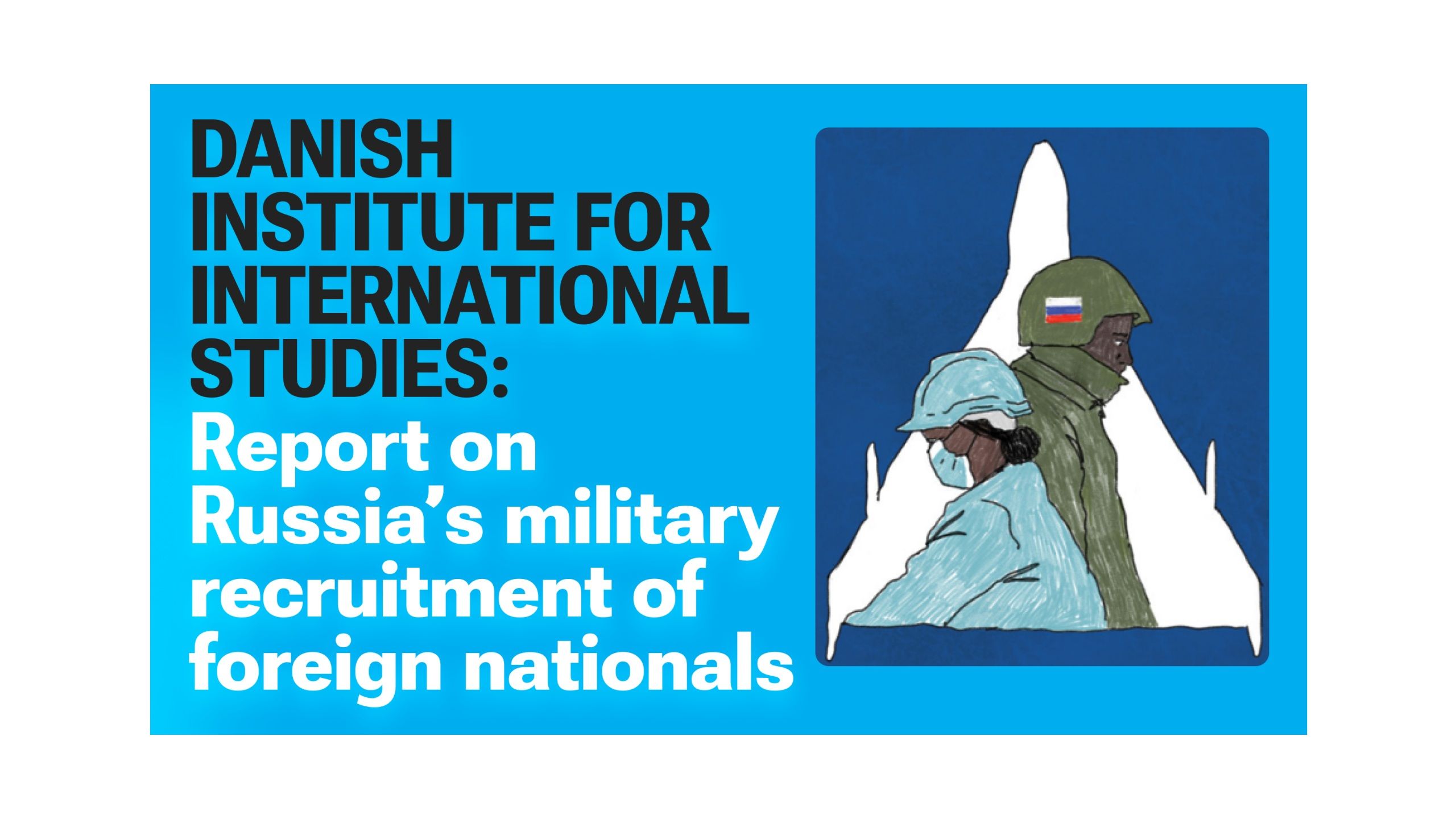
A report published in May 2026 by the Danish Institute for International Studies (DIIS) offers a detailed account of how Russia recruits foreign nationals for its war in Ukraine - and what happens to them after they sign. Researchers Karen Philippa Larsen and Signe Marie Cold-Ravnkilde conducted field interviews with 18 foreign prisoners of war held in Ukrainian camps, analysed tens of thousands of social media posts, and documented the infrastructure behind two distinct recruitment tracks: the Alabuga Start programme targeting African workers for drone production, and the direct recruitment of frontline fighters.
The report, titled Russia's Extended War: Foreign Nationals on the Frontlines, was published May 28, 2026. Its central argument is that Russia has marketised military labour - treating citizenship as a transactional commodity and foreign nationals as an expandable resource that shields the Russian middle class from the direct costs of the war.
The Scale of Recruitment Is Accelerating
Between June and September 2025, the number of Russian military promotion posts on VKontakte targeting foreign nationals increased from 621 to 4,600. By mid-2025, one in three contract announcements was aimed at foreigners - up from 7% in 2024. Ukrainian sources estimate more than 18,000 foreign nationals from 128 countries have fought or are fighting for Russia.
The acceleration coincides with Russia's tightening of domestic migration rules for everyone except those willing to enlist. The country is simultaneously running an anti-migration crackdown and an intensifying outreach to foreign workers it wants to convert into soldiers. That contradiction, the report argues, is not accidental: it narrows the options available to migrants already inside Russia, making military service the path of least resistance.
Alabuga Start: Women Recruited Into a Drone Factory
The Alabuga Special Economic Zone in Tatarstan is home to manufacturing facilities linked to Russia's Geran-2 (Shahed-136) attack drone production. Since 2022, the Alabuga Start programme has recruited foreign nationals - primarily African women - to work there.
On the video: Russian Geran-2 (Shahed-136) hits residential buidlings in Kharkiv, Ukraine
The programme advertises free housing, vocational training, high salaries and international travel. The Global Initiative Against Transnational Organised Crime (GI-TOC) estimates that approximately 800 women from 27 countries have participated, with 90% placed in drone assembly work. Reported conditions include unpaid overtime, coercive withdrawal penalties, restricted communication, surveillance, and concealment of the fact that the facility is a target of Ukrainian strikes. GI-TOC concluded that while Alabuga Start "fulfils several of the conditions for a case of human trafficking," it does not fully meet internationally accepted thresholds.
Recruitment happens primarily online, through social media influencers paid by Alabuga-linked operators. Researchers identified four types of intermediaries: local African companies (including Enangue Holding in Cameroon and YES International in Guinea), African officials who endorsed the programme, influencers paid for sponsored content, and Telegram channels. Among the officials cited by Alabuga-affiliated accounts as endorsing or facilitating the programme were the Somali Ambassador to Russia, a former Congolese government official, a Kenyan diplomat and former Secretary General of the East African Community, and ambassadors from Uganda, Mali and Burkina Faso to Moscow.
Following international coverage of trafficking allegations in late 2024, several social media platforms removed accounts associated with Alabuga Start. Official recruitment posts on public channels dropped sharply. The programme appears to have moved activity into more closed spaces, and researchers note that the disappearance of public recruitment does not mean recruitment has stopped.
Researchers also found what they describe as counter-influence campaigns operating against the programme - including the Alabuga Truth network and several French-language Facebook pages with disproportionate engagement patterns consistent with bot amplification. BLOOM analysts noted that some of this counter-activity may involve Western actors operating through African-facing accounts, though origin cannot be independently verified.
Most Frontline Fighters Were Not Recruited Online
Despite the volume of Russian military content on social media, the POW interviews produced a striking finding: almost none of the fighters had been recruited through online posts. Of the 18 foreign nationals interviewed in Ukrainian camps, only one - a man approached via LinkedIn by people claiming to represent a tech company - was recruited online. Seven others heard about the opportunity through a friend. The remainder were already in Russia for work or study when they enlisted.
The fighters came from Sri Lanka, Nepal, Yemen, Togo, Morocco, Egypt and Brazil, among other countries. Their awareness of what they were signing varied: some knew they were joining the Russian Ministry of Defence but did not expect frontline deployment; others said they signed contracts in Russian without understanding the content; and some were told they would work as security guards inside Russia, not as soldiers at the front.
The Passport Was Often the Point
The report identifies the Russian passport - not ideology, and often not even salary - as the primary draw for many fighters. A Russian passport is understood as a gateway: it can enable work across a broader range of destinations, including, in theory, onward movement toward Europe.
"Not just for money, but because first of all, I want a Russian passport," said one fighter interviewed in the camp, identified as Krishna. Another, Surendra, explained that after the war he intended to return to Russia specifically "because I've taken a big risk for the documents."
Several fighters described Russia as one stop in a longer labour migration trajectory. Some had previously worked in Dubai, Malaysia, the United States and Australia. Others had tried and failed to secure visas for Japan, the Netherlands and other EU countries. Russia presented itself as the door that would open when others had closed.
Three Mechanisms Trap Fighters Once Inside
The report documents three overlapping forms of exploitation that make leaving the Russian military practically impossible once a foreign national has signed.
The first is debt bondage. Fighters frequently borrow money from family to cover visa fees, health insurance, travel costs and recruitment agent fees before departing. Agents in India, Nepal, Sri Lanka and the UAE have charged up to $3,619 USD. Some fighters were told daily financial penalties would be applied if they tried to leave. One interviewee described being unable to go home without savings after the trip: "If I return home without any money or without any job, I would just be a burden on my family."
The second is the use of administrative and legal precarity as leverage. Several fighters described situations in which visa expiry or registration problems were used to pressure them into signing military contracts. One fighter, Hamza, had studied medicine in Russia and was arrested for a paperwork irregularity; he was offered an army contract as the alternative to a long prison sentence. "I was offered the contract; I signed the contract and was shipped out to the war," he said. Researchers note this coincides with documented Russian practice of fabricating protocol violations to pressure migrants into enlisting.
The third is direct threat and violence. Several fighters who attempted to cancel their contracts after learning they would be sent to the frontline described being threatened at gunpoint. "They put a rifle directly at my chest and said: 'Well, this is your cancellation,'" said one fighter, identified as Hamza. Other accounts documented fighters being shown execution videos of those who had tried to flee.
Foreign Fighters as Tradeable Commodities
Commodification does not end at recruitment, the report argues. Once captured, foreign POWs become exchange units in prisoner swaps. One Ukrainian POW coordinator quoted in the report stated plainly: "All Russian PoWs are an opportunity, a chance to return Ukrainians from Russian captivity through exchange… there are no such Russian PoWs - foreigner or Russian - that we would not be ready to return to Russia in exchange for Ukrainians."
Foreign nationals recruited under false pretenses, deployed to the frontline under threat, and then traded in POW negotiations represent the full arc of what the report calls Russia's commodification of human labour in wartime. The fighters are valued, the report concludes, not for their rights or dignity, but for their utility at each stage of a process they entered under false pretenses.
What the Report Recommends
The DIIS report directs its policy recommendations primarily at Denmark and the EU. It calls for addressing the underlying socioeconomic conditions that make recruitment strategies effective, rather than focusing exclusively on counter-messaging. It recommends facilitating safe and regulated migration pathways, supporting partner countries in monitoring exploitative labour flows, developing legal frameworks that hold intermediaries and states accountable, and coordinating information campaigns that balance counter-disinformation with structural responses to labour migration drivers.
The report notes one specific finding with broader implications: conditions for Ukrainian POWs in Russian captivity appeared to improve, at least marginally, after Ukraine began publicly documenting conditions in its own camps. Transparency, the researchers suggest, has demonstrable effects - and is itself a form of information campaign.