September 23, 2026
A Cameroonian Was Promised a Cleaning Job in Russia. He Ended Up Eating Garbage to Survive on the Frontline.
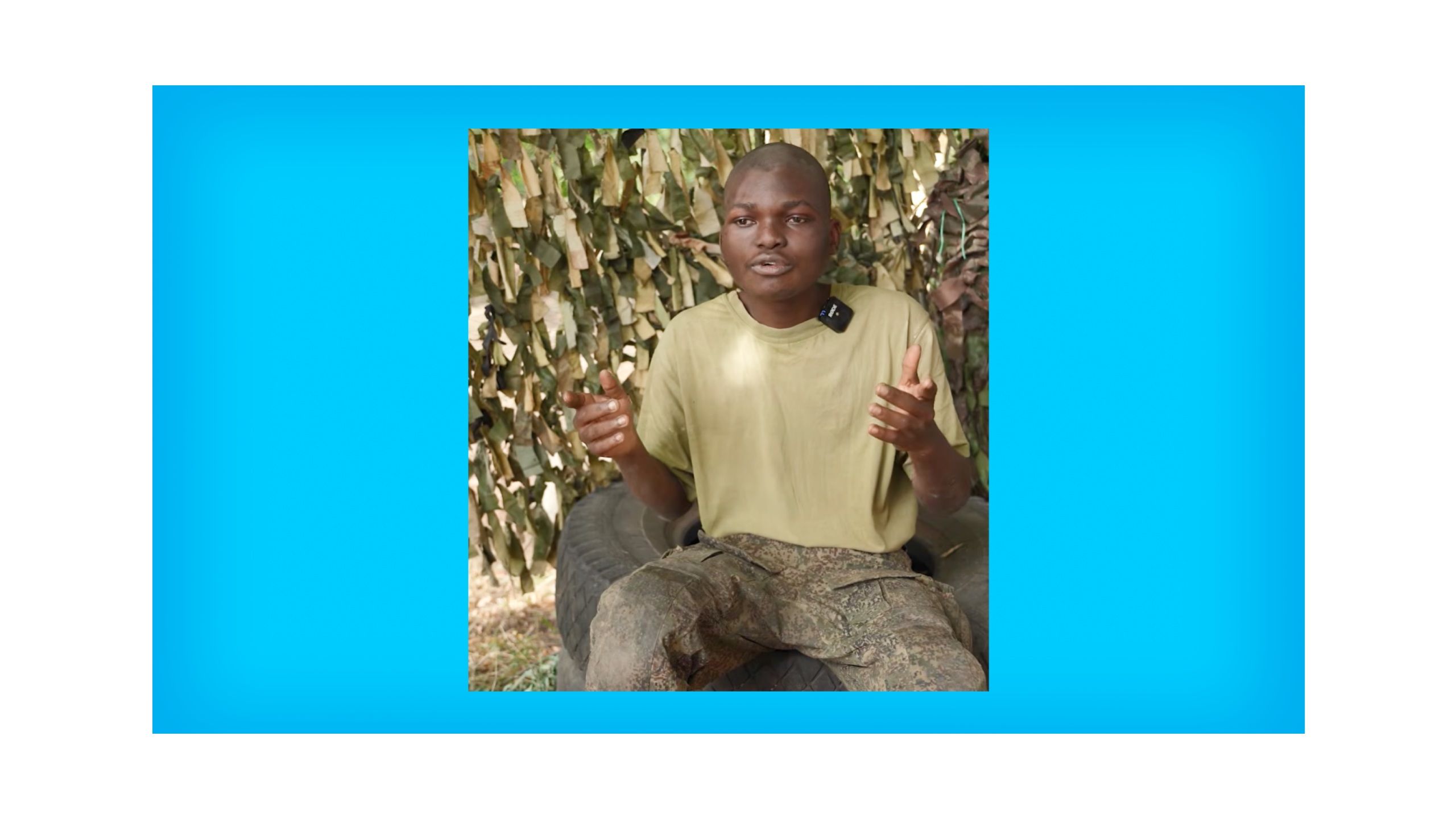
A 22-year-old Cameroonian Divine Ngum says a friend's promise of cleaning work in Russia turned into a military contract he couldn't read, a burned face from a drone-dropped grenade, and weeks spent surviving on wild pears and scraps of trash in a forest near the front - before he surrendered to Ukrainian forces. His account was published as a video interview by Ukraine's 425th Regiment.
Ngum, born in the city of Tiko and living in city named Limbe, in Cameroon's Southwest Region, says he was studying to become an ecologist and had experience in cleaning work when a Cameroonian friend already in Russia told him about cleaning vacancies open to foreigners there. He didn't have a foreign passport - his friend arranged one for him - and pushed him to travel before he'd finished his studies. "I didn't know it was a business for him," Ngum says. Once in Russia, he was made to sign documents in Russian he couldn't read or translate, was given a bank account that held a fraction of the roughly 800,000 rubles plus 200,000 rubles a month he'd been promised, and was eventually was issued a weapon and sent to a forest position near the front with almost no training, food, or water. After being wounded by a drone-dropped grenade and receiving no help from his own side, he walked away from his position under the pretext of picking wild pears and surrendered to the first Ukrainian soldier he found.
His Testimony in Full
The full inteview in Ukrainian is available on YouTube:
The translated transcript can be found below:
My name is Divine Ngum. I'm from Cameroon. I was born in Tiko. Cameroon is huge. There's a city here, a city there, but things are hard here - there's almost no work, because industry isn't developed. If you don't have connections, you won't get the job you want. So most people scrape by on small odd jobs just to survive. I have a big family, and that's exactly why I came here to earn money. I needed to help my family, my brothers, my sisters. I have two brothers and three sisters, a father and a mother. Every day we try to survive and get food, then go to sleep. I live in Limbe, in one of the city's neighborhoods.
I had a friend who had already moved to Russia. He said he worked there as a cleaner. He said they supposedly had vacancies for foreigners, and that some migrants were already working there. I told him I was studying to be an ecologist and had experience in cleaning and similar work. I didn't have a foreign passport - my friend got one for me. Without him, I wouldn't have made it here for so long. I told him: "Will you help me? Will you help me come? But I'm still studying. We should just wait. Could you hold that job for me until I finish my studies?" He replied he didn't know if they'd still need people by then. But I had no way to come on my own. And he said: "No, no, that's not a problem. I'll help you come." I didn't know that for him, this was a business.
Even when we arrived in Russia, it wasn't him who met us. He sent someone else to pick us up. When you enter Russia, it's like an iron curtain comes down. You sign everything blind. Even translating a single page or document is very difficult. I trusted everything, because my friend had helped me come. He told all of us: "If you don't want to sign, no one is forcing you." I trusted him, so I signed.
The contract was supposed to pay me. I still don't know how much I was actually supposed to get, or whether that money was ever paid at all. They promised around 800,000 rubles and another 200,000 rubles a month. [Interviewer: Did they open a bank account for you?] Yes, they opened one at VTB Bank. When I checked the balance, there were only 4,000 rubles in the account. I asked, "Where's the rest?" They told me, "No, no, that's just the food allowance." They said the main amount would be paid on the 10th of the following month. But I never received anything. I signed the contract in Murmansk. Yes, I signed the contract in Murmansk. Then we left Murmansk and went back to Moscow, and after that, at night, we ended up in Rostov. I thought, why are we traveling so long at night? Why did we spend the night under some kind of shelter at that particular time? And when I woke up, I saw it was a military camp - they issued us uniforms. For about two weeks we weren't trained at all, they just handed us weapons. Then they took us to a firing range.
We stayed in Rostov for about a month. Then we were moved somewhere else. From that day on, we just kept being moved from place to place. Eventually we arrived at a location. They issued us weapons again. That's how I ended up in the forest. They made sure to split up everyone who had come from Africa. We were taken into the forest in small vehicles, like quad bikes. Yes, on quad bikes. When we reached the first point on the route in the forest, a Russian said, "From here, you go on foot." I asked, "Is this the workplace?" He said yes - there was a pit there that they called a "blindazh" [Russian for dugout, ed.].
A few days into being in the forest, a drone dropped a grenade and it burned my face. I wanted to get out of there and reach the commander, because by then I was scared. I tried to call him on the radio. Commander - my face is burned, my face is burned - and he just answered: "Stop the panic, stop the panic, stop it." I said, "No, commander, no, no, no, help me." I took out my phone. I had an offline translator. I tried to use it to explain: "Help!" There was another Russian nearby. I saw him. He climbed out of the dugout and wanted to run. I shouted: "No, no, don't run, don't run. It's me, Divine, don't run!" He took the radio.
My face was burned. I could barely see - at most five meters ahead of me. I was in very bad shape. I couldn't hear. I couldn't see. I had to go through so many ordeals. I just kept thinking about how to survive in that forest. I asked myself, is this the job I came here for? There was no food, nothing, barely any water either. Even if you found water somewhere, it was half-liter bottles, tiny bottles - and there was no food at all. I walked through the forest, looked at the trees, and saw a pear. They called it "grushka" ["pear" in Russian - ed.] - little pear, little pear. You can't even imagine what I had to eat in that forest. If you'd seen what I actually ate out there, you'd think even a madman wouldn't put it in his mouth. I ate garbage. I tore open trash bags looking for fresh scraps. If I found an empty, open can that had held food, I'd lick out what was left just to remember the taste of food. The other Russians who came and worked alongside us were usually given very little food themselves - and since they got so little, nothing at all was left for me.
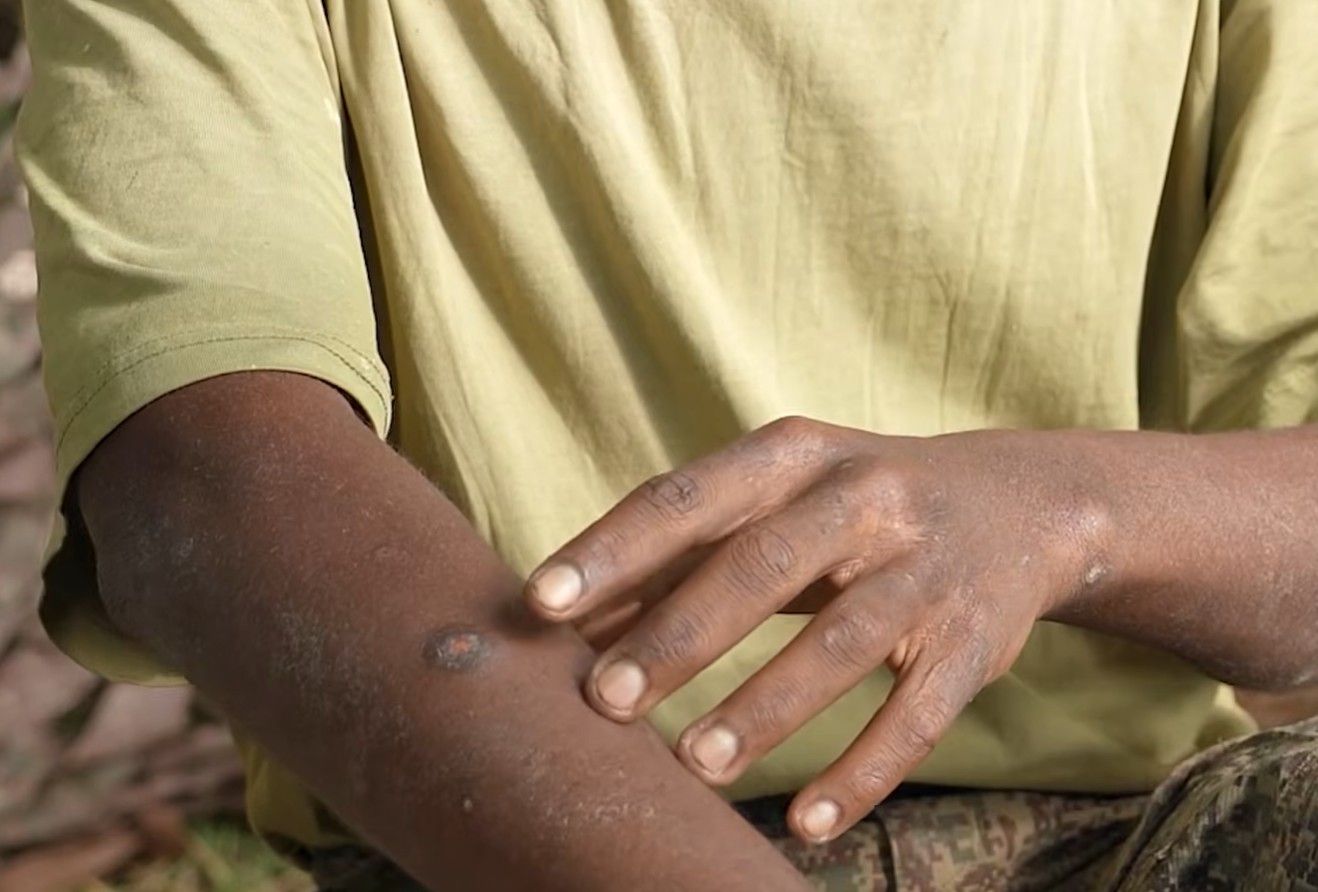
I said I wanted to go back. I kept asking when we'd go back, when we'd return. It felt like these people just wanted me to die. I didn't understand what I was doing there at all, what my task or role was. I don't know. I just ended up in the forest. I just sat there in that forest. And that forest - it's already the front line. One time I went to fetch water and drones spotted me. There were about five drones right near me, and others further off - what they called "babka" [likely, the Baba Yaga drone - ed.]. Constantly, constantly, drones - even under strikes, when they clear out a specific location, bombs fall one after another and explode. I thought, this is God. This is God protecting me. I can't even count how many times. What actually made me decide to give myself up was the drones. They attacked people in the forest. People got wounded - this is a wound from a grenade, these are grenade wounds. Look at my legs. Most of the Russians didn't want to help me. It was like that the whole time. Even when I was sick, I tried to help myself.
I knew Ukrainians were somewhere nearby, so I had to go to them. Even though the Russians told me, "Don't go there, there are enemies there." But I went anyway - I left the place where we slept and headed that way. I told the Russians I was going to pick pears, because whenever I brought pears back, I'd share them with everyone. I didn't take a poncho or a medical kit with me, just a backpack with my own things.
When I met the Ukrainian, I explained everything right away. He didn't even try to shoot, because I was standing like this, with my hands raised. I raised my hands and made sure he was behind me. The moment I saw him, I raised my hands immediately. He ordered me to stop and asked, "Where are you headed?" "For pears," I answered. "Pears." He gave me water and said, "Stop!" We went into a building, because we'd been standing in the open. There he gave me clean water - real clean water. Before that, I'd been drinking rainwater. He gave me water and plenty of food. And you could just feel human treatment. When I ate, I felt that humanity in him. They treated me with care.
A doctor comes here every day, examines me every day. They make sure I eat well. So I'm slowly recovering. And even though I surrendered to the Ukrainians myself, I didn't expect the kind of care they've shown me. To them I'm an enemy, but they still treat me well. The guards don't act like I'm an enemy. They come, check on me, ask how I'm doing, how I slept. And when they see my condition - bro, I won't lie, I think - just yesterday on the front there was an enemy in front of you. You fought against each other, and then you meet him and just ask for something, and he gives it to you. He asks you something, you answer, and he helps. No, no - this is more than just care. I've come to love this country forever. And even if they help me get back to Cameroon, even if I get my money and can go back to Cameroon, I wouldn't go. I'd rather stay here. Thank you for your care. Thank you. I'm truly grateful to you. I'm grateful to the Ukrainians for saving me. You are my saviors. And you're still saving me. Thank you. I'm very, very grateful.
He's Safe Now
Ngum is currently a prisoner of war in Ukrainian custody, being treated in accordance with the Geneva Conventions - the same care visible in his own account of daily medical checks and being given food and clean water. He is safe and being looked after.
Other foreigners coerced into Russia's army can also escape it and surrender to Ukraine. Read our FAQ on how to safely surrender to Ukrainian forces to find out how.