September 24, 2026
An Uzbek Migrant Signed What He Thought Was a Work Permit. It Turned Out to Be Russian Military Contract.
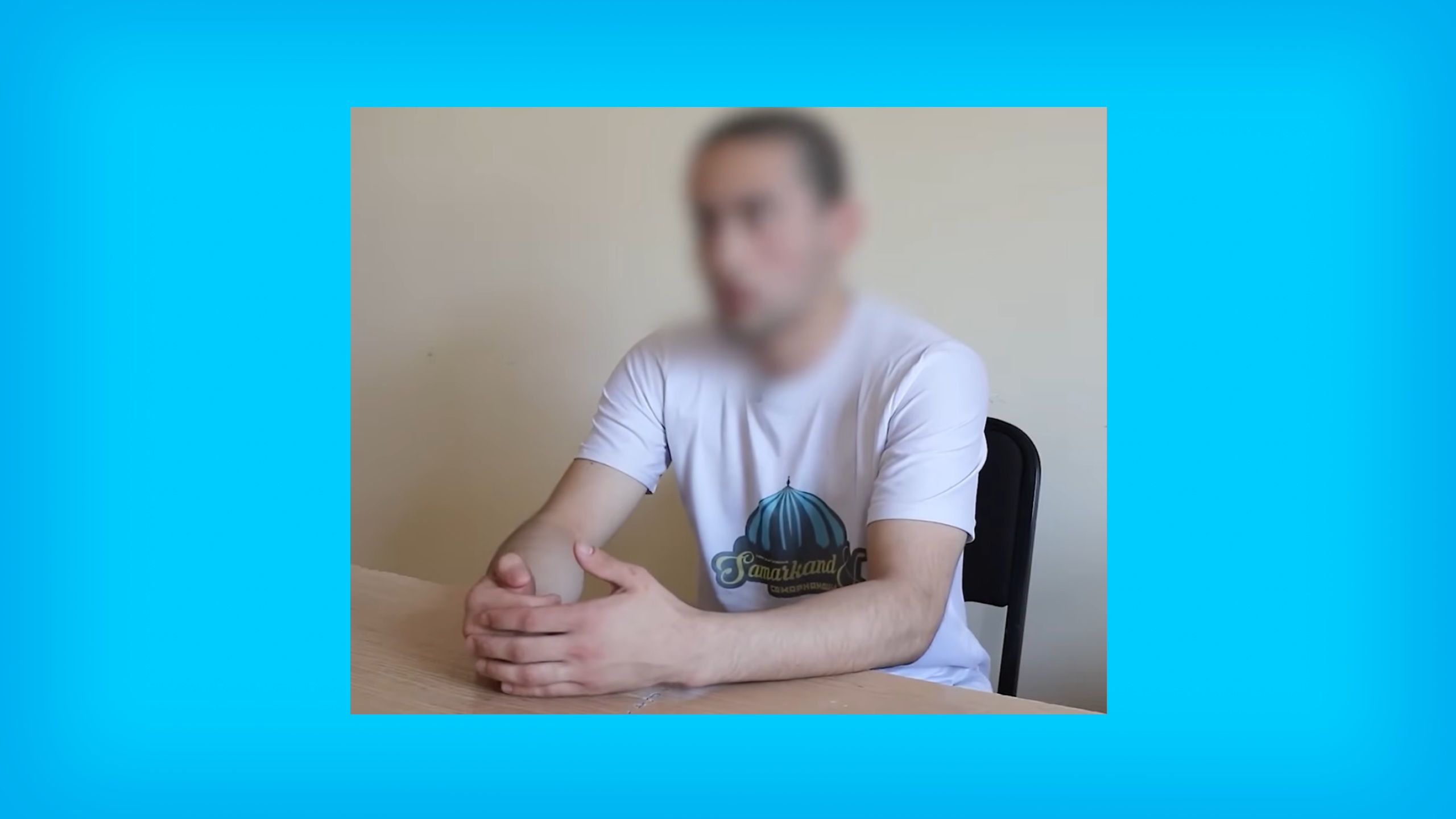
A 23-year-old Uzbek migrant worker named Diyorbek says a routine document check by Moscow police ended with him signing what he was told was a work-permit application - and turned out to be a year-long Russian military contract. He was beaten into training, sent to Ukraine's Luhansk region, and eventually walked roughly 790 kilometers back across Russia to reach Uzbekistan's embassy in Moscow. His account was published as a video interview by the Uzbek outlet Kunuz on Youtube:
A Traffic Stop, Then a "Legal" Office
Diyorbek says he went to Moscow in the summer of 2025 to work, alongside his acquaintances, at a paving-stone factory, earning 3,300 rubles a day - decent money, he says, except none of the workers had documents. Returning from a night shift by taxi, he was stopped in a joint police and migration-service check; a Tajik-national taxi driver translated for him. Officers noted he was carrying 35,000 rubles and told him about "a firm" that could get him a legal work permit, called a patent, and sent him to a specific address with the taxi driver relaying their instructions.
At the address, Diyorbek says he was left alone with women he didn't know, communicating only through Google Translate. He told them he couldn't read the Russian document they handed him; they wrote out a text by hand and told him to copy it, word for word, onto three separate forms. Afterward they drove him to a branch of Promsvyazbank - and opened an account in his name, insisting on a new card even though he already had one. He later learned it wasn't an ordinary account, but one set up specifically for military payments.
Snipers on Every Tower
Hours later, Diyorbek was put on a civilian bus with 23 other men - Dagestanis, Chechens, and Belarusian citizens - for a drive to a military training ground outside Voronezh. "That's when it finally hit me where I'd ended up," he says. He told the military police there immediately that he wouldn't serve; he was told the paper he'd signed was a one-year military contract and he was obligated to. He kept refusing, was beaten for arguing with commanders, and was eventually forced onto the training ground by August 16. He says the instructors, a group of Dagestani men running the ten-day course, beat resisters in twos and threes until they submitted, telling them: "dead or alive, you're still ours." Diyorbek says he sabotaged his own training rather than learn to use a weapon, and was punished with ten hours locked in an underground concrete bunker, followed by days on latrine and bathhouse duty.
I tried to find a way to escape, but on every one of the four towers around the perimeter, snipers are on duty around the clock. Escaping from there is physically impossible.
He Threw a Grenade at His Own Feet
After ten days at Voronezh, Diyorbek was sent with eleven Black African recruits to a settlement in Ukraine's Luhansk region (the name is unclear in the video's auto-generated captions). He refused body armor and a weapon there too, was locked in a underground cell for three days, then transferred to a tank regiment, where a Tajik officer with the call sign Shahid brought him before a colonel. The colonel told him he'd be imprisoned in Russia first and then sent home to face up to ten years in Uzbekistan for mercenarism; Diyorbek says he agreed to that rather than fight. Weeks later, still refusing to train with a new group of recruits, he was beaten badly enough to bloody his face. Soon after, at a grenade range, a commander he refers to by the call sign Kley - who had beaten him before - stood next to him.
They asked me, "hey Uzbek, want to throw a grenade?" And the thought came to me to kill the commander who'd been beating me with it. I took the grenade, pulled the pin, and threw it right under my own feet and his. I wanted to destroy us both at the same time. After everything they'd put me through, I had no desire left to live.
The grenade turned out to be a dummy used for training - loud, but without shrapnel. Diyorbek was locked in a punishment cell for two days and then transferred, on what he says was September 24, to a special military prison in Donetsk for soldiers who had deserted or refused to fight.
Fourteen Days Through the Forest
Diyorbek says he spent months afterward working kitchen and supply duty rather than combat roles, first in the Donetsk prison alongside a fellow Uzbek, a cook he names as Davronov, and later moving supplies between a city inside Russia and units in Luhansk. He refused a commander's offer of Russian citizenship in exchange for a driver's job. Eventually, deciding he was deep inside Russian territory with no legal way to void his contract, he waited until his commanders were drunk one night, changed out of his uniform, and left.
When the sixth day came, I'd completely run out of food. The hunger was so bad that in the villages I had to look for food in the trash bins. That's what I picked through, just to survive.
He says he walked roughly 790 kilometers over 14 days, following railway lines through forest for the first three days, then trekking parallel to the Moscow highway, drinking from ditches once his water ran out and avoiding shops out of fear of being recognized. On reaching Moscow, he destroyed his phone on his brother's advice so he couldn't be tracked, then walked into Uzbekistan's embassy and asked for help getting home.
See also: Miraculous escape from Russia's army by former Kenyan Defence Forces helicopter pilot
Home
Embassy staff told him he was under their protection and would be sent back to Uzbekistan. He stayed at the embassy until early April, when he received a travel document, and flew home through Sheremetyevo airport. Diyorbek says he believes many other Uzbeks who were tricked into Russia's army are now afraid to return home, because Russian commanders tell them they'll face 10 to 15 years in prison for mercenarism - a fear he says he didn't share, and he's encouraging others to come back.
A Warning, Not an Excuse
Kunuz frames Diyorbek's story as a warning to other Uzbek migrant workers: not knowing the language, one's rights, or what a document actually says, combined with violent pressure, can turn an ordinary laborer into a rightless soldier overnight. Anyone abroad on a Russian work contract who ends up facing the same trap, or who is already serving in Russia's armed forces and wants out, can read our FAQ on how to safely surrender to Ukrainian forces.