August 28, 2026
Ukraine's Foreign Intelligence Service Identified Eight Indonesians Recruited Into Russia's Army.
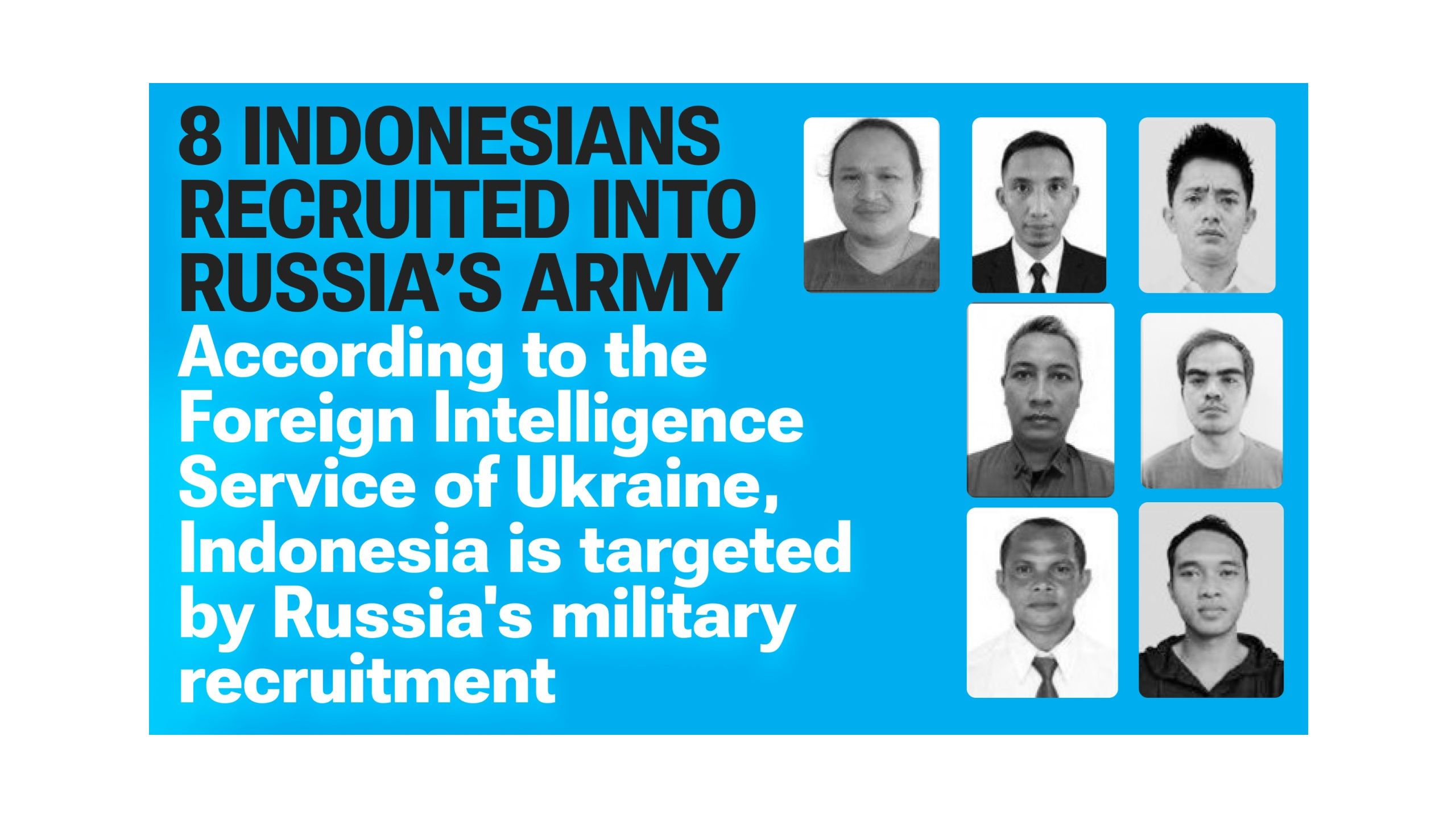
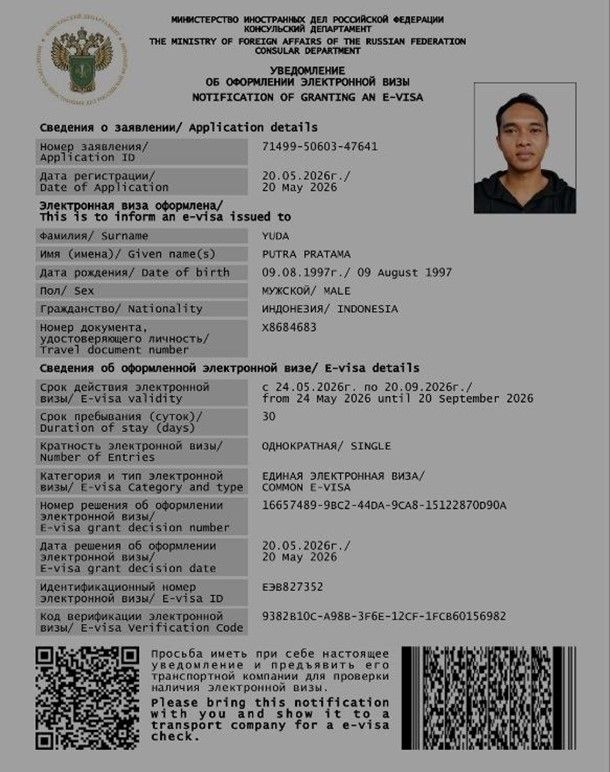
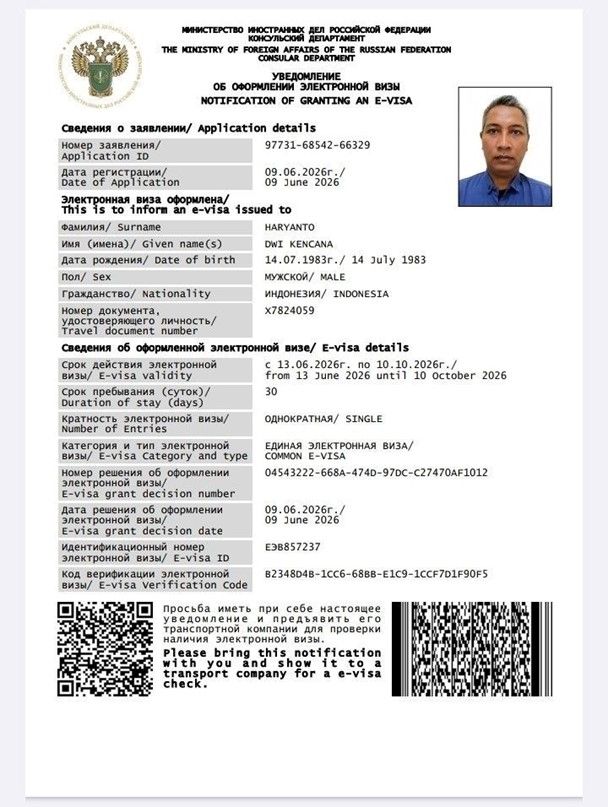
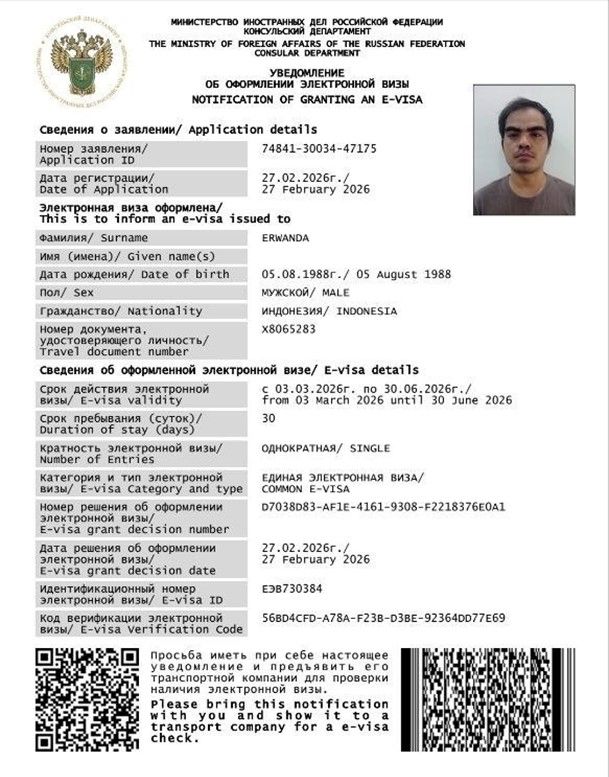
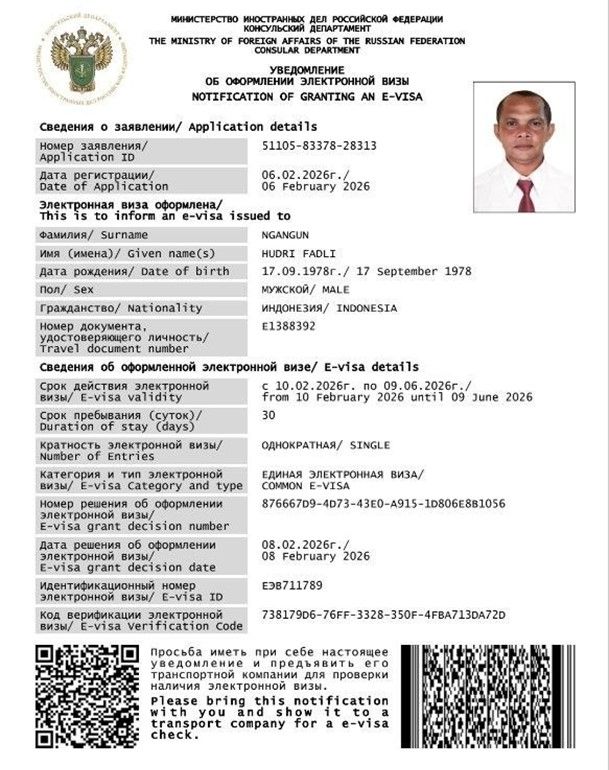
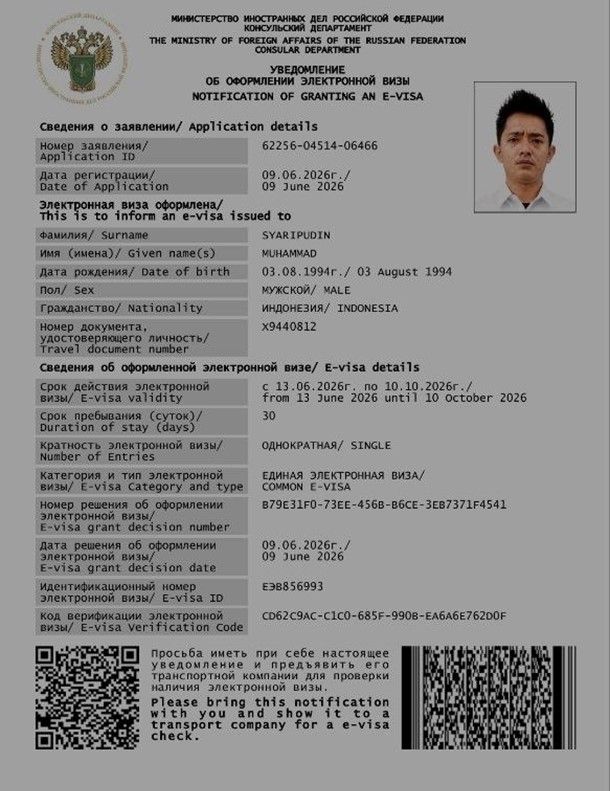
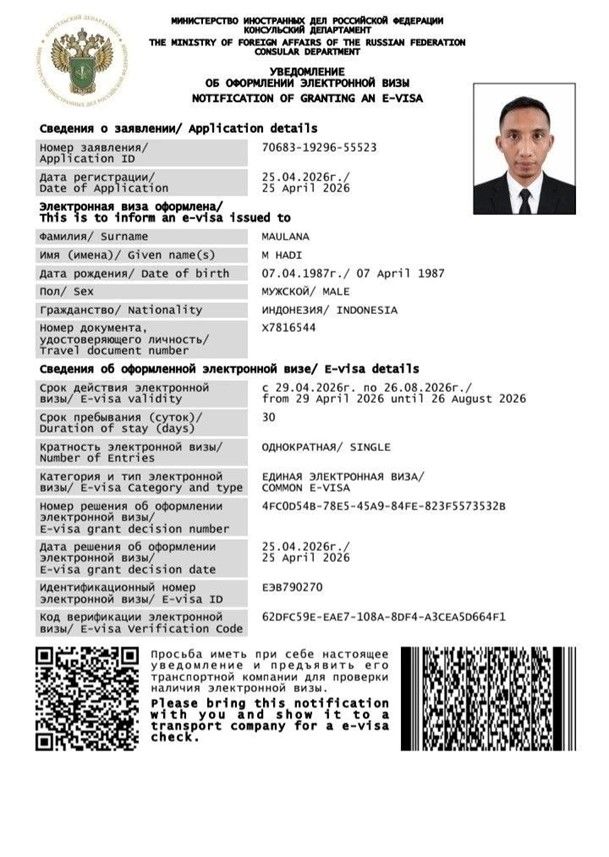
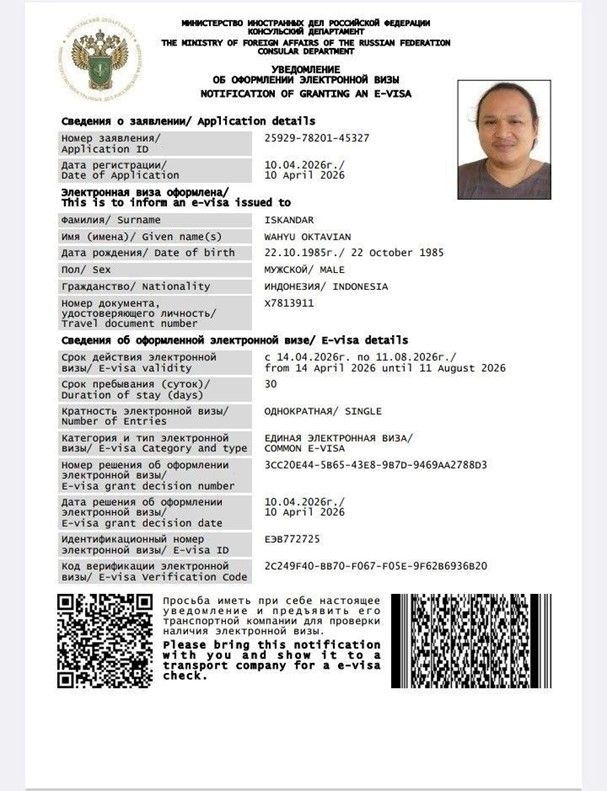
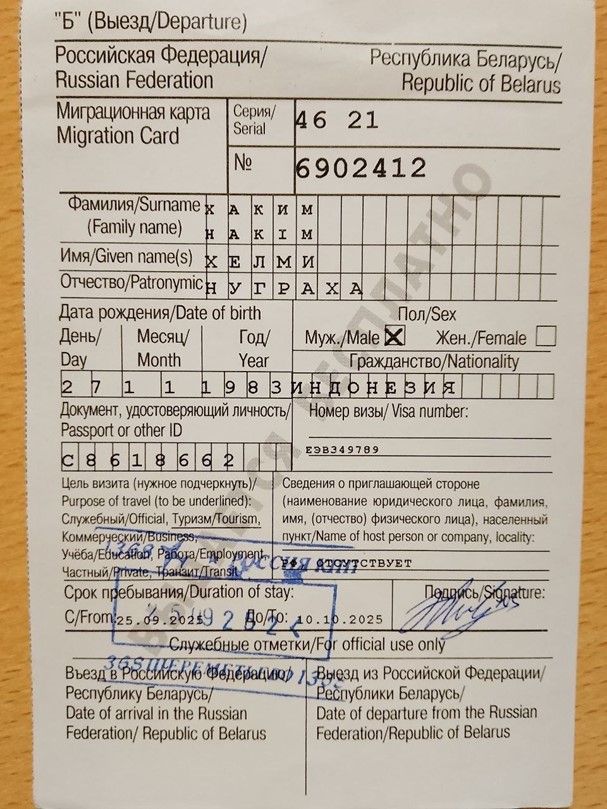
On August 27, 2026, Foreign Intelligence Service of Ukraine published Russian entry documents for eight Indonesian citizens who were recruited into Russia's occupation forces. The documents include seven Russian Common E-Visas and one migration card, all issued to Indonesian male nationals between September 2025 and June 2026. All visas list the purpose of travel as tourism.
According to the Foreign Intelligence Service of Ukraine, Indonesia is targeted by Russia's systematic foreign recruitment operation - with the same model used in Nepal, Cuba, Kenya and India: promises of high pay, non-combat roles, accelerated Russian citizenship and social guarantees, followed by frontline deployment with little or no training.
Russia's recruitment activity in Southeast Asia has been going on for a while. We have previously reported on a separate list identifying personal data of recruits from Indonesia, Cambodia, the Philippines, Myanmar, Malaysia and Vietnam. That list is available here.
The Indonesian Citizens
The eight individuals identified in the Foreign Intelligence Service disclosure are:
| # | Name | DOB | National ID num. | Russia Entry Period |
| 1 | Yuda Putra Pratama | 9 Aug 1997 | X8684683 | 24 May - 20 Sep 2026 |
| 2 | Haryanto Dwi Kencana | 14 Jul 1983 | X7824059 | 13 Jun - 10 Oct 2026 |
| 3 | Erwanda | 5 Aug 1988 | X8065283 | 3 Mar - 30 Jun 2026 |
| 4 | Ngangun Hudri Fadli | 17 Sep 1978 | E1388392 | 10 Feb - 9 Jun 2026 |
| 5 | Muhammad Syaripudin | 3 Aug 1994 | X9440812 | 13 Jun - 10 Oct 2026 |
| 6 | M Hadi Maulana | 7 Apr 1987 | X7816544 | 29 Apr - 26 Aug 2026 |
| 7 | Wahyu Oktavian Iskandar | 22 Oct 1985 | X7813911 | 14 Apr - 11 Aug 2026 |
| 8 | Helmi Nuraha Hakim | 27 Jan 1983 | C8618662 | 25 Sep - 10 Oct 2025 |
1-7 on the list were e-visa holders received 30-day Common E-Visas issued by Russia's Ministry of Foreign Affairs Consular Department - the standard tourist entry document. The eighth, Helmi Nuraha Hakim, entered on a migration card in September 2025, the earliest documented case in the set.
Find the documents published by the Foreign Intelligence Service of Ukraine, below:
Why Russia Is Expanding to Indonesia
The Foreign Intelligence Service of Ukraine identifies three drivers behind Russia's intensifying foreign recruitment. The first is operational: foreign nationals fill frontline gaps as domestic volunteer numbers decline. The second is propagandistic: each recruited foreigner becomes evidence, in Russian state messaging, of supposed global support for the "special military operation."
The third factor the Foreign Intelligence Service highlights is domestic pressure inside Russia itself. Domestic dissatisfaction with the war, the economic situation and the prospect of a new mobilization wave at 69% - a figure that has shrunk the pool of Russians willing to sign contracts voluntarily. Foreign recruitment compensates for that shortfall.
Indonesia presents an attractive target by scale alone. With a population of over 280 million, it is the world's largest Muslim-majority country and the fourth most populous nation on earth. For a recruitment operation that runs on volume and operates through informal networks - WhatsApp, Telegram, agents, friends of friends - the potential reach is substantial.
The pattern the Foreign Intelligence Service describes for Indonesia is identical to what has been documented in Kenya, Nepal, India and Cuba. Recruits are offered high salaries, non-combat security work, Russian citizenship on an accelerated timeline and housing guarantees. They travel on tourist visas, often through a third country. On arrival, passports are confiscated. Within days, the promised civilian job is replaced by a military contract written in Russian. Recruits who have already borrowed money to cover the trip and agent fees find themselves unable to leave. They are sent to the frontline, in most cases with minimal training.
The Foreign Intelligence Service notes that recruits from comparable countries frequently died within their first weeks of deployment.
There Is a Way Out
Indonesians and other foreign nationals lured into Russia's armed forces can contact Ukraine's I Want to Live project and safely avoid dying or getting wounded. Read more details here.