July 15, 2026
The IOC Readmitted Russia. It Should Be Asking Why Foreign Athletes Are Ending Up on the Frontline Instead.
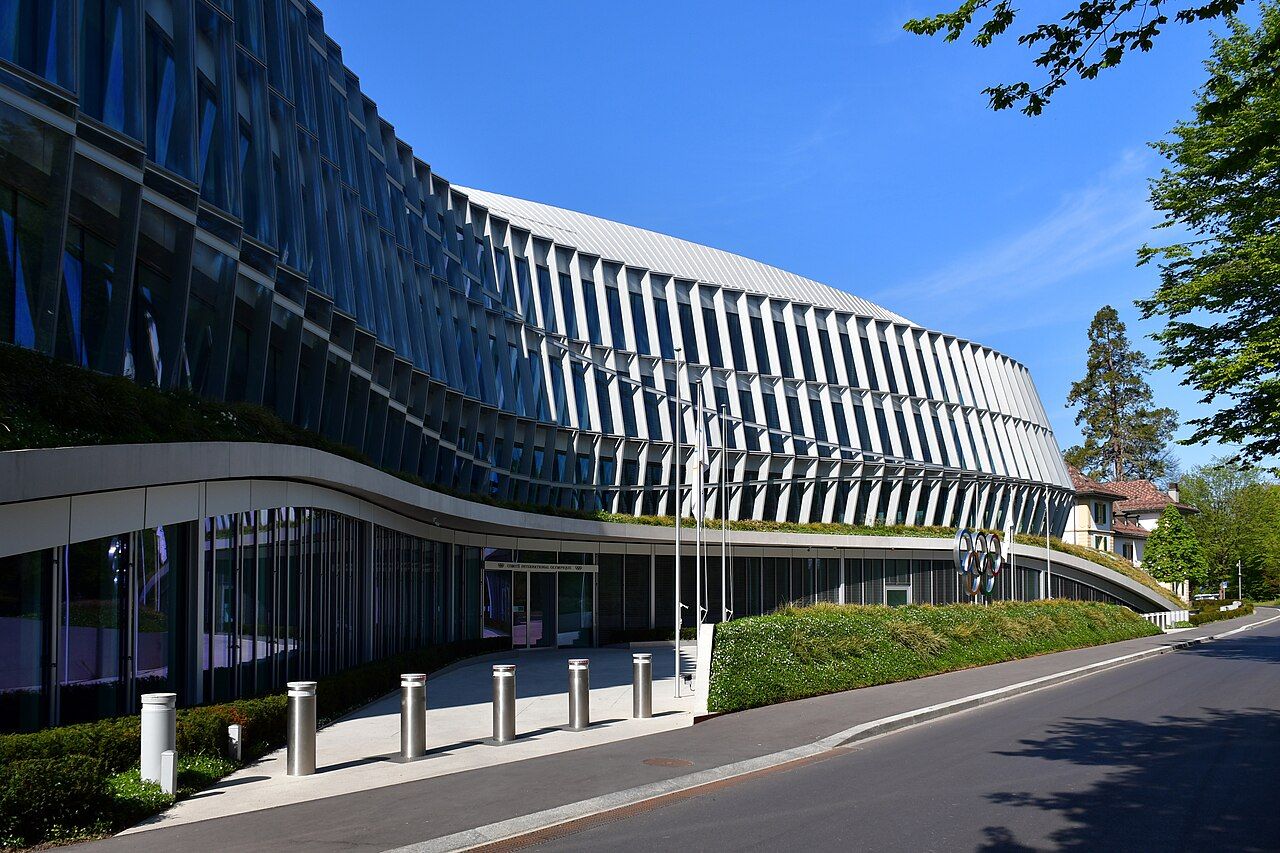
On 7 July 2026, the International Olympic Committee Executive Board provisionally lifted the suspension of the Russian Olympic Committee, citing that the ROC no longer includes regional sports organisations from Ukrainian territories. Russian athletes are now cleared to return to international competition ahead of the LA28 Olympic Games qualification cycle.
The IOC said its position on the Russian invasion of Ukraine remains unchanged. It reaffirmed its solidarity with Ukrainian athletes. It imposed anti-doping conditions. And it handed Russia's sports establishment a path back into the global arena.
What the IOC did not address is what happens to foreign athletes who travel to Russia as a consequence.
Russia Sends Foreign Athletes to the Frontline
This is not a hypothetical risk. It is a documented one, with names attached.
Mevoungu Mbe Stevys Astride is a 19-year-old Cameroonian centre-back who played for Canon Yaoundé's reserve squad and represented Cameroon at U17 level. In 2025, a man posing as a representative of FC Ural - a professional Russian club - approached him at a city championship in Yaoundé, offered to arrange a trial, and bought the tickets. The documents Stevys signed were in Russian. No translation was provided. He was told they were a trial agreement.
They were a military contract.
Stevys spent a year in a storm unit as a mortar operator. His callsign was "Maksimka." He was wounded three times. His friend was killed. He came to Russia for a football trial and left with three combat wounds.
Kibet Evans is a Kenyan professional runner from Mount Elgon. He was invited to Russia for a cultural festival - an event at which he was to demonstrate Kenyan running culture. A man named Hari, who received the group in Russia, told Evans and four other Kenyans that their visas were expiring and that he could arrange a one-year working permit. The papers Hari brought were in Russian. Evans signed. The following morning he was taken by car, off the highway, through a forest, to a military camp. He was locked in a room, issued a military uniform, and told the contract he had signed was military.
When Evans said he would not go to war, he was told: "Either you go to war, or you will be killed."
He received one week of weapons training. He was taken to the front line. He ran through the forest for two days without food or water until he crossed into Ukrainian-controlled territory, called out to a group of Ukrainian soldiers with his hands up, and surrendered. He is now held as a prisoner of war in Ukraine. He has a 16-year-old daughter at home in Kenya who does not know where he is.
"Don't travel to Russia. Please stay in your country," he said in an interview from the POW camp.
His testimony was captured by “I Want to Live” on Youtube.
These are not isolated cases. They are two examples from a broader pattern in which foreign nationals - including athletes - are lured to Russia under false pretences and coerced into military contracts. Since February 2022, at least 2,984 Africans from 40 countries have been confirmed as having signed contracts with Russia's armed forces. Nearly one in six is confirmed killed.
The IOC's Own Standards
The IOC's decision cites the Olympic Charter requirement that athletes selected for the Games must demonstrate "their ability to serve as role models who respect, uphold and promote a peaceful society through sport." Russia is conducting daily strikes on Ukrainian civilian infrastructure, residential buildings, and hospitals. This is not disputed. The IOC itself condemns the invasion and states its position is unchanged. Russian athletes, with rare exceptions, have not publicly opposed the war their government is fighting - many have actively supported it. The IOC has not explained how it reconciles the "peaceful society" standard with the current conduct of the Russian state, or how it intends to verify that individual athletes meet it.
What This Decision Actually Creates
When Russian sports institutions re-enter the international circuit, foreign athletes and delegations begin traveling to Russia for qualifying events, training exchanges, and competitions. Russia has already demonstrated, repeatedly, that it treats the arrival of foreign athletes as a recruitment opportunity.
Stevys came with a player profile and a club history. Evans came with an athletic record and an invitation letter. Both were in Russia legitimately. Both ended up on the frontline.
The IOC's decision does not address this risk. There is no framework to protect foreign athletes who travel to Russia as a consequence of Russian sport's rehabilitation. There is no mechanism for accountability when a recruiter poses as a sports agent and hands a foreign national a military contract in Russian.
What Should Actually Be Happening
Before any conversation about Russian athletes returning to international competition, the international sporting community should be demanding answers to a different set of questions:
How many foreign athletes have been coerced into Russian military contracts? What protections exist for foreign nationals who travel to Russia for sport? What accountability does Russia face for the documented cases of athletes lured to the frontline?
The IOC stands in solidarity with Ukrainian athletes, it says. The athletes the world should also be standing with are the victims of Russia’s predatory recruitment - the Kenyan runner waiting to go home to his daughter, the Cameroonian footballer who spent a year in a storm unit instead of a training camp.
That is where the IOC's attention belongs.