July 16, 2026
Kenya's Official: 289 Kenyans Were Recruited into Russia's Military. 69 Are Dead or Missing. Over 150 Are Still Unaccounted For.
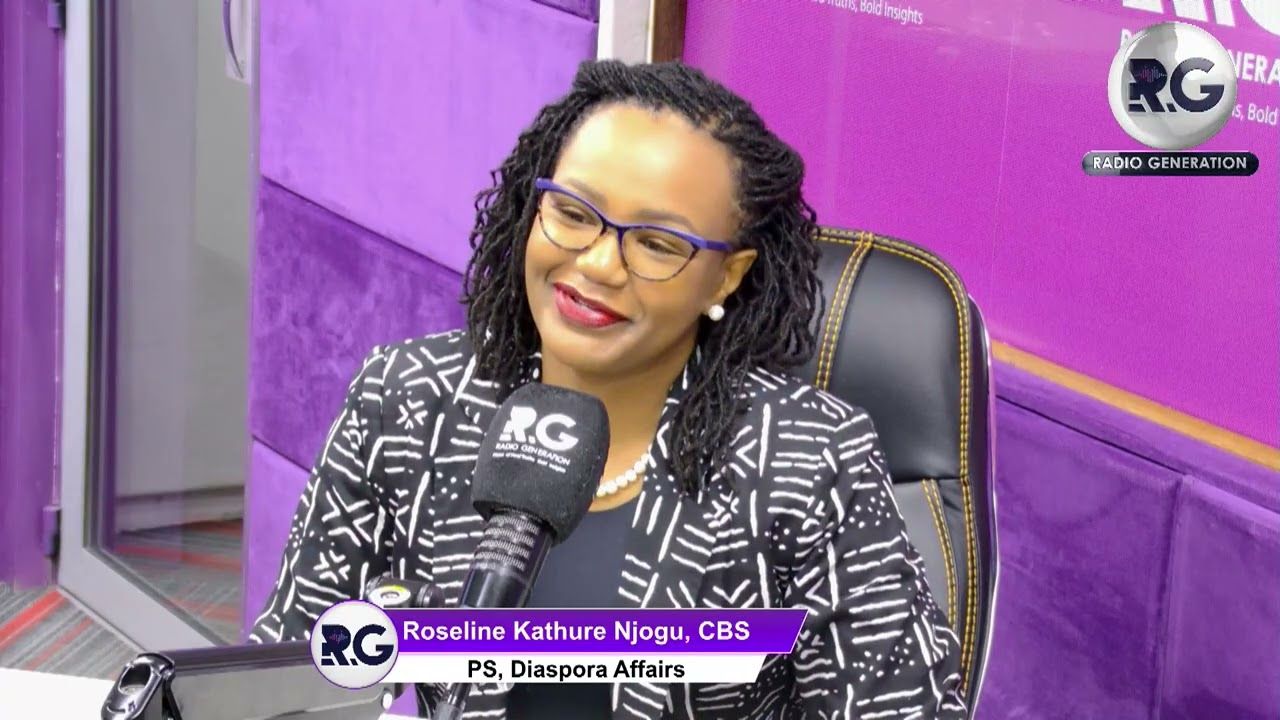
Kenya's Diaspora Affairs Principal Secretary Roseline Njogu has given the clearest official account yet of the scale of Kenyan involvement in Russia's war against Ukraine. Speaking on Radio Generation on Wednesday July 15, 2026, Njogu said government records show 289 Kenyans have at some point been recruited into Russia's armed forces.
Of those, only 64 have returned home. At least 69 are confirmed dead or missing in action - figures that came directly from the Russian government. The remaining roughly 153 are believed to be in military camps, on the front line, or their whereabouts are simply unknown.
See also: Earlier this year the "I Want to Live" project published list of 772 Kenyans in Russia's army
"It Is Colorless for Me to Say, but It Is What It Is"
Njogu did not soften what has happened to those who went.
"Because it is a war, it is expected that life is lost. It is colorless for me to say that, but it is what it is. Armed conflict necessarily means that people are dying."
The 289 figure is drawn from reports submitted by families and by Kenyans themselves who made contact with Kenyan authorities. It is almost certainly an undercount - many families have not reported missing relatives, and some of those listed as having unknown whereabouts may already be dead.
The day before the interview, Njogu hosted a meeting with 90 family members of Kenyans who are missing, killed, or unaccounted for in Russia.
"Families came to see me and I hosted 90 family members to basically give them updates on broadly what the situation looks like, but also to give them deeper information each of them about their specific kin," she said.
This is not a contract the government of Kenya was party to. "We have been dragged into it because our citizens have dragged themselves into this situation," she said. "We don't negotiate the compensation."
Many of those who enlisted and subsequently wanted out found the contracts harder to exit than to sign.
"Many of them realized this is harder than I thought it was going to be. People are dying. I've seen people near me die. I want out," Njogu said, describing what she has heard from those who made contact with the embassy. "There are limitations."
See also: List of Africans killed in Russia's army
"We Cannot Parachute into Armed Conflict"
Kenya's Embassy in Moscow has four officers. The front line is roughly a thousand kilometres away.
"Kenya is not a party to this war. We cannot parachute into armed conflict, lift Kenyans using a helicopter or whatever, pull them out, bring them back home. Some things are impossible," Njogu said. "What we can do is once people have extracted themselves, or have been extracted from that, then we are able to facilitate their exit."
People recruited through unofficial channels - none of them licensed by Kenya's government - had no protection infrastructure behind them when they arrived.
"People are fighting in a war that they have either chosen to go to or have sometimes been deceived to get into," she said.
Illegal Under Kenyan Law
Enlisting in a foreign military without the President's approval is an offence under Section 68 of Kenya's Penal Code. Njogu was direct about what the law would normally require.
"If anything, we should be arresting you the minute you get back."
The government instead extended an amnesty, so far allowing returnees to come home without facing prosecution. None of those who recruited Kenyans into Russia's military did so through Kenya's licensed recruitment agencies. "None of the people who were enlisted were recruited by those agents," Njogu confirmed.
Kenya has since introduced administrative screening at JKIA: anyone whose travel to Russia is flagged as potentially work-related is pulled aside for additional checks before being permitted to leave.
A Diplomatic Agreement to Stop Recruitment
Njogu herself travelled to Moscow with Foreign Affairs Cabinet Secretary Musalia Mudavadi to negotiate a halt to recruitment. Russia's Foreign Ministry gave assurances that Kenya had been placed on a "stop list".
"We negotiated with their Foreign Ministry, and our minister got the assurances of their foreign minister that they would put Kenya on the stop list. This means: stop recruiting Kenyans into your special military operations," Njogu said.
The agreement followed talks in March 2026 between Mudavadi and Russian Foreign Minister Sergey Lavrov. The two governments also agreed that any Kenyan found to be serving against their will would be transferred to Kenya's Embassy in Moscow for repatriation. In March 2026 the "I Want to Live" project published a report stating that the decision triggered mass refusals among the Kenyans to participate in combat operations. In response, Russian commanders executed at least five men as a warning to others. The victims were to be officially recorded as "killed in action." The executed Kenyan citizens have been identified as Otieno Owaga (born December 5, 1999), Shaban Kalama (April 29, 2002), Aaron Abduyi Nyongesa (November 20, 2001), Abednego Mwenga Mwikya (March 1, 2002), and Abel Kipkosgei Tarus (March 2, 1995).
For Those Still Inside
In some cases victims of Russia's predatory recruitment manage to escape the battlefield with the help of their countries' embassies - like a former KDF pilot Samuel Maina Kariuki who fled from Russia after the first failed attempt. But the safest escape option is provided by the "I Want to Live" project. Read more details here.
Source: Radio Generation Kenya