October 14, 2026
Kenyan Government Tells Senate It Has Recorded 354 Citizens in Russia's War - Petitioners Say the List Is 841
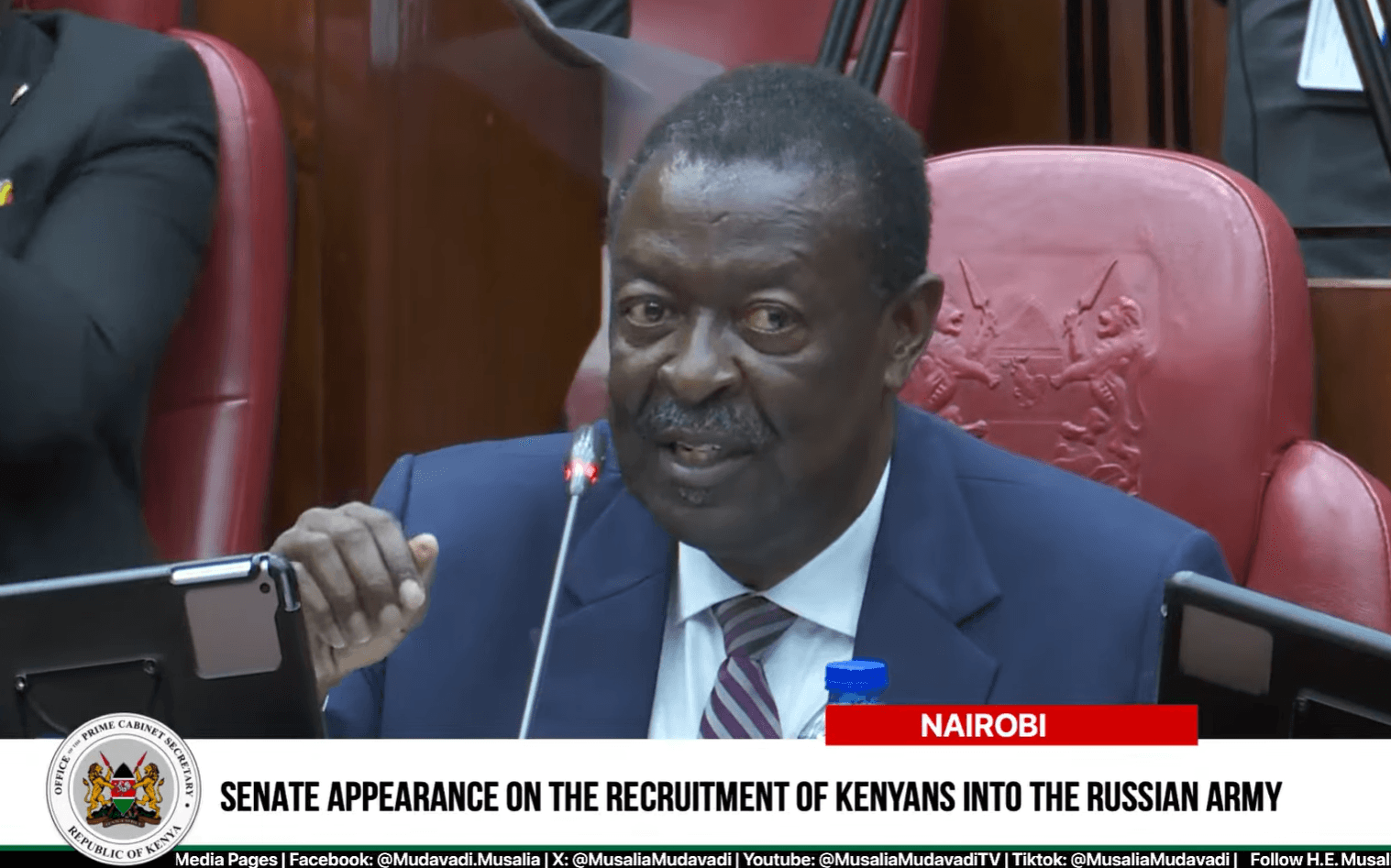
Prime Cabinet Secretary Musalia Mudavadi told a joint sitting of two Senate committees that Kenya has recorded 354 nationals connected to the war in Ukraine, 62 of whom have been repatriated and five confirmed as prisoners of war in Ukraine, according to a statement published by the Parliament of Kenya on October 9, 2026. The 354 covers Kenyans on the front lines, those whose whereabouts are unknown, those reported killed or missing in action, hospitalised, or repatriated, and the five prisoners of war. Mudavadi said Kenya is working through its diplomatic missions to locate the missing, secure the release of those held in Ukraine - including through possible prisoner exchanges - and help others leave the conflict. The sitting, held on October 8, was a joint one of the Senate's Committees on Labour and Social Welfare and on National Security, Defence and Foreign Relations.
In the previous month Kenya's senate postponed hearing on Russia-recruited citizens after some of the officials skipped their testimonies.
The full video of the hearings is available on YouTube:
354 Versus 841
The hearing exposed a gap in the numbers. Peter Kamau, the lead petitioner, presented documents containing a list of approximately 841 Kenyan recruits, a figure substantially higher than the government's. Mudavadi said the list had not been provided to his office before the hearing and could not immediately be verified, and the committees directed that the petitioners' documents be formally tabled and forwarded to the Ministry of Foreign and Diaspora Affairs for checking against embassy and other records, with the process fast-tracked. Kamau told the senators that the circumstances of some people on the list had changed since the petition was filed: some had been hospitalised, sent back to the front line, or reported dead.
Earlier this year "I Want to Live" project identified at least 59 Kenyans who were killed in the ranks of Russia's army, while Kenya's Diaspora Affairs Principal Secretary Roseline Njogu, stated on air that 289 Kenyans were recruited into Russia's military with 69 known to be dead.
Four Named Dead, Remains Unaccounted For
Mudavadi said that remains of the killed Kenyans may still be in areas of Donetsk and Luhansk outside Ukrainian government control, and DNA testing may be needed to establish identities. Senator Okong'o Mogeni raised the case of Onyancha Tom, who contacted his family in February before communication was lost, and asked whether families could trigger an urgent response when contact with a relative suddenly stops. Mudavadi said such cases are pursued through diplomatic missions and that "missing in action" is the designation used where the government cannot conclusively establish whether someone has died.
No Funds, and Russia Will Not Pay
Russia has told Kenya it cannot meet the cost of repatriating the remains of Kenyans who died, so arrangements are being handled case by case, Mudavadi said. Kenya has no dedicated fund for returnees or for repatriating remains, and he said the government has reallocated resources to give some returnees accommodation, food, and air tickets. He proposed a Welfare Fund created through legislation, subject to parliamentary approval. He also said Kenya secured a place on a Russian "stop list" meant to prevent further enlistment of Kenyans, and that the Kenyan embassy in Moscow has reported no new enlistments since it took effect.
What Mudavadi Says Kenya Cannot Do
In the hearing, Mudavadi said Kenya "does not have the capacity militarily to enter into a war zone," so diplomacy is its only route. He said Kenya's embassy in Moscow has 10 officials, six of them Kenyan officers besides the ambassador, and that "we are chasing after the event" because some recruits left without telling their families, let alone the government. He described the recruitment as private, done "in secrecy" and not with the knowledge of the Kenyan government, and said Kenya does not issue Russian visas; those come from Russian authorities. He also noted that under section 58 of Kenya's Penal Code it is a crime for a Kenyan to enlist in a foreign government's forces without the president's consent, but said the government is not pursuing that aspect and is focused on bringing people home.
A Safe Way Out
Kenyans and other foreign nationals lured into Russia's armed forces have an option to safely escape the battlefield with Ukraine's "I Want to Live" project. See our FAQ to find out more.