June 26, 2026
The Worst Transfer of the Year: Cameroonian Came to Russia to Play Football but Was Sent to the Front Line Instead.
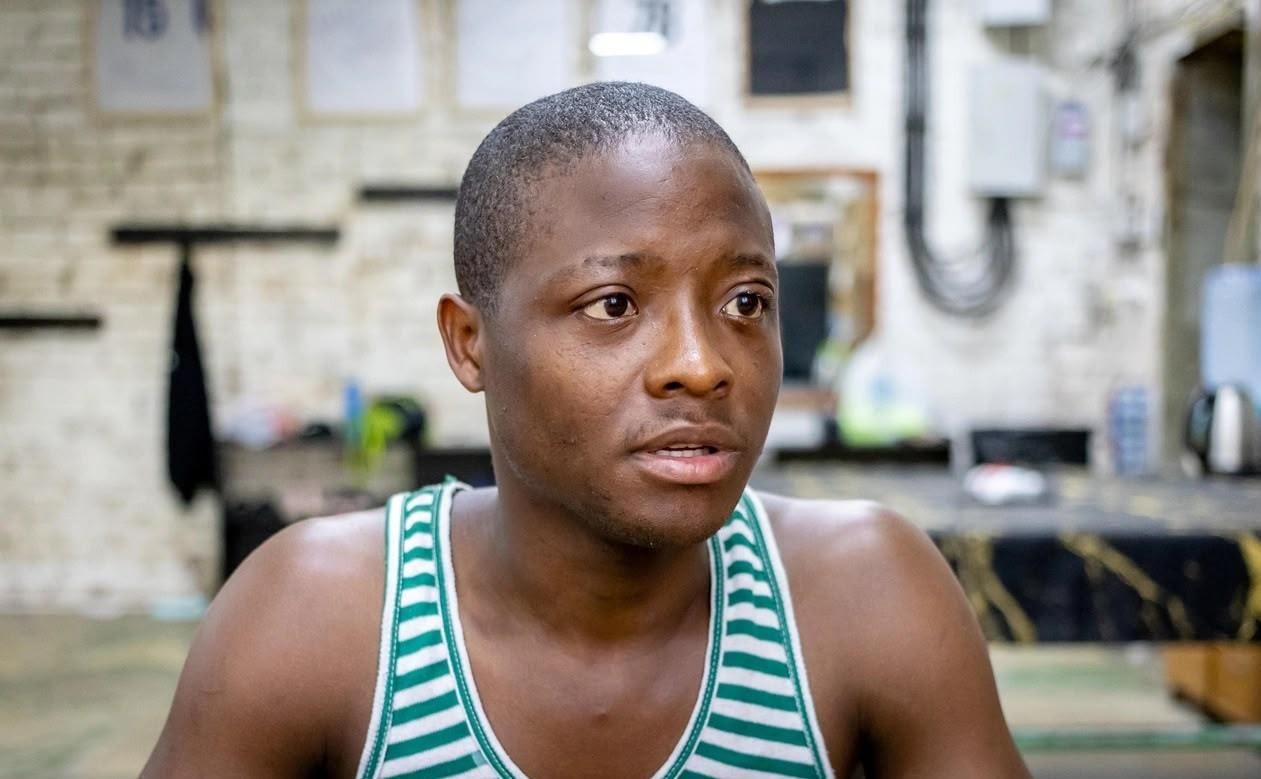
Whlie the 2026 FIFA World Cup fills stadiums across North America, Russia is turning football into an opportunity to replenish its catastrophic frontline casualties. A 19-year-old Cameroonian footballer who dreamed of playing professional football in Russia spent the past year on the front line in Ukraine. He came for a trial with FC Ural. He was lucky to make it out alive with three combat wounds.
His name is Mevoungu Mbe Stevys Astride. He was not exactly recruited not by a military enlistment office but was scammed by a man posing as a football agent. The story was reported by Russian regional outlets - meaning Russia's own press documented the deception.
The Offer
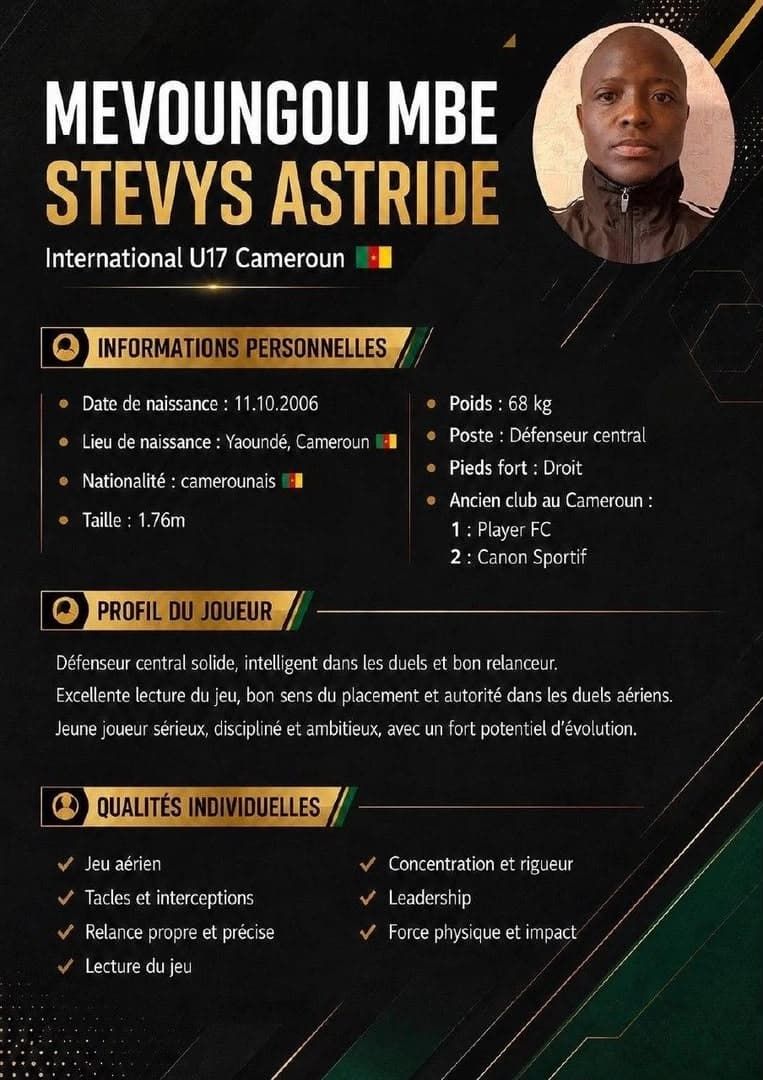
In 2025, Stevys was 19 years old and playing as a centre-back for the reserve squad of Canon Yaoundé, one of Cameroon's most storied clubs. He had represented Cameroon at U17 international level. Football was not a hobby - it was the plan.

At a city championship in Yaoundé, a Cameroonian intermediary named Unano approached Stevys, his brother, and their friend - all footballers. Unano presented himself as a representative of FC Ural, a professional club from Yekaterinburg. He offered to arrange a trial, handle the paperwork, and buy the tickets.
The three players signed documents in Russian. No French translation was provided. They were told the papers were a trial agreement. A week later they were on a flight to Moscow.
"You Signed a Contract of the Year"
At Moscow's airport they were met by a Russian man named Alexander. He explained, through a translator, what had actually happened.
"He told us that the man from Cameroon had lied to us," Stevys told to local media. "He said: you signed a 'contract of the year' - but it's not a football contract, it's a military contract. He also said there would be no problems with pay where they were going: 'Serve your time, it's nothing serious, and afterwards you'll come back and play football.'"
The three Cameroonians spent two days at the airport. Then they were driven to Yaroslavl and taken to a military enlistment office. They told the staff they had come to play football. They were told: once the contract is finished, you can go and play for any team you want. They had no money for return flights. They did not speak Russian. They were not offered a chance to get out.
The Front Line
Stevys was assigned to a storm unit as a mortar operator. His callsign was "Maksimka" - a reference to a Soviet film about a Black boy taken in by Russian sailors, which someone apparently found amusing. He was wounded three times, lightly each time. His friend was killed during an assault operation. His brother was captured according to the local media claims - though this could not be independently verified.
See also: The List of 485 Africans Killed in Russia's Army
Stevys completed his one-year contract in May 2026 and returned to Russia. He had come to Russia for an FC Ural trial - so that, he reasoned, was still where he needed to go. On 6 June 2026 he arrived in Yekaterinburg. He was immediately targeted again. A stranger on the street offered him accommodation. What was presented as a flat turned out to be a bunk in an apartment shared with Central Asian migrant workers. His passport was confiscated. He had narrowly escaped the front line only to nearly enter a labour trafficking situation in the same city. He was lucky once again to be rescued by locals who helped him with accomodation in a local youth center.
What This Case Shows
Stevys's recruitment followed the standard pattern documented across dozens of cases on this site: a trusted intermediary from the recruit's own country, documents in Russian with no translation, a promise that sounded legitimate, and a military enlistment office at the end of the journey. What makes this case unusual is the source - regional Russian newspapers reported it, including the admission that the Cameroonian intermediary "lied to them" and that the contract was military, not footballing.
Russia's own press documented deceptive Russian military recruitment of a foreign national and published it as a human interest story. The framing treated it as a colourful adventure. The facts it recorded tell a different story: a 19-year-old centre-back from Yaoundé spent a year in a storm unit, lost his friend, and nearly lost his freedom twice - once to a war he did not sign up for, and once to a trafficker in Yekaterinburg.
This case is also a direct answer to those who argue that sport should be separated from politics - that Russian athletes and institutions deserve a return to international competition. Russia cannot be trusted to treat foreign athletes as athletes. It treats them as a recruitment pool. Stevys came with a player profile, a position, a club history, and a dream. Russia saw a body for the front line.
Cameroon has among the highest confirmed African casualties in the Russian Armed Forces. Stevys is one of the survivors.
See also: Cameroon Confirms 16 Citizens Killed Fighting for Russia Against Ukraine
Do Not Travel to Russia
There is no verification process that can protect you. Russia does not honor contracts, does not respect agreements, and does not recognize the rights of foreign nationals on its territory when it needs soldiers. A legitimate-looking offer, a real club name, a signed document - none of it means anything once you are inside Russia's borders. Stevys had all of that. He still ended up in a storm unit.
Do not travel to Russia for work, sport, or study. No offer is worth the risk.
If you or your relative signed or were coerced into signing a contract with the Russian Armed Forces and are looking for a way out - this guide is for you.
Source: "I Want to Live" Telegram