September 14, 2026
The Ministry of Denial: How Russian Embassies are Covering Up Predatory Recruitment
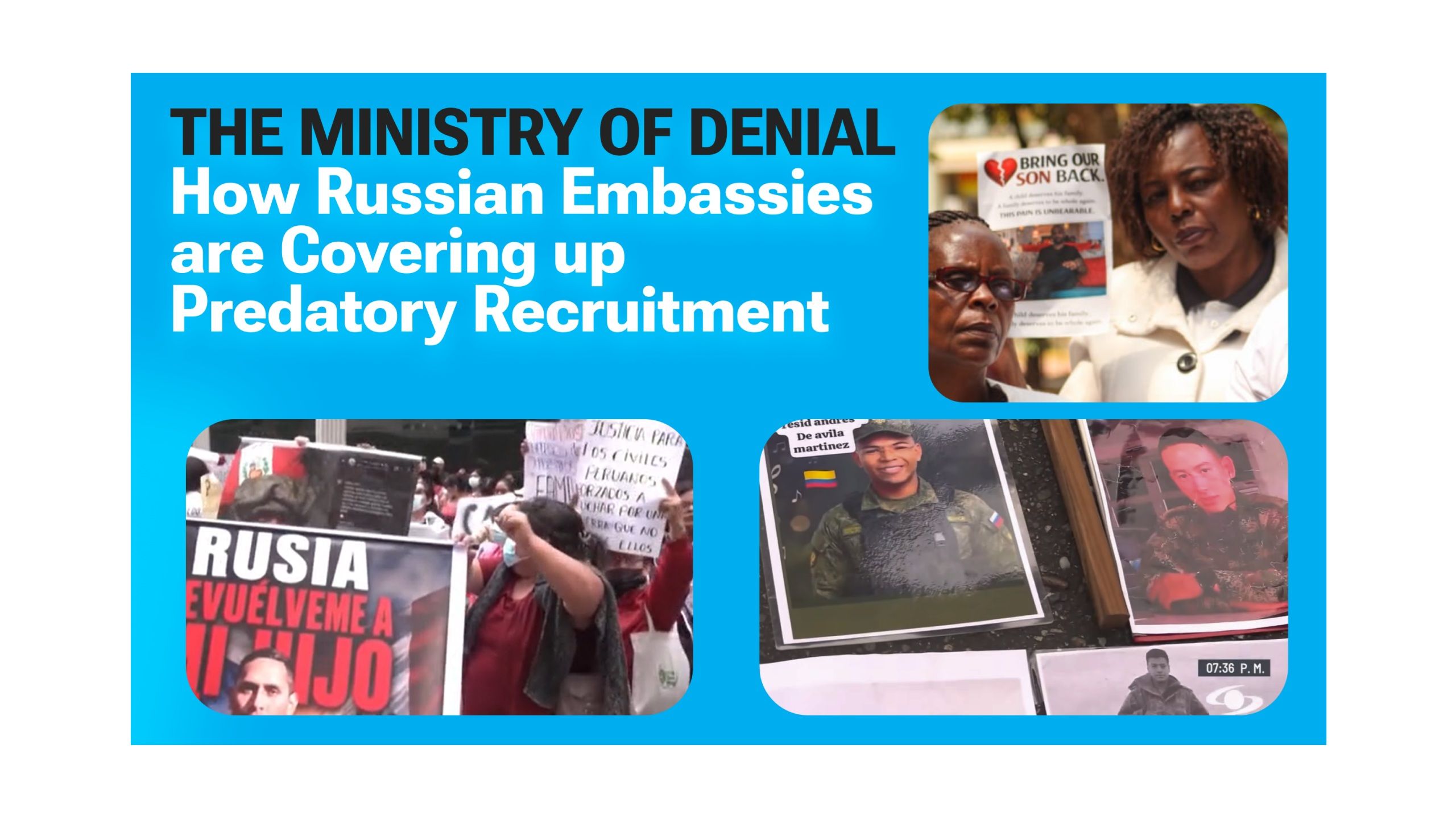
Families held rallies outside Russian embassies all around the world carrying photos of sons and husbands who left for jobs and ended up missing or killed in action in Russia's army. While the families are demanding answers, Russia's diplomatic missions simply deny everything. Covering up predatory recruitment has become an essential function of the Russian Foreign Ministry. StopRussianRecruiters.org documents how Russian embassies around the world refuse to acknowledge the phenomenon of predatory recruitment and refuse to take responsibility, as families grow desperate to find out what happened to their relatives who departed for Russia for civilian jobs.
Colombia: Russian Embassy Denies Invovement as Families Protest
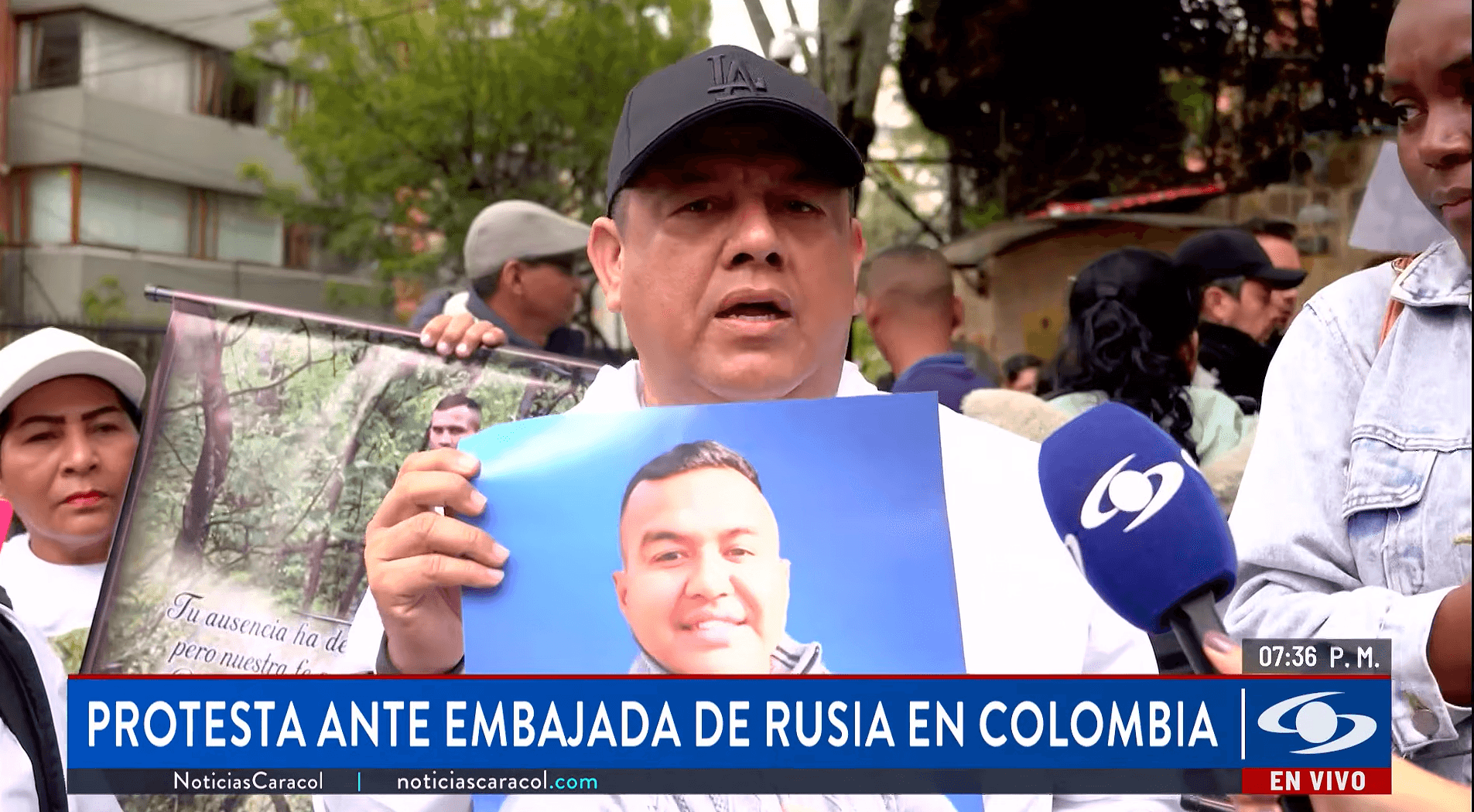
On August 14, 2026 hundreds of Colombian families gathered at the Russian Embassy in Bogotá, capital city of Colombia. They demanded answers - their brothers, sons and husbands disappeared in Russia's army and no information came from the Russian side - except for the denials issued by the embassy once in a while.
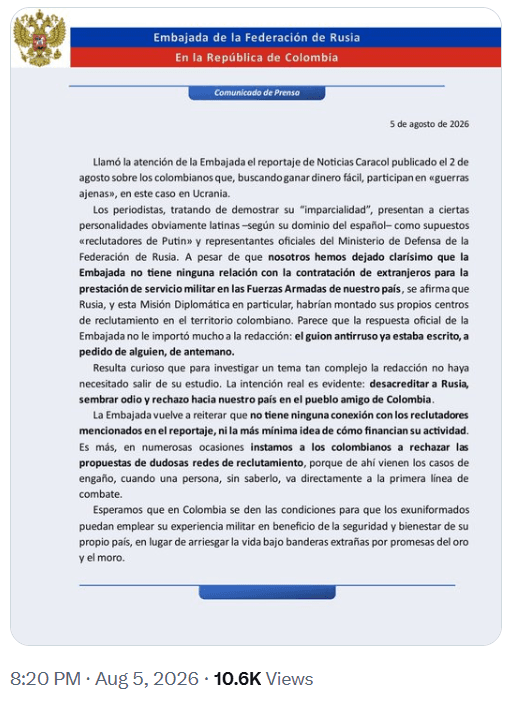
As tension among the families of Russia's predatory recruitment had been unfolding, Russia's embassy in Colombia denied any involvement and claimed they "advocated the Colombian government to stop the practice of Colombian nationals participating in conflicts abroad" - in attempt to shift the blame. On the 8th of July 2026 they posted a press release on X:
In view of recent requests from national and international media outlets, we feel obliged to reiterate that the Embassy of the Russian Federation in Colombia has no connection whatsoever to the organizations or methods behind the eventual involvement of Colombian citizens in wartime combat under false pretenses. We recommend that all Colombians avoid any contact with the unscrupulous entities or individuals allegedly carrying out this illegal activity.
On the contrary, we have advocated on numerous occasions before the Colombian government to stop, as soon as possible, the bad practice of nationals of the Republic participating in conflicts abroad, particularly in Ukraine. We note positively Colombia's accession to the International Convention against the Recruitment, Use, Financing and Training of Mercenaries, adopted by the UN in 1989. We hope that the citizens of this friendly country will refrain from involvement in conflicts abroad that are not their own.
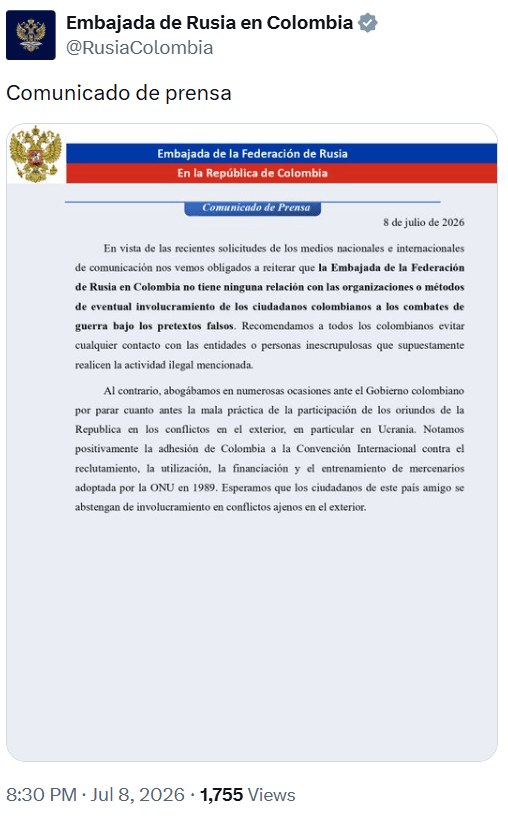
With their next press release on August 5, 2026, they tried attacking journalists who investigated Russia's predatory recruitment of Colombians:
The Embassy's attention was drawn to the Noticias Caracol report published on August 2 about Colombians who, looking to make easy money, take part in "wars that aren't theirs" - in this case, in Ukraine.
The journalists, in an attempt to demonstrate their "impartiality," present certain obviously Latino individuals - based on their command of Spanish - as supposed "Putin recruiters" and official representatives of the Russian Federation's Ministry of Defense. Despite the fact that we have made it perfectly clear that the Embassy has no connection whatsoever to the recruitment of foreigners for military service in the Armed Forces of our country, it is claimed that Russia, and this Diplomatic Mission in particular, have supposedly set up their own recruitment centers on Colombian territory. It seems the newsroom wasn't much bothered by the Embassy's official response: the anti-Russian script had already been written, commissioned by someone, in advance.
It's curious that to investigate such a complex topic, the newsroom didn't need to leave its studio. The real intent is obvious: to discredit Russia, and to sow hatred and rejection of our country among the friendly people of Colombia.
The Embassy reiterates once again that it has no connection whatsoever to the recruiters mentioned in the report, nor the slightest idea how they finance their activity. What's more, on numerous occasions we have urged Colombians to reject offers from dubious recruitment networks, because that is where cases of deception come from - when a person, without knowing it, ends up directly on the front line of combat.
We hope that conditions will exist in Colombia for former servicemen to put their military experience to use for the security and wellbeing of their own country, rather than risking their lives under foreign flags for promises of the moon and the stars.
While families in Colombia are seeking for a solution of their problem, Russia's embassy in the country denies it is involved - leaving the families with no official channels to get their answers.
Kenya: The Embassy Speaks About "Misleading propaganda" as Kenyans Die
On February 19, 2026, the Russian Embassy in Nairobi issued a formal statement calling reports of Russian recruitment of Kenyans "a dangerous and misleading propaganda campaign." It said that Russian authorities "have never engaged in illegal recruitment of Kenyan citizens in the Armed Forces of the Russian Federation" and had "at no point in time" issued visas to Kenyans to travel to Russia for the war. Kenya's National Intelligence Service had told parliament that more than 1,000 Kenyans were fighting for Russia in Ukraine. According to the "I Want to Live" project, Kenya is fourth by confirmed casualties among African nationals in Russia's army, with at least 59 its citizens killed. Numerous reports and testimonials confirm that Kenyans lured into Russia's army initially thought they were travelling for civilian jobs and were coerced to military service after arrival.
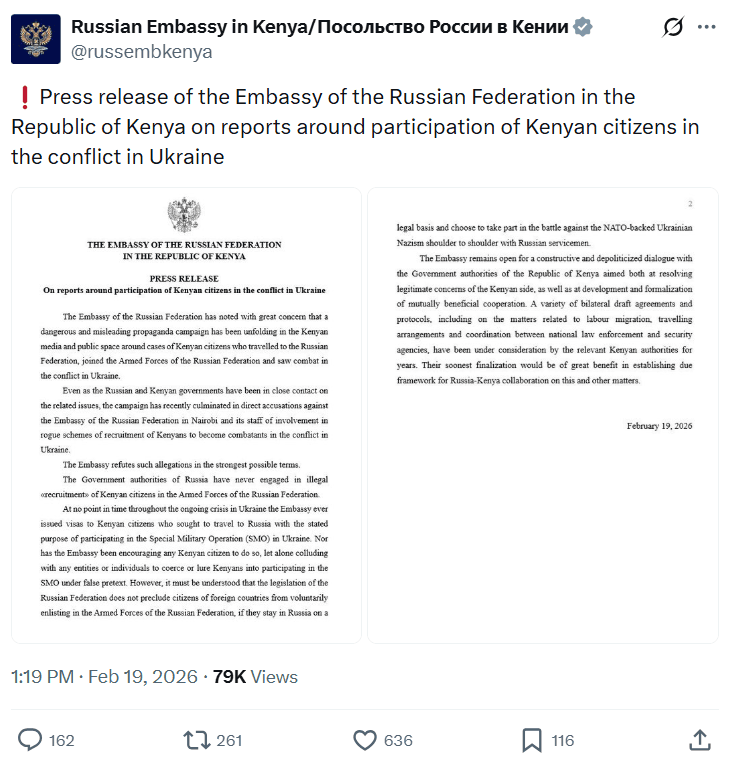
The full text of Russia's embassy statement:
On reports around participation of Kenyan citizens in the conflict in Ukraine
The Embassy of the Russian Federation has noted with great concern that a dangerous and misleading propaganda campaign has been unfolding in the Kenyan media and public space around cases of Kenyan citizens who travelled to the Russian Federation, joined the Armed Forces of the Russian Federation and saw combat in the conflict in Ukraine.
Even as the Russian and Kenyan governments have been in close contact on the related issues, the campaign has recently culminated in direct accusations against the Embassy of the Russian Federation in Nairobi and its staff of involvement in rogue schemes of recruitment of Kenyans to become combatants in the conflict in Ukraine.
The Embassy refutes such allegations in the strongest possible terms.
The Government authorities of Russia have never engaged in illegal «recruitment» of Kenyan citizens in the Armed Forces of the Russian Federation.
At no point in time throughout the ongoing crisis in Ukraine the Embassy ever issued visas to Kenyan citizens who sought to travel to Russia with the stated purpose of participating in the Special Military Operation (SMO) in Ukraine. Nor has the Embassy been encouraging any Kenyan citizen to do so, let alone colluding with any entities or individuals to coerce or lure Kenyans into participating in the SMO under false pretext. However, it must be understood that the legislation of the Russian Federation does not preclude citizens of foreign countries from voluntarily joining the Armed Forces of the Russian Federation, if they stay in Russia on a legal basis and choose to take part in the battle against the NATO-backed Ukrainian Nazism shoulder to shoulder with Russian servicemen.
The Embassy remains open for a constructive and depoliticized dialogue with the Government authorities of the Republic of Kenya aimed both at resolving legitimate concerns of the Kenyan side, as well as at development and formalization of mutually beneficial cooperation. A variety of bilateral draft agreements and protocols, including on the matters related to labour migration, travelling arrangements and coordination between national law enforcement and security agencies, have been under consideration by the relevant Kenyan authorities for years. Their soonest finalization would be of great benefit in establishing due framework for Russia-Kenya collaboration on this and other matters.
Five months before that denial - on September 25, 2025 - Kenya's Directorate of Criminal Investigations had arrested Mikhail Lyapin, a Russian national who had been operating in Nairobi since 2017. Police described him as a key figure in a network sending Kenyans into Russia's military. Lyapin was deported to Russia. On May 5, 2026, the official London sanctioned him under its Global Irregular Migration and Trafficking in Persons Sanctions Regulations.
The denial came after the arrest. The embassy issued it anyway. In February 2026 Kenyan authorities also arrested a local Festus Arasa Omwamba. He took advantage of the Kazi Majuu Initiative - a legitimate Kenyan government programme for overseas employment - which he invoked to make his agency appear government-endorsed. Recruits who signed with his company believed they were going through an official channel. But they departed Kenya on tourist visas, routed through Istanbul and Abu Dhabi before arriving in Moscow. Upon arrival, they were taken to military camps, given approximately three weeks of training, and deployed to the frontline in Ukraine. The contracts they signed in Kenya were not employment contracts. Kenya's parliament heard that approximately 800 Kenyans passed through the pipeline Omwamba operated.
In March 2026 a crowd of Kenyans whose relatives were lured into Russia's army protested at the Kenyan parliament:
Numerous calls for help and for information by families of the victims, accounts by prisoners of war and by survivors who managed to flee Russia's army and return home, information of Kenyans who were killed in Russia's army - all of that have been circulating online for years now - while Russian embassy denies it and tries to frame the despair of their predatory recruitment victims as "propaganda".
Ethiopia: Embassy Was Collecting Documents by Potential Recruits
In April 2022, hundreds of Ethiopians - many of them former military personnel - spent days standing outside the Russian Embassy in Addis Ababa, hoping to be recruited to fight for Russia. Witnesses confirmed that embassy staff came outside the building and collected documents from those in line. The queue was documented by Reuters:
Maria Chernukhina, the embassy's press attaché, told VOA that the Russian Embassy was "not recruiting people for any purpose, as that would not comply with its responsibility as a diplomatic mission." She described those in line as expressing solidarity with Russia.
Embassy staff were visibly collecting the documents of people seeking to join Russia's army. The Russian Embassy was simultaneously denying that it was doing this.
Iraq: the Ambassador Who Contradicted his own Consulate
In October 2025, Russia's ambassador in Baghdad, Elbrus Kutrashev, gave an interview and stated that "thousands of Iraqis are ready to join the Russian army if allowed." The remarks were widely reported and drew condemnation from Iraqi lawmakers and civil society groups, prompting calls for an official investigation into recruitment networks.
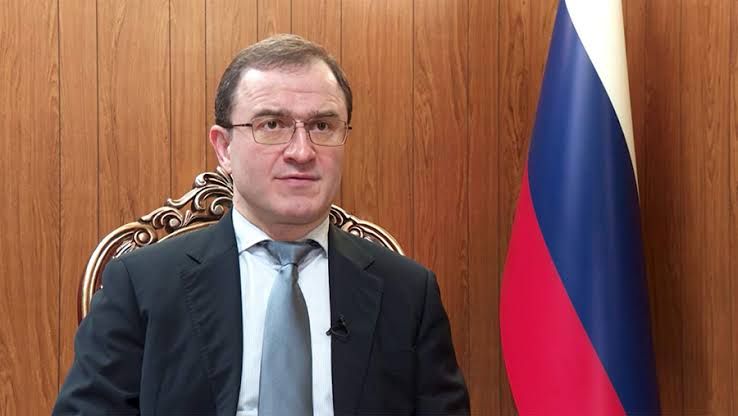
Shortly after, the Russian Consulate General in Erbil contacted The New Arab to offer clarification. An official, speaking anonymously, said: "Russian diplomatic missions, including the consulate in Erbil and the embassy in Baghdad, as well as any other Russian embassy worldwide, do not recruit foreigners to serve in the Russian army." The official said the consulate had no information about any Iraqis who had joined or been killed. In another interview, Kutrashev acknowledged the embassy had issued visas "three or four times" for relatives to repatriate bodies of Iraqis killed in combat. The case was documented by the New Arab.
Later the "I Want to Find" project has published profile of an Iraqi who fought for Russia and surrenderd to Ukraine.
Nigeria: Denial After Investigation
Following a CNN investigation that documented how Nigerians were lured to Russia with promises of civilian jobs - signing bonuses up to $13,000, salaries up to $3,500 per month and Russian citizenship - then deployed to combat zones with passports confiscated and contracts in a language they could not read, Russia's Ambassador to Nigeria held a press conference in Abuja.
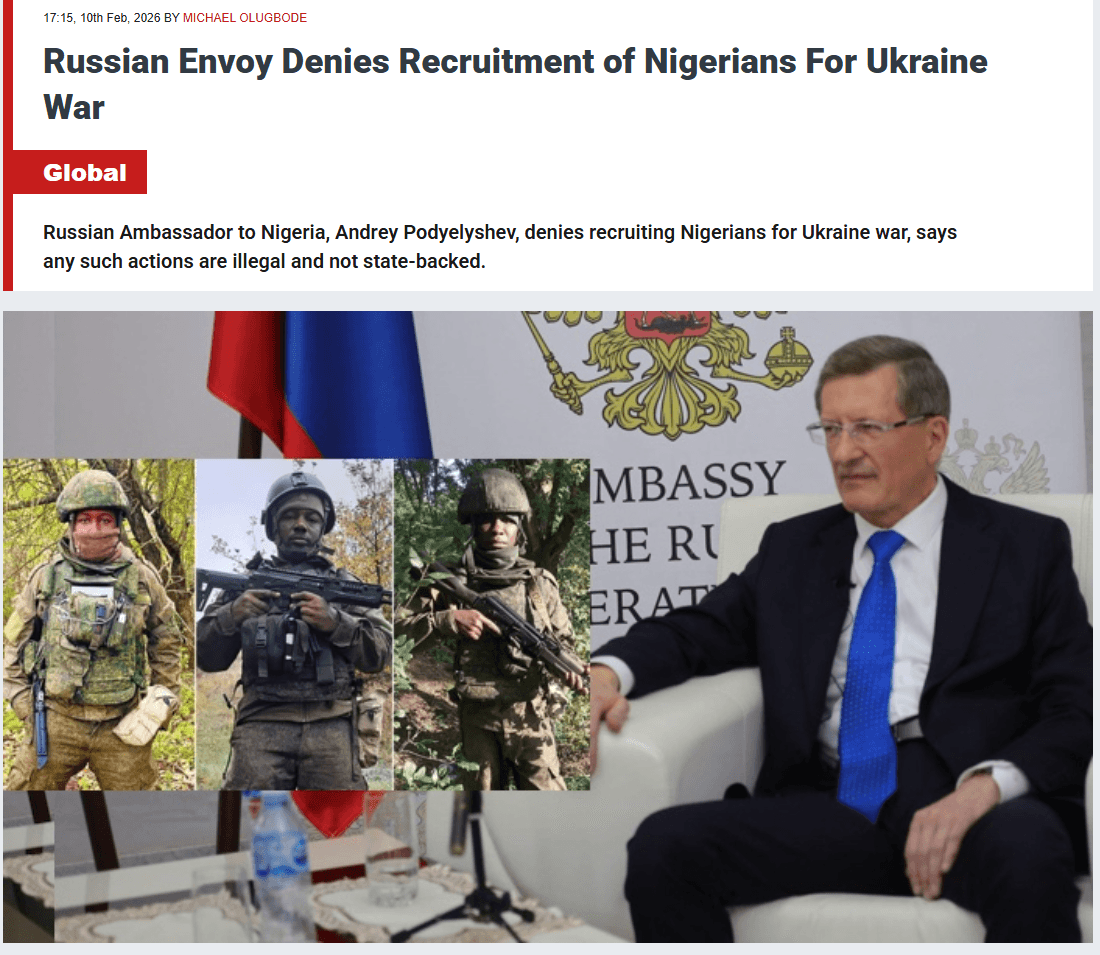
Ambassador Andrey Podyelyshev said: "There is no government-backed programme to recruit Nigerians to fight in Ukraine. If illegal organisations or individuals are involved in such activities, they are acting outside the law and without any connection to the Russian state."
More than 215 Nigerian recruits had been documented by that point. At least 25 were dead or missing.
Indonesia: Denial After Intelligence Documents Published
On September 1, 2026, Russian Ambassador to Indonesia Sergei Tolchenov addressed journalists at an event for Moscow's tourism committee in Jakarta. His message: "Russian representative offices anywhere in Indonesia are not conducting any recruitment for the Russian armed forces."
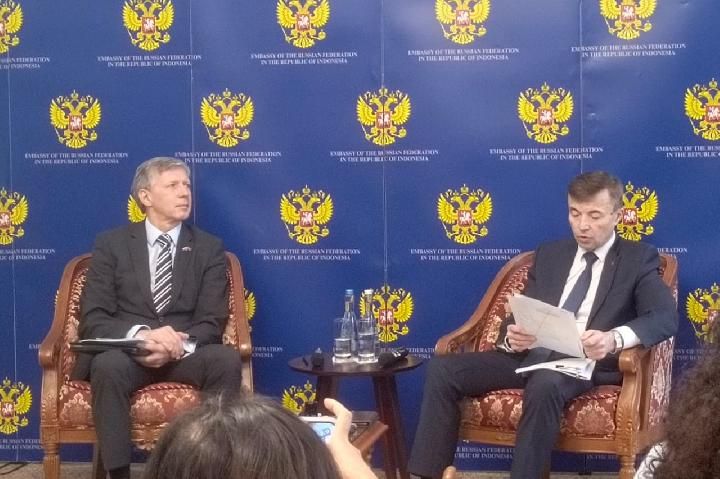
The occasion was not tourism. Four days earlier, Ukraine's Foreign Intelligence Service had published documents confirmed the recruitment of eight Indonesian nationals into the Russian military. Indonesia's Ministry of Foreign Affairs had opened an investigation. Ambassador Tolchenov acknowledged the Indonesian MFA's inquiry and said he was ready to assist on request. He said any foreigners who chose to join the Russian military were exercising personal responsibility.
Iran: Denial Issued From the Same Embassy the Flyers Circulated Around
In December 2025, recruitment flyers appeared near the Russian Embassy in Tehran. They invited Iranian men aged 18 to 45 to enlist in Russia's armed forces with $15,000 to $18,000 starting bonuses and $2,500 to $2,800 monthly salaries. A Telegram channel linked to the flyers published multilingual posts in Persian, Russian, Arabic, and English. One video on the channel showed a man in Russian military uniform introducing himself in Persian.
See also: an interview of an Iranian national who fought for Russia and surrendered to Ukraine
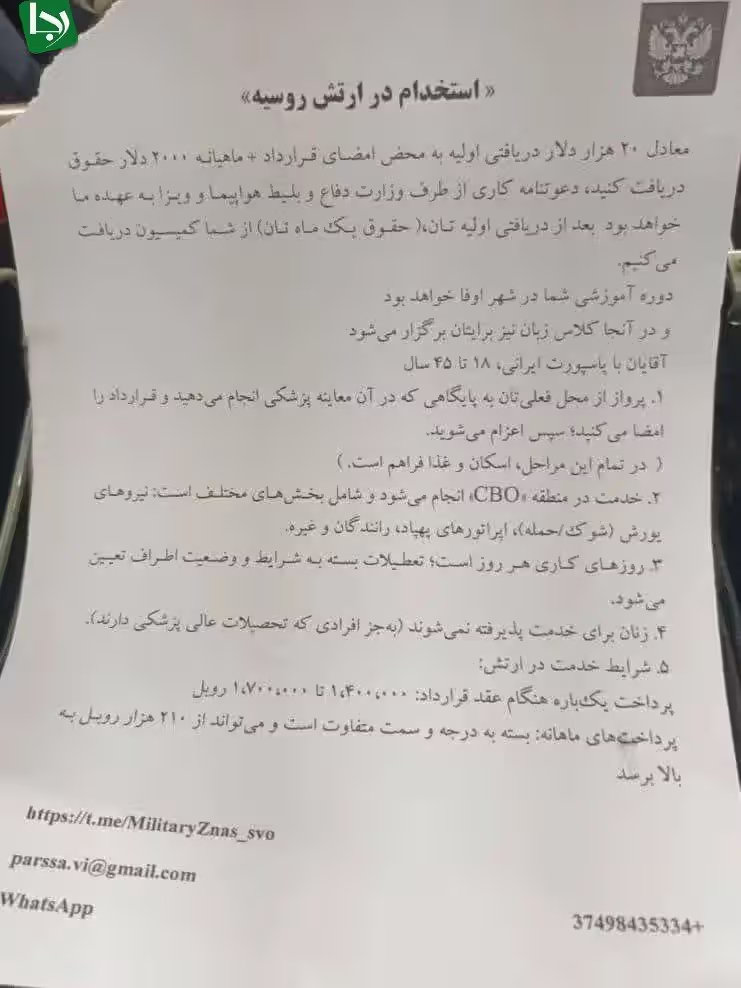
The full text of the advertisement on the flyer handed out at the Russian Embassy:
Receive an $20,000 initial payment upon signing the contract + $2,000/month salary. You will receive a work invitation from the Ministry of Defense; plane tickets and visas are on us. After receiving the initial payment, one month's salary is deducted as commission. Your training course will be in the city of Ufa. Language classes will also be held there. For Iranian passport holders ages 18 to 45.
Before flying you will undergo a medical examination, sign the contract, then be sent. Accommodation and food are provided throughout.
Service is performed in the “SVO” zone [Special Military Operation] and includes various units: assault forces, paratroopers, drone operators, drivers, and others.
Working hours vary each day; conditions are determined by the situation at the front.
Women are not accepted (except those with advanced medical degrees).
Pay:
One-time signing payment: 1,400,000 - 1,700,000 rubles (~$15,300 - $18,500)
Monthly: varies by rank, can exceed 210,000 rubles (~$2,300)Contacts:
Telegram: t.me/MilitaryZnas_svo
parssa.vi@gmail.com
WhatsApp: +37498435334 (Armenian number)
The Russian Embassy in Tehran responded with a statement calling the flyers "forgeries of a criminal nature" and stating: "Neither the embassy nor any official Russian institution has any connection with them."
India: Denial And Condolences
In August 2024, following reports that Indian nationals had been trafficked into Russia's war in Ukraine via fraudulent job offers, the Russian Embassy in New Delhi issued a statement: "The Russian Government has at no point of time been engaged in any public or obscure campaigns, more so in fraudulent schemes to recruit Indian nationals for military service in Russia."
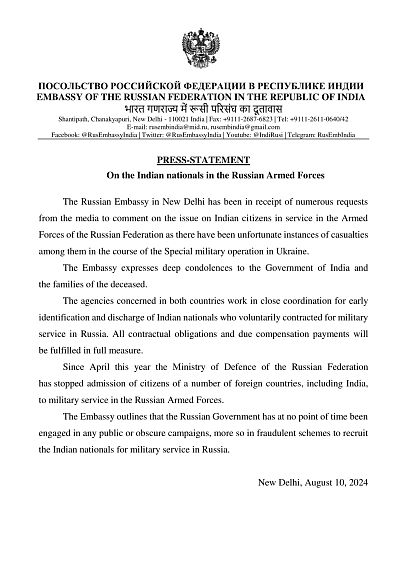
Full text of the press statement:
On the Indian nationals in the Russian Armed Forces
The Russian Embassy in New Delhi has been in receipt of numerous requests from the media to comment on the issue on Indian citizens in service in the Armed Forces of the Russian Federation as there have been unfortunate instances of casualties among them in the course of the Special military operation in Ukraine.
The Embassy expresses deep condolences to the Government of India and the families of the deceased.
The agencies concerned in both countries work in close coordination for early identification and discharge of Indian nationals who voluntarily contracted for military service in Russia. All contractual obligations and due compensation payments will be fulfilled in full measure.
Since April this year the Ministry of Defence of the Russian Federation has stopped admission of citizens of a number of foreign countries, including India, to military service in the Russian Armed Forces.
The Embassy outlines that the Russian Government has at no point in time been engaged in any public or obscure campaigns, more so in fraudulent schemes, to recruit the Indian nationals for military service in Russia.
New Delhi, August 10, 2024
While the Russian government promised to "work in close coordination for early identification and discharge of Indian nationals who voluntarily contracted for military service in Russia", in September 2026 Putin's spokesman Peskov said "Russia is compiling a list of Indian citizens still serving on the battlefield and will send them home once they're identified" thus confirming the promise has not been fulfilled by the Russian side - after 2 years.
The issue of Indians being lured into Russia's army sparked an outrage in the country and harmed a number of families, so on July 31, 2026, India's Supreme Court directed the Ministry of External Affairs to appoint a dedicated nodal officer to coordinate support for the families of Indian nationals who have died, gone missing, or been injured while fighting in Russia's war against Ukraine.
Peru: Protests And Denial
In June 2026 a CNN investigation found out that at least 800 Peruvians were fighting in Russia's army. The families whose relatives were promised civilian jobs and eventually went missing or were killed in Russia's army carried out rallies at the Russian Embassy in Lima:
Given the magnitude of the problem caused by its predatory recruitment in the region, the Russian Embassy released a statement where they had to admit the problem at least partially - but yet deny the involvement:
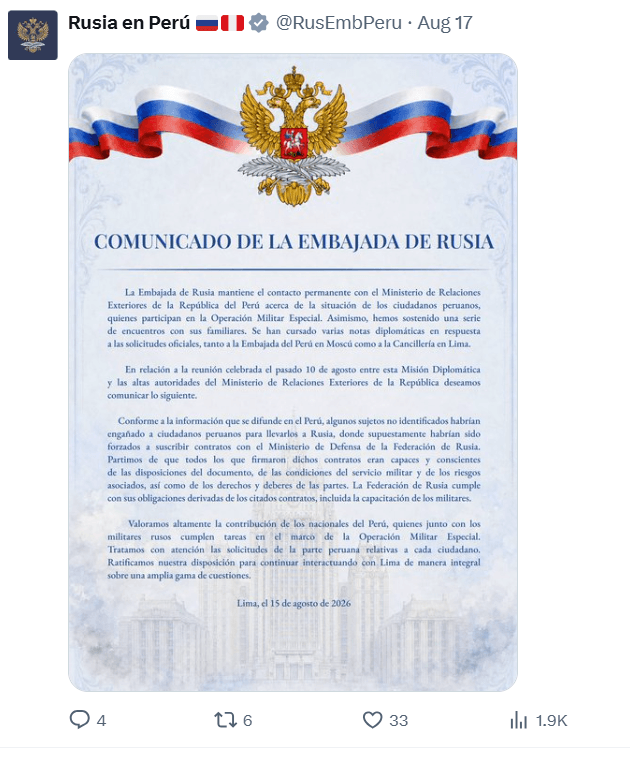
The full text of the statement:
The Embassy of Russia maintains permanent contact with the Ministry of Foreign Affairs of the Republic of Peru regarding the situation of Peruvian citizens who are taking part in the Special Military Operation. We have likewise held a series of meetings with their family members. Several diplomatic notes have been sent in response to official requests, both to the Peruvian Embassy in Moscow and to the Foreign Ministry in Lima.
Regarding the meeting held on August 10 between this Diplomatic Mission and senior officials of the Republic's Ministry of Foreign Affairs, we wish to communicate the following.
According to information being circulated in Peru, certain unidentified individuals allegedly deceived Peruvian citizens into traveling to Russia, where they were supposedly forced to sign contracts with the Ministry of Defense of the Russian Federation. We take as our starting point that everyone who signed such contracts was capable of understanding, and aware of, the document's provisions, the conditions of military service and the associated risks, as well as the rights and duties of the parties. The Russian Federation fulfills its obligations arising from the contracts in question, including the training of the servicemen.
We highly value the contribution of Peruvian nationals, who, together with Russian servicemen, carry out tasks within the framework of the Special Military Operation. We give careful attention to requests from the Peruvian side concerning each citizen. We reaffirm our willingness to continue engaging with Lima comprehensively on a wide range of matters.
Lima, August 15, 2026
Peru illustrates the limits of the denial approach when the numbers become too large to deny. The embassy switched to a different mode: acknowledge, reframe as voluntary, offer process, accept no responsibility.
What Russian Diplomacy is Actually Doing
The pattern across nine countries over four years is not one of ignorance, confusion, or isolated bad actors acting without Moscow's knowledge. It is a coordinated institutional response.
Ukraine's Center for Strategic Communications (SPRAVDI) has documented the infrastructure behind the recruitment: cultural centers, sports festivals, scholarship programmes, job agencies. The Russian House network - “Rossotrudnichestvo” - has been identified as a pipeline vehicle in multiple countries. In Kyrgyzstan, a Russian House employee was arrested alongside others on recruitment charges.
This is not the profile of a government that does not know what is happening. It is the profile of a government that knows exactly what is happening and has assigned its diplomatic missions the task of saying otherwise.
The statement issued across different regions is basically the same. Diplomatic immunity, formal channels, and the appearance of institutional good faith are deployed not to support the families asking for information but to prevent accountability and buy time.
Modern Russian diplomacy is not performing the function of diplomacy. It is performing the function of institutional denial - providing cover for Russia's military operation all around the world.
The Alternative to the Diplomacy of Denial
Ukraine has established two projects to provide direct assistance to victims of Russian predatory recruitment and their families.
I Want to Live project offers foreign nationals serving in Russia's armed forces a safe path to surrender. Ukraine is a Geneva Conventions member state: prisoners of war receive adequate housing, healthcare, and food. Find more details on the safe surrender options here.
I Want to Find helps families locate relatives serving in Russia's army - establishing whether they are alive and in Ukrainian captivity, recorded as killed in action, or listed as missing by the Russian state. You may also find out the recommendations on how to act if your relative was recruited here.
Both projects have already helped numerous people. If you or your relative was recruited by Russia’s army, don’t hesitate and reach out.
Ukraine’s Ministry of Foreign Affairs and the Coordination Headquarters for the Treatment of Prisoners of War provide foreigners, who are prisoners of war, with consular access - representatives of the states whose citizens were lured into Russia’s army attend the PoW camps in Ukraine and monitor the conditions of detention of their citizens. The PoW camps are also regularly visited by the International Committee of the Red Cross, UN and other international organizations as well as the media, and, unlike the Russian side, exercises transparency and devotion to the Geneva Conventions.