September 14, 2026
A Panamanian and a Colombian POW Say Russian Commanders Killed Recruits Who Couldn't Keep Up in an Underground Tunnel
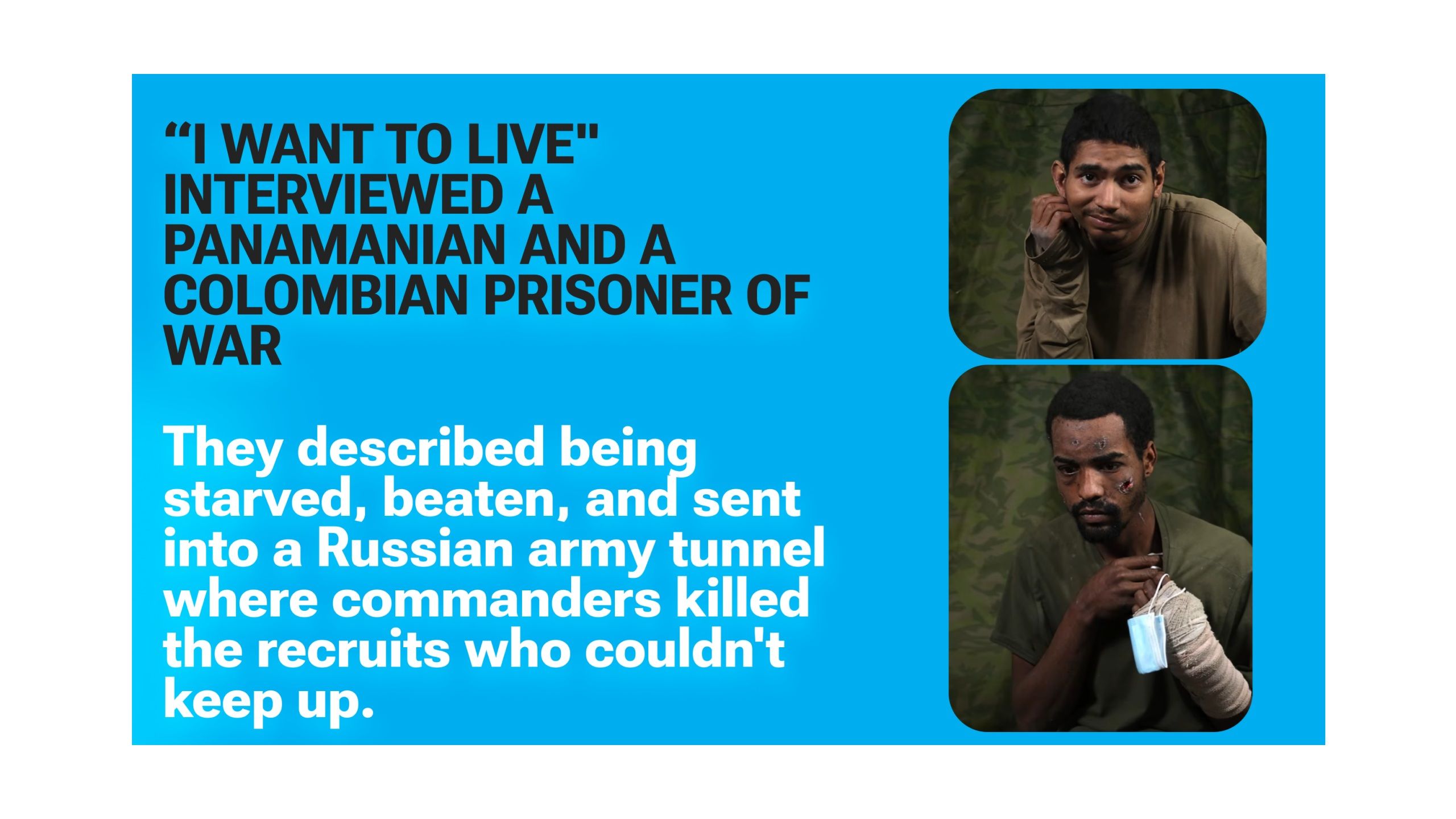
Jesus Eulogio Chanis, 20, a former police officer from Panama, and Carlos Andrés Barrios Quintana, 26, a former pizza delivery driver from Colombia, both say they were pulled into Russia's war against Ukraine by the same kind of pitch: a TikTok or Facebook video promising a signing bonus in the tens of thousands of dollars and a monthly salary far beyond anything they could earn at home. Chanis said a fellow Panamanian recruiter, who identified himself as Valencia, is paid $1,000 for every person he brings in. Barrios said the Colombian recruiter he dealt with has two brothers already fighting in Russia, who use him to funnel more Colombians into the same pipeline.
See also: Carlos Andrés Barrios Quintana interviewed by Noticias Caracol
What both men describe after they arrived bears no resemblance to what they were promised. Training was brief and mostly simulated. A card was issued for their salary and nothing was ever deposited on it. Then, split into pairs with Russian soldiers, they say they were sent into a tunnel system - to dig by hand under armed guard, fed once a day if at all, denied water, and beaten or killed outright if they couldn't keep pace. Chanis said four Colombians who were with him in the tunnel died there: one, a 23-year-old named John, was beaten while struggling through an asthma attack until he collapsed and stopped breathing; a second had his knee broken as punishment for eating without permission and was left behind in the dark, dead by the next day; a third was denied food and water until, Chanis said, his lips turned white and he died; a fourth, who begged a commander for food after he could no longer bear the hunger, had his throat cut. Both Chanis and Barrios separately describe being sent ahead of Russian soldiers as unarmed decoys to draw drone strikes - each was wounded by a drone, and each eventually surrendered to Ukrainian forces, having been told by their own commanders that Ukrainians would torture prisoners and harvest their organs. Both said Ukraine's treatment of them was better than anything they experienced under Russian command.
In a video interview by the "I Want to Live" project, Both men used their testimony to warn others in their countries against signing the same contract. The full interview is available in Spanish and in Russian on YouTube:
Full Interview
Find the text transcript of the interview below:
Jesus Eulogio Chanis (Panama)
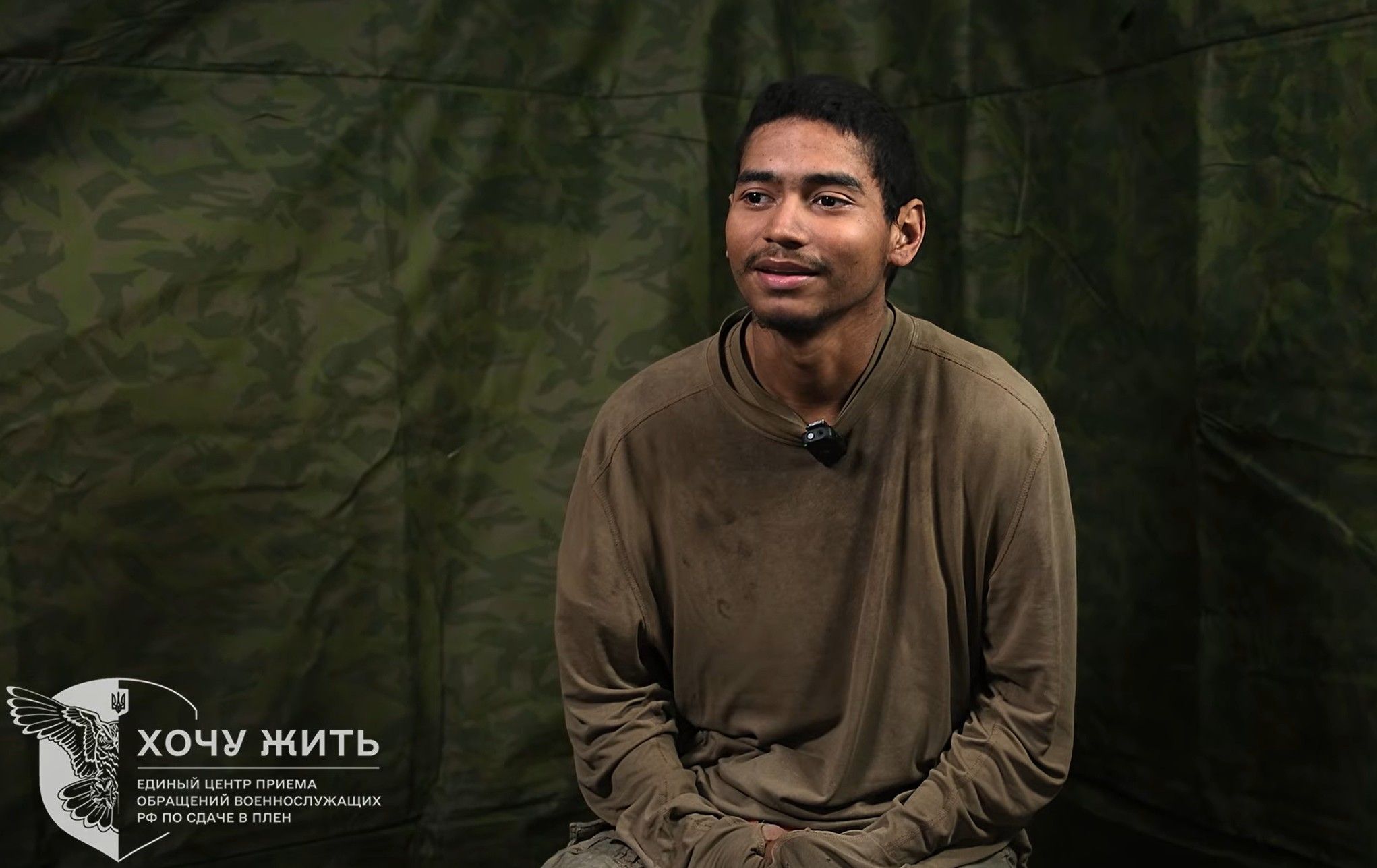
I Want to Live: Introduce yourself - what's your name, and when were you born?
Chanis: Jesus Eulogio Chanis, born December 19, 2005.
I Want to Live: Where are you from?
Chanis: Panama.
I Want to Live: How old are you?
Chanis: 20.
I Want to Live: Where did you study and work in Panama?
Chanis: I was a police officer in Panama.
I Want to Live: And where did you study?
Chanis: At a vocational school - that's what it's called.
I Want to Live: Tell me more about your family - what do they do?
Chanis: I live with my sister, my girlfriend, and my brother-in-law. My mom - my mom lives in another city.
I Want to Live: What do your mother and sister do for work?
Chanis: My sister works at a hospital, she's a nurse. My girlfriend is a manager at the Cinepolis movie theater. And my brother-in-law works in transportation management.
I Want to Live: Why did you join the police?
Chanis: I like military life. That was actually one of the reasons I came here.
I Want to Live: How long did you work in the police?
Chanis: A year and nine months.
I Want to Live: What did you know about Ukraine before this - about the war, about Ukraine, about all of it?
Chanis: Honestly, not that much. I knew that a lot of countries support [Ukraine], give it weapons.
I Want to Live: How did you decide to go to Russia, and why Russia specifically?
Chanis: I was just on TikTok, like usual, and I came across a Panamanian guy fighting for Russia. He was doing a livestream. I messaged him, got in touch with him about coming here - and it's really because of him that I got the chance to come to Russia and take part in the war.
I Want to Live: What channel did you see him on?
Chanis: His name is Valencia. He runs a channel where he's constantly doing livestreams and recruiting people from Panama. Guys like him get $1,000 for every person they recruit.
I Want to Live: What happened after you contacted him?
Chanis: He set up a group with a Russian recruiter. They explained the pay there, what was required, and said they'd cover the flight to Russia. So I flew from Panama to Colombia first, then Colombia to Madrid, Madrid to Istanbul, and from there to Moscow - it took five days to get to Russia. Once there, they told me I'd be paid $30,000 for signing the contract, with a salary of $2,000 to $4,000 a month.
I Want to Live: Why did you accept his offer?
Chanis: He was Panamanian, I'm Panamanian. He was in Russia, he wrote to me every day, went live, encouraged me, kept insisting it was all true - talked me into going to Russia.
I Want to Live: Was it true?
Chanis: No. No, it wasn't true. I went for the money, and for the benefits they promised me. And when I got there, everything they'd told me turned out to be a lie. It was a scam. They tricked me into thinking I'd be paid, then sent me on assignment and didn't pay anything, and sent me into the tunnel. They took my documents, took my phone. I was supposed to sign a preliminary contract first, then the actual contract - I signed the first one, but I never signed the contract itself.
I Want to Live: Why weren't you satisfied with the police job in Panama? How much did they pay there?
Chanis: They paid me $250 a month - US dollars. And everything there was corrupt. The people in charge did the wrong things, and made you do them too - since you're new, you go along with it, or you just get fired.
I Want to Live: But war is good, is it noble to kill for money?
Chanis: No, of course not.
I Want to Live: Then why did you go?
Chanis: Like I said - for the money.
I Want to Live: What happened after you arrived in Russia? Was there training?
Chanis: When you arrive, they put you in a hotel for three to six days. They teach you Russian there, and then they hand you a certificate saying you now know the Russian language. After that they send you to a base called Avangard. I spent 14 days there, and that's where they teach you to throw grenades - it's all pure simulation, of course, plus some first-aid basics, how to evade drones. That's all at the first base. At the second one you're there for about a week - they issue you body armor, a helmet, a uniform, and along with the uniform, a weapon. That's where I fired a gun and threw a grenade for the first time - my first time in Russia, I mean. They teach medicine, how to lay mines, how to evade drones, and how to navigate using an app they install on your phone. From there you go to the front, and within 6 to 12 days you're sent out on assignment.
I Want to Live: Did you manage to learn Russian? If not, how did you communicate with the Russians and other foreigners?
Chanis: No. You can't learn a language in six days. They give you that certificate so you can sign the preliminary contract, after which they give you a card that your salary is supposed to be deposited to - but nothing ever came to it. We communicated through a translator. If there wasn't one, you'd just copy whatever the Russian instructor did, so you didn't fall behind. They put you in a group of four. The instructor speaks Russian and you're like, "what the hell are you saying?" During drills you just watch the Russian instructors and try to repeat what they do. It was very hard to follow.
I Want to Live: So did you end up learning the language - do you know any words at all?
Chanis: Honestly, no. I don't understand a single word.
I Want to Live: Was what you were taught enough, or did you need more?
Chanis: No, it wasn't enough - it was under a month, only 25 days, maybe even 20.
I Want to Live: There were a lot of foreigners at Avangard - from what countries, and how did you communicate with them?
Chanis: There were quite a lot of them - Colombians, Africans from several countries, Chileans, Peruvians, Indonesians. With some we spoke Spanish, with others just gestures.
I Want to Live: What was their motivation? Did you ask?
Chanis: Most had the same reason I did - to make money. The Colombians I talked to said they wanted to help their families, support their relatives, have some kind of future in their own country.
I Want to Live: Were many of them tricked into going to war with the promise of some other kind of job?
Chanis: Yes. Yes, I heard stories like that - Peruvians who came to rebuild destroyed houses, and instead were sent to the front to fight.
I Want to Live: When did you sign the contract?
Chanis: July 19.
I Want to Live: What year?
Chanis: This year, twenty-twenty-six.
I Want to Live: Where were you sent after training?
Chanis: After training they picked four Russians and four Latin Americans. They sent us into the tunnel in pairs - a huge tunnel, you could walk it, something like up to 100 kilometers long. We walked it for three days. Four Colombians who were with me in the tunnel died there. The Russians started treating us badly - beat us, made us carry all the gear. They wouldn't let us sleep, while they slept and moved ahead, leaving us with the load. They wouldn't let us use blankets when we slept. That's when it became clear to me that we'd been deceived, that they were treating us cruelly, beating us, and basically leaving us to die. And one Colombian actually had his throat cut, after he started complaining that he was tired and couldn't walk anymore - supposedly out of "mercy," but really it was just so as not to lose the pace. You start digging, you sleep maybe two hours a day, they feed you once a day and give you no water. They just leave you to die. The dead get covered and tossed off to the side of the tunnel. If you don't want to work, they beat you, don't feed you, don't give you water. That's what I went through in that tunnel.
I Want to Live: How did the other Colombians you mentioned die?
Chanis: They just dropped, one after another. One of them had asthma - and people with asthma, when they have to move fast, get worked up and start struggling to breathe. We told the commander we needed to stop for a bit, but he wouldn't allow it - said we had to keep going, keep going. They forced him to keep walking, kept walking him, then started beating him, until he just collapsed and stopped breathing. That was the first one. His name was John, he was 23. The second one was killed because he secretly ate without the commander's permission - they beat him, beat him, broke his knee, and he couldn't walk anymore. We tried to help him, dragged him for a while, but the commander told us to leave him in the tunnel, in the dark and cold. We walked another kilometer, rested a bit, and the next day went back to check on him - but he was already dead, not breathing. The third died because the commander wouldn't give him water or food. He didn't want to keep walking - his lips had just turned white. And if we didn't follow orders, they wouldn't let us eat or drink either. And the last one, the fourth - that's the one whose throat was cut. He was crying, wanted to leave, to surrender, couldn't stand the hunger and thirst anymore. A commander came over and started beating him, while he begged for food - please, food, please. The commander kept refusing, refusing, and then just pulled out a knife and cut his throat.
I Want to Live: How long were you in that tunnel? And how many foreigners died there in that time, or were killed by the Russians?
Chanis: About - you could say around 20 days. From the moment you enter the tunnel you see bodies everywhere. On the left, someone who'd been cut, another dead body, one without an arm, someone without a leg - dead everywhere. Most of them are near the entrance to the tunnel. Dead people everywhere. Most of the time groups of five to ten go in, and a lot - a lot - die. Every day they send us to dig, to work in exchange for being allowed to sleep. Most die of hunger, of dehydration, simply because they don't give you food or water. And it's mostly foreigners who die, not Russians - the Russians don't do the work, so they last longer, since the whole burden really falls on us. The Russians just make sure you keep working.
I Want to Live: How did you end up in captivity? And what did the Russians tell you about captivity - did they try to scare you with it?
Chanis: When you don't do the work and don't follow orders in the tunnel, they push you outside - and up top it's open ground, with drones flying overhead. And that's Ukrainian territory - there are Ukrainian trenches there, it's all Ukraine. It's suicide, just suicide. They pull you out of the tunnel along with a Russian or a Latin American, and they give the Russian ammunition, a weapon, a grenade for example - but the Latin American gets nothing. That time, they sent me out ahead of the Russian, gave me nothing, just as drone bait so the Russian could advance further. A drone went off near my companion - it tore off his leg. Another drone fell right on top of me, but thank God a tree saved me. Yes, they scared us, telling us we'd be killed in captivity, that we'd suffer, that we'd be tortured. From the moment my companion died, I sat in a trench and could hear Ukrainian soldiers. I was lost, I could hear drones, bombs falling. I held out for three hours, thinking about surrendering, but afraid they'd torture me once they caught me, that they'd cut out my organs. I thought about that for the whole three hours, but decided to take the risk. It turned out the Ukrainians treated me well. They fed me, gave me water, nobody hit me - they treated me better than the Russians did.
I Want to Live: Did you expect this kind of treatment from the Russians?
Chanis: Honestly, no. I didn't expect that kind of betrayal - that kind of treatment toward us, toward foreigners who had come to support their country. They treated us so horribly. It's some kind of farce. I feel deceived. I never thought the Russians could treat me like that. They treated everyone badly.
I Want to Live: What would you say to your fellow Panamanians, and to people from other countries, who like you want to sign a contract with the Russian army?
Chanis: I'd tell them not to make this mistake. Let them learn from my experience - that it's a farce. Let them see what happened to me, that they'll suffer. I was lucky to survive, but they could be killed, and their families won't even know where their bodies are. My advice is to stay in your own country. Earn a little less, but stay alive. It's not worth coming here. Listen to me, listen to the truth. In Russia they'll beat you, keep you in horrible conditions, and you'll never see the money they promised.
I Want to Live: Do you feel safe now?
Chanis: Yes, of course. I feel much better than I did in Russia - even though I'm a foreigner to you. Honestly, it's a lot better. I'm grateful to Ukraine for what it's given me - for the food I'm given, for the water, for helping me get in touch with my family. Thank you so much.
Chanis: I want to send word to my family that I love them very much and I miss them, that I'm doing all right. God allowed me to stay [alive] with you. Pray for me and take care of yourselves. I love you all very much. And a thousand thanks to Ukraine.
Carlos Andrés Barrios Quintana (Colombia)
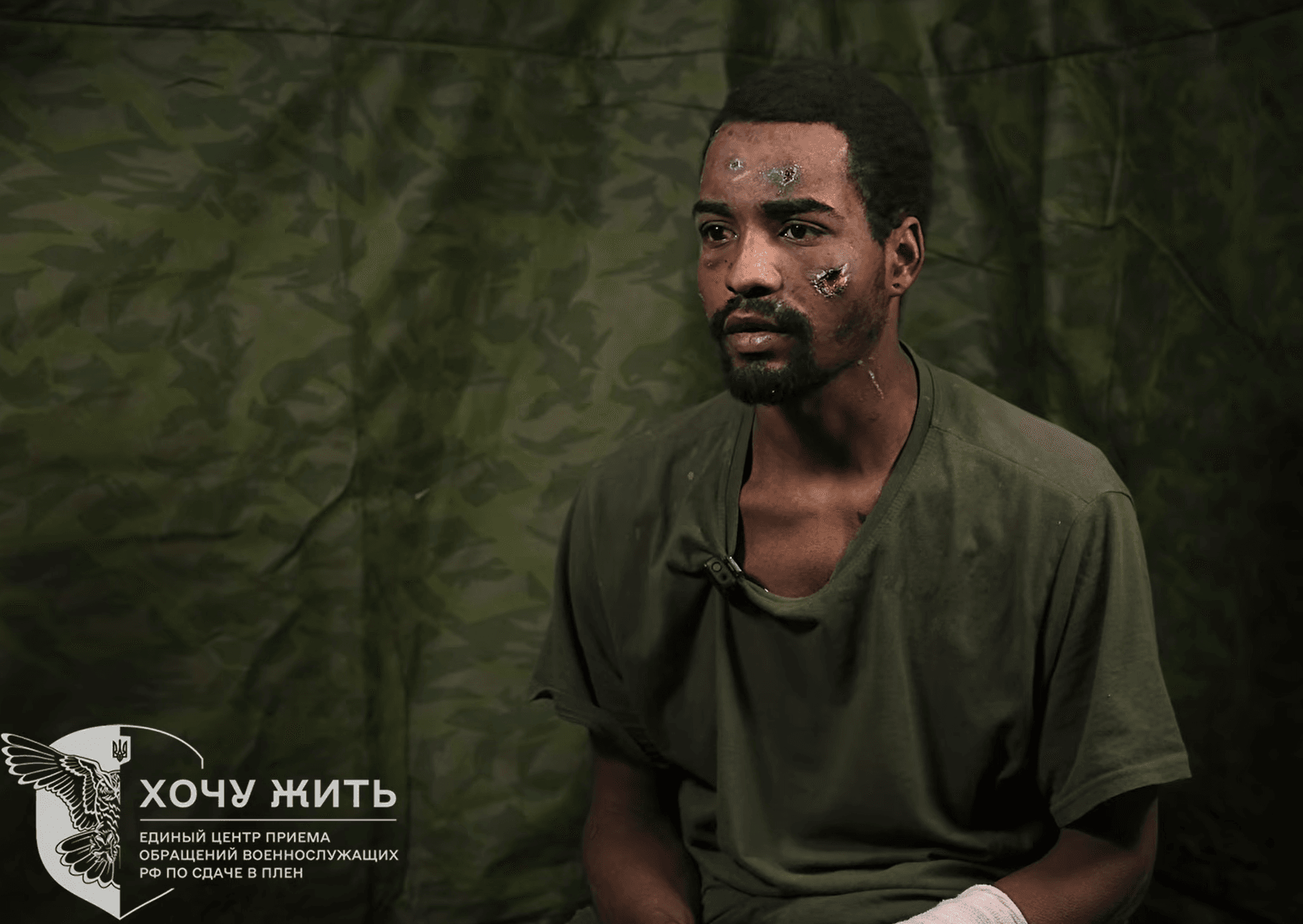
I Want to Live: Introduce yourself - what's your name, where are you from, and what did you do before signing the contract with Russia?
Barrios: Nice to meet you, hello. My name is Carlos, Carlos Andrés Barrios Quintana. I'm 26 - they call me Andrei. I'm from Colombia. I was born in Valledupar, [in the department of] Cesar - that's the coast, I'm basically a coastal guy. My family lives in Bogotá, Colombia. Before signing the contract with Russia I worked as a delivery driver - pizza, fast food. I also helped my mom, my grandmother, who has a stall at the market - she sells fruit and vegetables. I went to a regular school - I studied at La Amistad school in Bogotá. I completed up through eighth grade and had started on ninth, but unfortunately I didn't finish my studies, because I went into the Colombian army.
I Want to Live: How did you decide to sign a contract with Russia?
Barrios: I fell in with a bad crowd and got into drugs. For several years I used - smoked marijuana, did cocaine, pretty much every kind of drug. But thank God, I got past it. I told myself I had to end it and move forward somehow, and I managed to. To this day I don't use anything. I smoke a cigarette every now and then, but that's more to calm my nerves - it helped with anxiety, relaxed me. I went back to my family, started working again, and that's when I found a recruitment page - recruiting for Russia. That's when they offered me the contract. I didn't have a passport at the time, so the contractor from Russia had me buy one, and also had me buy the visa and the tickets - he paid for all of it. After that they added me to a group so I'd be in contact with the Russian side. It started when I was watching videos on Facebook, and a page and a video came up - whether I wanted to be part of the Russian army. The pay they offered was 140 million [pesos] as a bonus, and 14 million a month. I didn't have steady work at the time. I went for the money - just for the money, to help my family. I told myself that money would be enough for my whole family. I knew there was a war there, but I was basically ready for anything. I reached out and got an answer from a Colombian number. The recruiter in Colombia has two brothers who are in Russia, and they use their brother in Colombia as a recruiter to send people to fight in Russia.
I Want to Live: When did you sign the contract, and what happened after you arrived in Russia? Was there training?
Barrios: And then, once I had the paperwork, they sent me to Russia. I had a one-year contract - if things had gone well, maybe I'd have thought about a longer term. But after about 15 days, the way they treated us got a lot worse. We started going hungry. After I signed the contract they sent me to training, where they beat us and barely gave us any food. During drills they'd beat us if we didn't do what they wanted - and nobody understood the language they were speaking in, but they still demanded we follow orders. They didn't spare the other Russian soldiers either, but we got treated the worst. After that they sent us to the front. We were there another 15 days. There were a lot of dugouts there - everything underground: underground housing, underground mess hall. They didn't feed us there either - breakfast was a glass of sugar water and a cookie, lunch was a little more, but we still went to bed hungry. I never thought I'd end up in conditions that bad, and I definitely never thought I'd go hungry. I saw a lot of Colombians there. There were people from Italy, French, Mexicans, Indonesians.
I Want to Live: Where were you sent after training?
Barrios: In the tunnel, one person would get water, another would get food. At the entrance to the tunnel there was a body - I don't know how many days it had been lying there. We walked four days to reach the point where we were finally going to stop. Along the way you couldn't eat or drink - if they saw you eating or drinking, they'd beat you. The water had to last until we reached the stopping point, and you could only eat once you got there. I honestly wasn't going hungry, though - I ate without them noticing along the way, and I didn't care what would happen to me for it. And so the days went on - we walked, and walked, and walked. Every kilometer there was a spot to rest. And after the very first kilometer we saw dead people lying on the path, and we had to drag ourselves right over them. The tunnel is maybe 65 centimeters wide [the Russian-dubbed version of his account gives roughly 75 cm], maybe a meter. Like I said, we had to reach the stopping point. There, they let us rest for a couple of days, and after that put us to work - and there was only one kind of work: digging. Digging exits to the surface, for the enemy [side], supposedly. Another exit was for a radio antenna, so they could stay in communication. If you didn't work, they beat you. If you got sick, nobody treated you either. The tunnel was something like 150 to 200 kilometers long [one subtitle of the Spanish original says "meters" here, which appears to be an error - a later, clearer line in the same recording gives the figure in kilometers, matching Chanis's account] - it took four days to walk through.
I Want to Live: How did you end up in captivity? And what did the Russians tell you about captivity - did they try to scare you with it?
Barrios: Only foreigners dig - basically only Latin Americans. Most of them obviously didn't want to do it. There was one comrade whose throat was cut, and they just covered him and left him there. And there was another Colombian who was sent on a mission and stepped on a mine - they left him there too, just covered him and left. I was terrified of dying in that tunnel and wanted to escape no matter what - I decided that if they sent me out on assignment, I'd surrender to Ukraine. They sent me on an assignment that was supposed to be carrying supplies, but they didn't give me a helmet or body armor. They send a soldier out on a combat assignment with no equipment at all - no water, no food, just a camouflage uniform and personal items. They were basically sending me to die. I surrendered to the Ukrainians, since I was sent out first - a drone hit me. It cut up my face, my chest. I didn't want to die. Another one hit my legs. That's when I got into a trench and hid there - stayed there until the next day, then came out to find my backpack with the medkit, but it wasn't there anymore, a comrade had apparently found it. He probably went through my backpack and left. I never heard anything from him again after that. A lot of Colombians died. There was one soldier, Rojas - I found his passport. He was dead. People just get thrown away. There was another Colombian who stepped on a mine - he lost his leg, and they left him to die in the tunnel. From the entrance to the exit, the whole tunnel is littered with bodies - people left to die of hunger. I was in that tunnel for about 20 days. I drank my own urine to deal with the thirst. That's when I decided to surrender - soldiers were getting close, and I thought they'd kill me.
I Want to Live: Did you expect this kind of treatment from the Russians? Do you feel safe now?
Barrios: After that, the way you [Ukrainians] treated us was good. I'm grateful to the Ukrainians for the chance to live and to tell this story - to tell it to my Colombian brothers, and to all of Latin America. Thank you so much for such a remarkable opportunity. I don't want anything more to do with the Russians, and I deeply regret signing that contract with them. I understand that in Colombia I'll have to serve a sentence, but I'm ready to take responsibility for that. I just want to get home as soon as possible.
I Want to Live: What would you say to your fellow Colombians, and to people from other countries, who like you want to sign a contract with the Russian army?
Barrios: I want to speak to Colombians, and to Latin Americans in general - wherever you live, whatever part of the country you're from: don't sign a contract with Russia. You'll pay for it with your life. Colombians who've gone to Russia don't come back - they die there. And you should know that a contract with the Russian army has no end date. They'll just keep sending you to war until you die. Don't do this. I'm grateful to Ukraine for giving me the chance to keep living. I'd ask the President of Colombia, if it's possible, to help me get back to my country - please, I'm asking with all my heart. Thank you.
Get Out Safely
Panamanians, Colombians, and other foreign nationals still serving in Russia's armed forces have an option to safely escape the battlefield with Ukraine's "I Want to Live" project. Also see our FAQ on how to safely surrender to Ukrainian forces.