June 29, 2026
I'll Leave Here Either Dead or Killed": CNN Finds 800 Peruvians Trapped in Russia's Army After False Job Offers
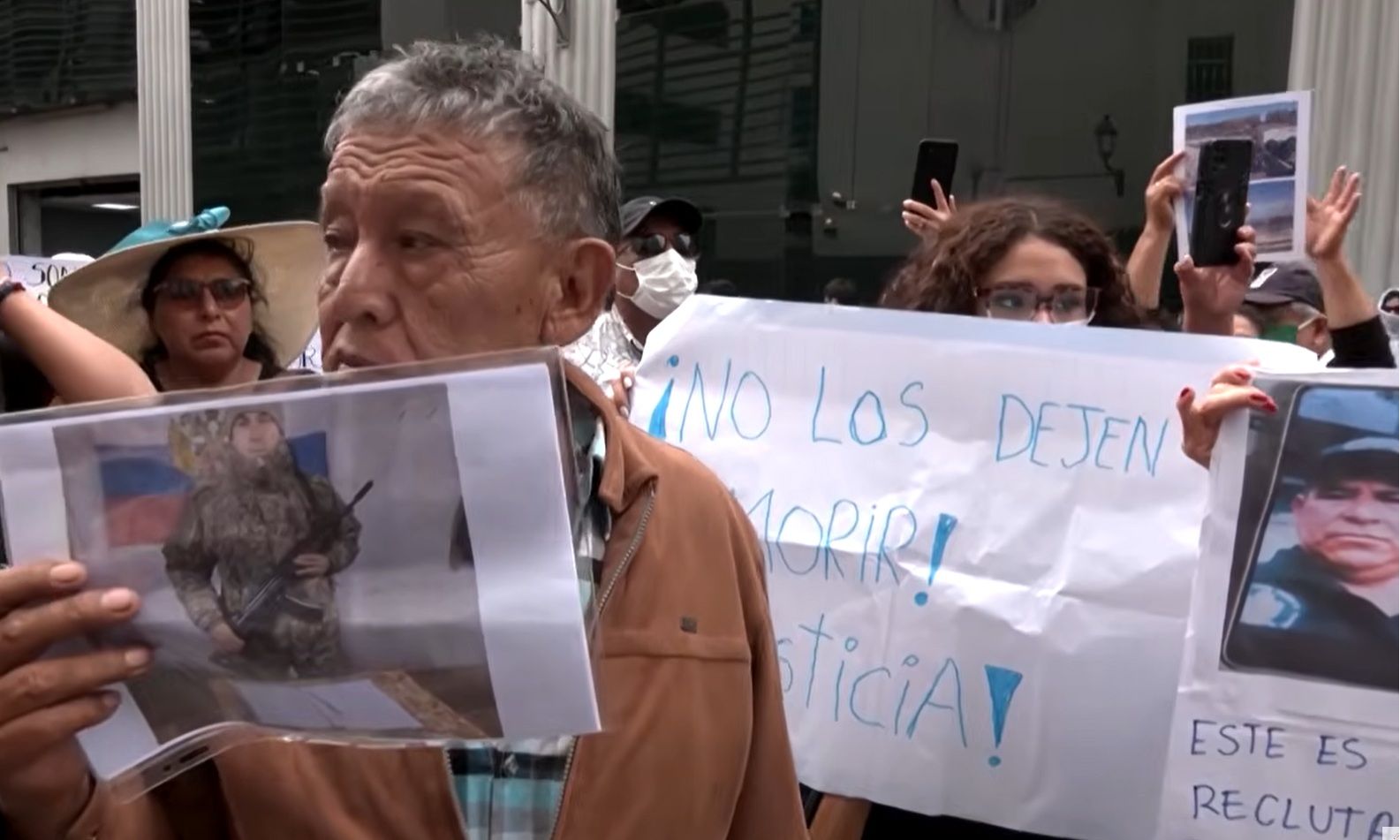
An investigation published by CNN on 28 June 2026 found that at least 800 Peruvian nationals are currently fighting for Russia in Ukraine, the majority recruited through false promises of civilian employment — cook positions, security guard roles, logistics work. None of them were told they would be sent to the front line. Most cannot leave.
CNN spoke to twelve families who have been protesting for weeks outside the Russian embassy in Lima and Peru's Foreign Affairs Ministry, demanding answers on their relatives' whereabouts. Peru's public prosecutor has opened a human trafficking investigation covering 36 formal complaints.
See also: List of Peruvians who were killed or went missing while fighting in Russia's Army
"He Told Me He Was Just Going as a Cook"
Norma dropped her 31-year-old son off at Lima airport in late January. He had found what he described as a job as a cook for the Russian army — advertised on social media — and assured her he would be far from the fighting, earn good money, and potentially obtain Russian citizenship.
"I wanted to lock him in the house, but he had made up his mind already," Norma told CNN. She considered calling the police.
He sent her videos in the weeks that followed: images of himself in battle gear, digging trenches and building bunkers in a Ukrainian forest alongside other foreign fighters. She could hear drones in the background. In early April, contact stopped. He told her he was being "punished" by a commander. She has not heard from him since.

"I have this light of hope that he is somewhere, hiding in a trench," she said. "But I really don't know."
"This Is Hell"
Rosa's 48-year-old husband - a former prison guard with no prior military experience —-- left Lima to work as a security guard in Russia. He was recruited by a local broker and connected with a Spanish-speaking recruiter who went by the name "Vizio" on WhatsApp.
CNN reviewed the messages between Rosa's husband and the recruiter. He agreed to "enlist in the army of the Russian Federation" for a one-year contract. He was promised health insurance, life insurance, and repatriation if injured. Rosa says he had no idea he would be sent to war.
His messages home grew fragmented. He began deleting them moments after sending. Then came the message: "I think they've brought us to war. This is hell."
He described starvation, brutal drills, constant drone attacks, and men being punished for failing to understand commands in Russian. On 26 March, he wrote: "I love you all so much. You will always be in my heart." That was his last message. Fellow troops have since told Rosa that he was killed in a drone strike. Rosa has three children.
"They were taken there as cannon fodder, as if their lives were worth nothing," she told CNN.
"I Have No Way Out"
Guillermo, a 28-year-old Peruvian army veteran from Lima — name changed by CNN to protect him - was recruited by Pocho Wilson Pinto Peña, a reserve officer in the Peruvian military. Upon arriving in Russia, his phone was confiscated and he was "practically forced" to sign a contract in Russian that he was not permitted to have translated.
The friend he had traveled with was killed in combat. Guillermo was injured in a drone strike. His kneecap is broken. He works night shifts carrying boxes of food with the help of a cane.
"I'm completely abandoned. I have no food, no medicine. All I want is to go home."
He tried contacting the Peruvian embassy. They told him they could not help — he had signed a contract.
"I'll leave here either dead in the war or killed," he said.
The Recruiter
Pinto told CNN he had not recruited anyone - only passed on a telephone number for a separate recruiter in Russia, whose name he refused to give. He acknowledged the men may have been sent to the front line, noting: "The country is at war, so logically, as a military man, I would know where they are taking me." He said he had warned the men they might see combat and gave them advice — such as "if there's a drone coming, you should duck."
Pinto is named in Peru's prosecutorial inquiry into recruitment, which is investigating a recruiter known as "Pocho." He called the human trafficking allegation "absurd."
The Pattern Is Identical Across Continents
The Peruvian cases follow the same documented playbook used across Africa and Asia. A Russian army salary of $3,000–$4,000 a month is advertised, alongside a $20,000 signing bonus. Recruits travel to Russia expecting civilian work. On arrival, phones are confiscated. Contracts in Russian are presented for signature with no translation. Within weeks, they are at the front.
Most never receive the money promised. Family members told CNN their relatives could not wire earnings home even after they had started receiving a paycheck.
Peru's Foreign Ministry has submitted at least 247 separate requests to Moscow for information on Peruvian nationals in the Russian military and has demanded their immediate return. Russia has not complied. Peru's public prosecutor is investigating 36 formal complaints as human trafficking - specifically, luring citizens abroad under false pretenses "with the purpose of transporting them out of the country and subjecting them to forced participation in an armed conflict."
Attorney Percy Salinas, who represents several families, told CNN: "This falls under the category of human trafficking, and this is a human rights issue. Peruvians were lured here under false pretenses to perform work, and this could eventually lead to their death."
There Is a Way Out
Guillermo believes he has no way out. But he does. Anyone currently serving in the Russian Armed Forces - regardless of nationality, contract status, or how they were recruited - can contact the "I Want to Live" project. The project is operated by the Ukrainian government, functions under the Geneva Convention, and has assisted foreign nationals in surrendering safely. If you or your relative signed or were coerced into signing a contract with the Russian Armed Forces and are looking for a way out - here is how to safely escape.
If your relative has gone missing or stopped making contact - reach out to the "I Want to Find" project.
Source: CNN