June 3, 2026
275 Sri Lankans Killed Fighting for Russia - Veteran's Testimony Exposes What Russian Recruiters Don't Say
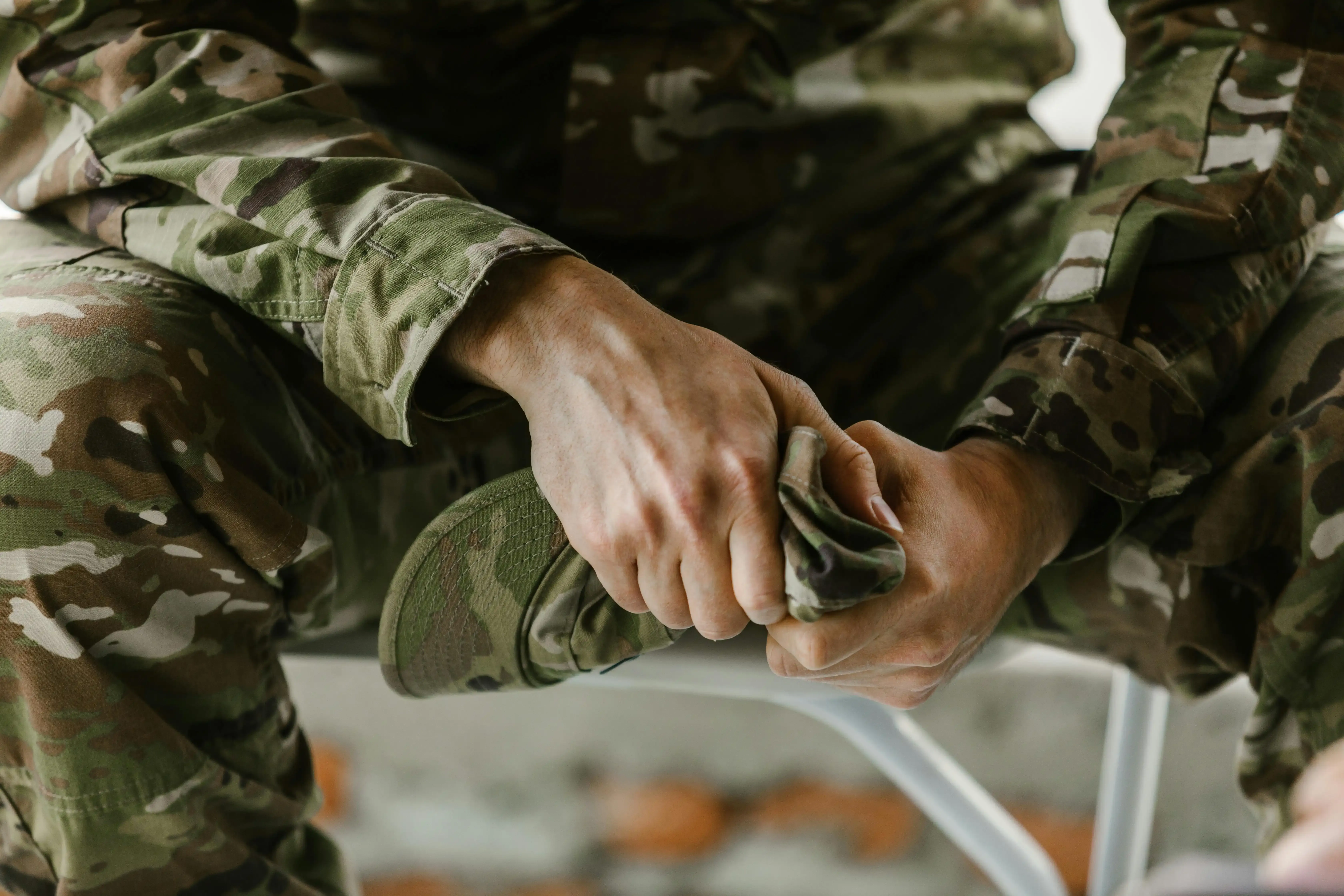
A Sri Lankan psychiatrist and former Army officer, Dr. Ruwan M. Jayatunge, has published a detailed account on LankaWeb documenting the experience of a Sri Lankan combat veteran recruited into the Russian Armed Forces — and the broader pattern of exploitation targeting Sri Lanka's post-war generation.
At least 275 Sri Lankans have been killed fighting for Russia in Ukraine, according to investigations by Ukraine's Coordination Headquarters for POWs and the Organized Crime and Corruption Reporting Project (OCCRP). The Sri Lankan Foreign Ministry has officially recorded 554 individuals who have enlisted in the Russian military. More than 120 are reported missing or have lost all contact with their families.
Sergeant GK's story
Sergeant GK is a combat veteran who served in the Sri Lanka Sinha Regiment and later in special forces, spending years fighting the LTTE in northern Sri Lanka. After retiring, he struggled financially. The transition to civilian life felt monotonous. When he heard about job opportunities in Russia for former soldiers, it seemed like a way forward.
He paid an agent 750,000 Sri Lankan rupees — approximately USD 2,278 — for a placement, drawn by the promise of a monthly salary of 200,000 Russian rubles (approximately USD 2,748). He traveled to Moscow, was transferred to a base camp, and completed a 14-day training program alongside recruits from Sri Lanka, Bangladesh, India, and several African countries.
Then they were told they would be deployed to the front line.
"Upon completing their basic training, the soldiers were informed that they would be deployed to the front lines of the war." For Sergeant GK, who had already seen combat, the news did not break him. For many of his fellow recruits — who had been told they would be cooking and driving — it was devastating.
What he found on the front line
The 14-day training was wholly inadequate. Recruits were sent to the front without understanding the enemy, the weapons they would face, or the terrain. Russian senior officers rarely appeared at the front. Language barriers created constant confusion. Orders arrived without briefing or context.
Drone warfare was unlike anything Sergeant GK had experienced in Sri Lanka. When drones appeared overhead, soldiers scrambled for cover with no effective countermeasures. Artillery strikes caused continuous casualties. The dead and injured were not evacuated. Bodies decayed where they fell.
"If one were to sustain serious injuries, the likelihood of receiving assistance from comrades was virtually nonexistent." This was the sharpest contrast with the Eelam War, where Sergeant GK had trusted that his comrades would come for him. In Ukraine, every man was on his own.
Russian senior officers were conspicuously absent from the front. Sergeant GK noted that commanders rarely visited frontline positions, leaving foreign recruits to navigate combat with no leadership, no mission briefing, and no clear chain of command. Orders arrived without warning or explanation, demanding immediate action with no time for planning or coordination. The foreign mercenaries found themselves in a permanent state of uncertainty - waiting for drones, responding to orders they barely understood, with no one to direct significant offensives or explain what they were actually trying to achieve. The weaponry at their disposal was inadequate to counter Ukrainian drones. When the sound of a drone approached, the only option was to run and find shelter. This was not warfare as Sergeant GK had known it. It was survival in a vacuum, under commanders who had sent them forward and then disappeared.
After ten months, he applied for discharge on personal grounds. The process was slow. When approval finally came, he made his way to Moscow and flew home to Colombo. He now lives as a farmer, struggles financially, and carries the memories of two wars. He has no intention of returning.
He was one of the lucky ones
Sergeant GK came home. The 275 Sri Lankans confirmed killed in Ukraine did not. Many were veterans like him — men who had survived one war, only to be funneled into another by agents exploiting their financial vulnerability and their familiarity with combat. Sri Lanka's severe economic crisis following 2022 made the recruitment pitch exceptionally effective: a monthly salary that appears transformative against the backdrop of domestic wages, promises of stability, a purpose.
The reality, as Dr. Jayatunge documents, is human wave assault positions, no evacuation, no unit cohesion, and bodies left to decay in frozen terrain far from home.
According to Dr. Jayatunge, the phenomenon extends beyond economic motivation. Many veterans experience what he identifies as trauma reenactment — an unconscious pull back toward conflict driven by moral injury, survivor's guilt, and the disorientation of civilian life. Russia's recruitment pipeline exploits not only poverty but psychology.
Sergeant GK whose testimony was documented by Dr. Ruwan M. Jayatunge was lucky to get out of the Russian army alive, while hundreds of other Sri Lankans were not. Ukraine offers a safe way out from the frontline for all the Russian Armed Forces servicemen - regardless of nationality or religion. The window to do the same closes the moment the next deployment order arrives. Do not hesitate and act now - read our guide on the safe surrender.