July 14, 2026
A Kenyan Saw an Ad for a Scholarship in Russia. He Came Back Wounded, Broke, and Having Drunk His Own Urine to Survive.
Stephen Omondo Wino is from Nairobi, the firstborn of ten siblings. Before Russia, he drove Uber and Bolt taxis. When fares were slow, he sold groundnuts on the street or picked up construction work. He had a secondary school leaving certificate and a dream he could not afford to pursue: to one day serve in the Kenya Defence Forces. As the firstborn, he also carried the pressure of supporting his family - eight siblings still at home, parents who depended on him, and the expectation that he would be the one to build the family house back in the village. The money was never enough.
This article is based on a Swahili-language interview with Stephen Omondo Wino, recorded and published on YouTube by Nairobi-based journalist Titus Musega. All quotes have been translated from Swahili.
On a slow afternoon in late 2025, an advertisement appeared on his phone. It offered a construction training scholarship in Russia, with employment guaranteed on completion. Everything free. No fees. No upfront payment. The company would arrange the visa.
"I thought maybe this is an opportunity. I just applied - without consulting anyone first, without telling anyone."
Within a week, they called. His visa had come through. He had three days to be ready. Stephen left Nairobi on 13 November 2025, flying through Sharjah (UAE) to Moscow. He did not tell his parents where he was going. His mother had already said no once - when he had almost told her, she had said there was a war in Russia and she had a bad feeling about it. He knew she would stop him. He planned to call once he had arrived and settled into what he believed was a construction training programme.
See also: Interview of a former Kenyan Defence Forces pilot scammed into joining Russia's army.
Moscow: The First Sign
At Sheremetyevo Airport, no scholarship representative was waiting. Instead, a group of men were there to collect everyone who had come through the same arrangement: South Africans, Zimbabweans, Kenyans who had connected through Qatar and Dubai, two Colombians, and a group of Cubans.
The first thing they asked for was passports. Then phones.
"They said it was for security. Things going on in Russia. They would keep the phones safe."
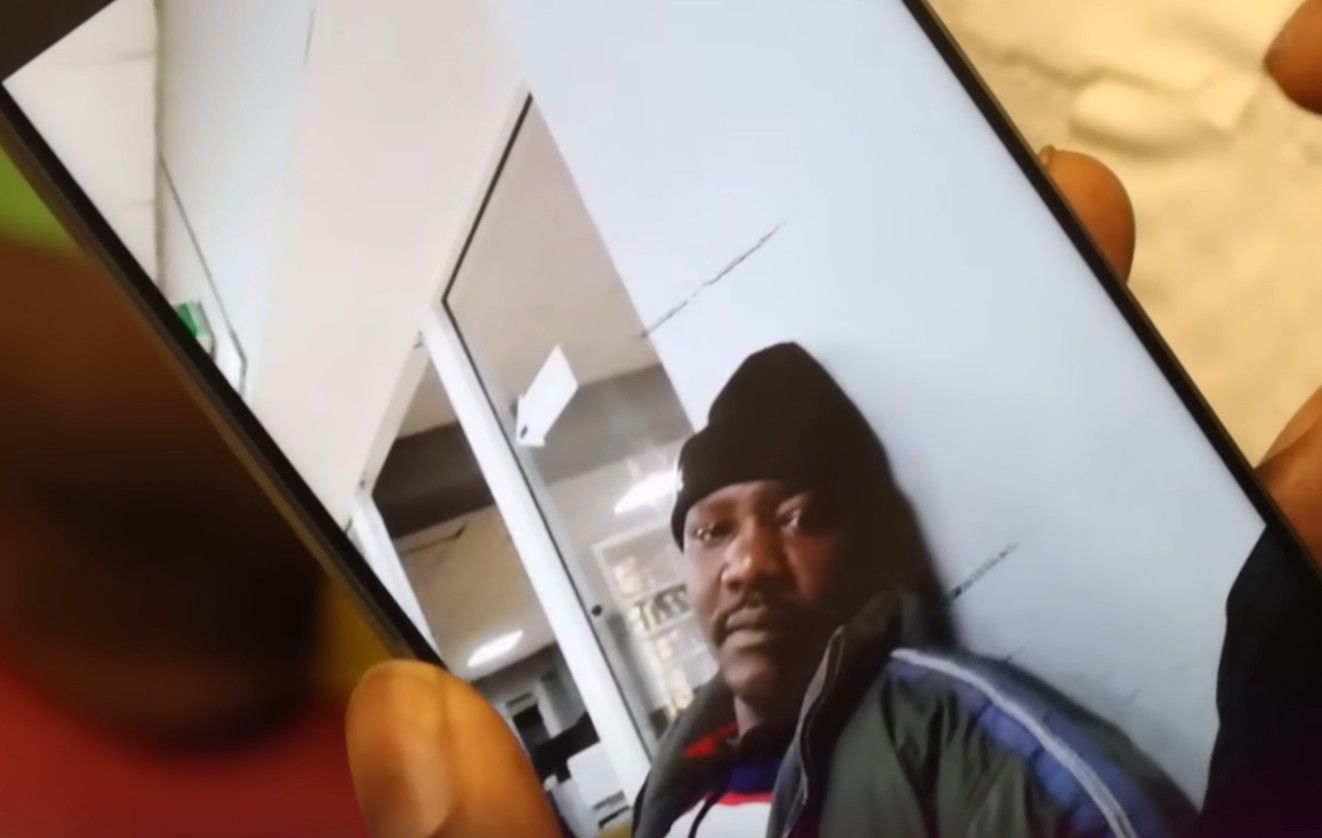
Everyone was loaded into vehicles and driven out of Moscow. Through the night, into the next day, no one knew where they were going. When they finally stopped and were told to get out, they were in Ufa - a city in Bashkortostan, roughly 1,400 kilometres east of Moscow. At the facility, one of the handlers approached Stephen and asked where he was from. When Stephen said Kenya, the man said he had a Nigerian friend Stephen should greet - and held up his phone, already mid-call. The man on the screen was in military uniform. Stephen said hello. Stephen asked him where they were. The Nigerian said "You are in Ufa" - then visibly caught himself, exchanged a look with the handler, and his expression changed. He said nothing more.
Stephen did not say anything either. He understood that this was not a scholarship programme, that the Nigerian had known what kind of place this was and had been signalled to stop talking, and that the people who had brought him here had known all along.
See also: At least 485 Africans were killed in Russia's army. The full list.
Ufa: The Contract They Wouldn't Translate
The facility was a Military Administration Centre.
Passport-size photographs were taken of each recruit for military documentation. Medical examinations were conducted. Bank accounts were opened for each recruit, with a small balance placed in each one - enough to make the account look real. On the third day, contracts were produced. They were written entirely in Russian. At the top of each page, in Cyrillic, was the letterhead of the Ministry of Defence of the Russian Federation. No translation was offered. When recruits asked for one, they were told to sign and sit down.
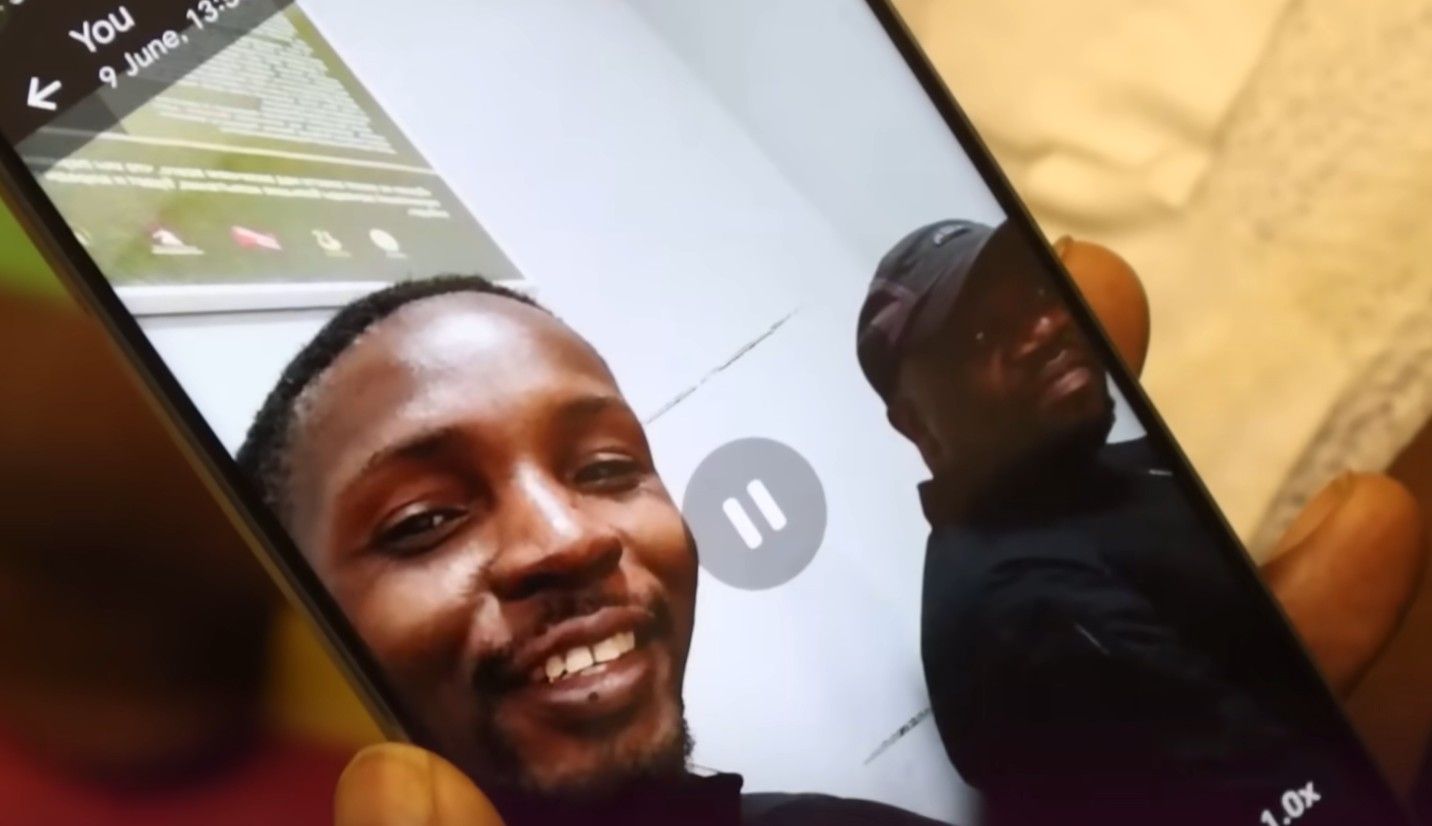
"They rushed you. Open the page. Sign here. Sign. Sit down."
The Cubans were treated differently. They were given time with their contracts. They were allowed to photograph them and send the images to people back home. None of the Africans received this.
"We all noticed. They could photograph their contracts - we were told nothing."
Stephen asked the instructor directly about the construction training he had been promised. The instructor said he would have to learn Russian language first - after that, everything else would follow. Stephen complied. He was asking about a programme that did not exist. That week, the group was taught basic Russian. Not construction vocabulary. Military commands: words for the body, for movement, for weapons, for fire and stop.
The Road to Donetsk
Phones had been returned to the group on arrival in Ufa - SIM cards still inside. When bank accounts were opened, 500 rubles was deposited in each one to make them look active. Stephen used part of that balance to buy mobile data. From that point, he began tracking their movements on his phone's map. From Ufa they were moved by bus to Orenburg - a military academy. Then to a place Stephen called Tutros - another military academy. Then to Camp Samara, where more paperwork was signed. From Camp Samara, they were told they were going to Donetsk region.
"I kept asking myself why we were moving from one military academy to another. Nothing was making sense."
At the border into Ukraine, phones were seized. All electronic devices were searched. On the other side, military trucks were waiting. At the battalion base, phones were returned - but with conditions. SIM cards had to be removed and phones kept in airplane mode at all times. The only internet available was a Starlink connection provided on base. Recruits were permitted to briefly reinsert their SIM cards to call family, then immediately return to airplane mode. It was the only contact with the outside world they were allowed.
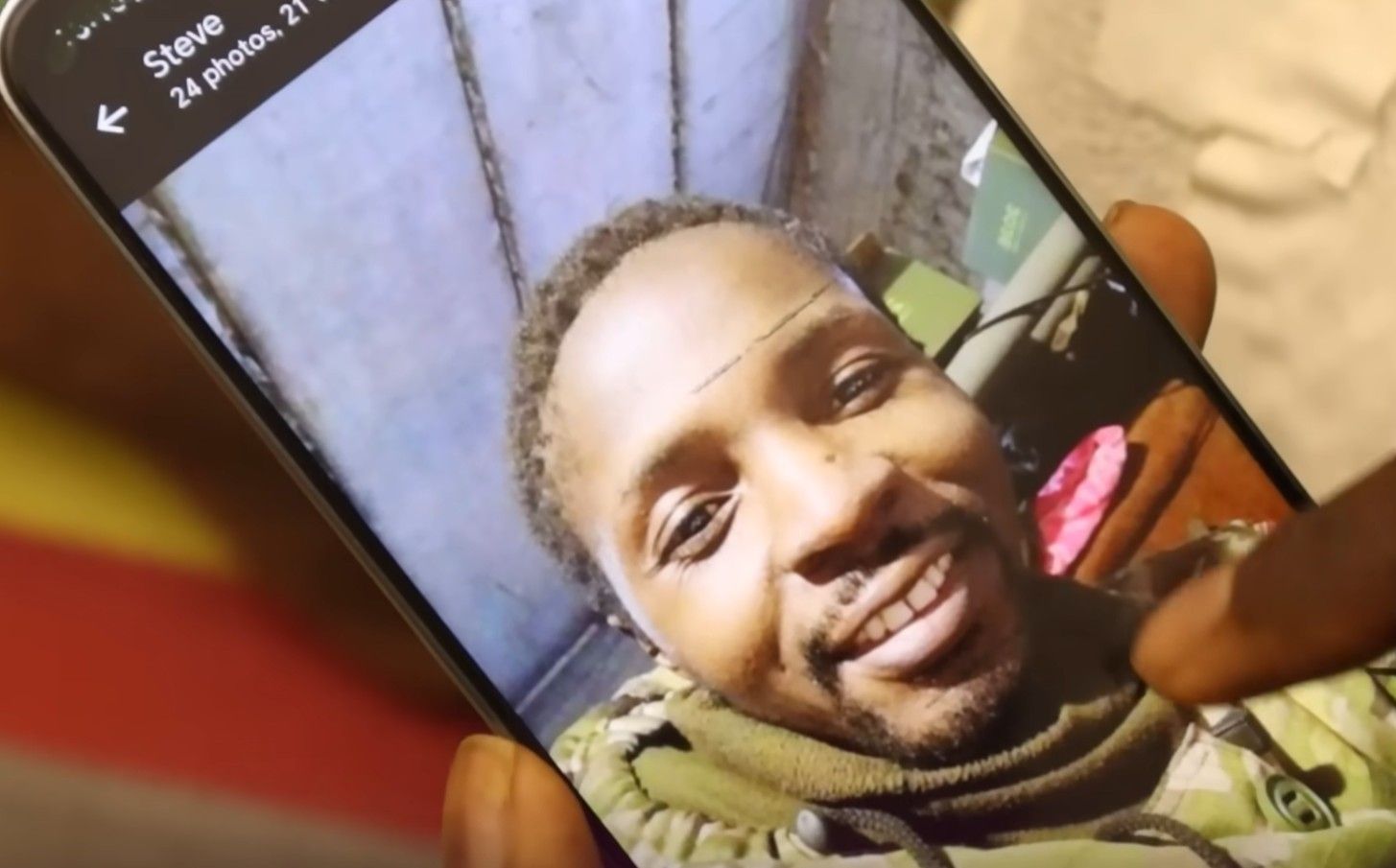
At the first base in Donetsk region, one week of training followed: AK-47, grenades, tank mines, RPG, a homemade explosive device called a sizic assembled from field components. Drone identification. Evasion. All of it crammed into seven days. Then the battalion commander addressed them.
He thanked them for coming. He told them that, per the contract they had signed, they would serve one year. They would be paid 350,000 rubles per month and a 2 million ruble signing bonus upon completion. They should not worry - they would not be sent to the front. They would be holding already-secured positions.
Stephen raised his hand. After the one year, he asked, would he be able to go and study construction - the reason he had come? The commander said yes: finish the year, and he would receive a passport, citizenship, and a medal. Stephen understood this for what it was. He had no way out.
The South Africans pushed harder. They had noticed the contract mentioned a 2 million ruble signing bonus. They wanted it before going anywhere. The commanders said they had heard the complaint and would sort it out after training ended. Training ended the next day. Instead of returning to base to address the payment, everyone was handed a weapon, given a uniform, and told they were leaving for the front. The bonus was never mentioned again. Before they left, they were warned: anyone who tried to run would be imprisoned for life. Criminal cases would be filed. There was no way back.
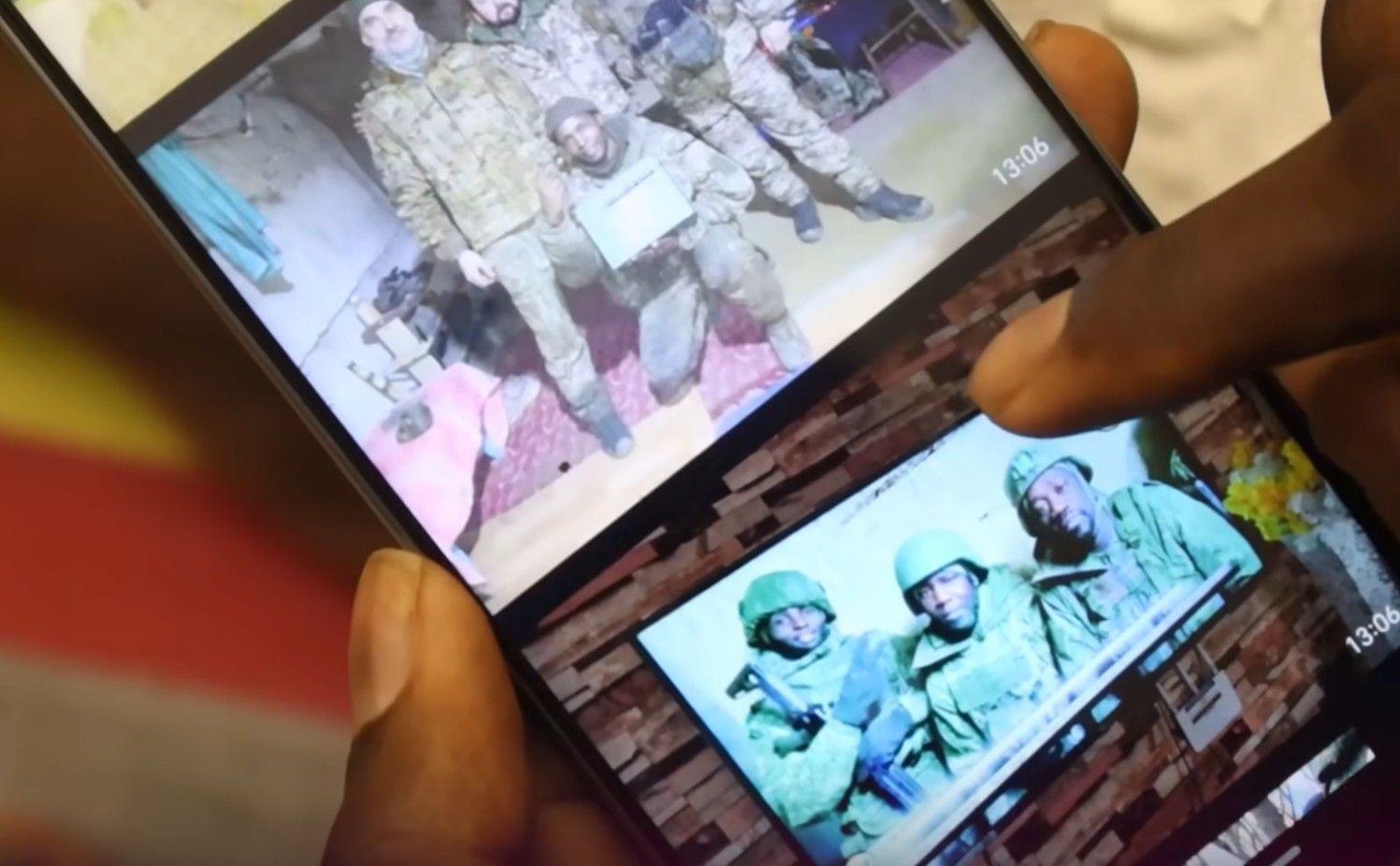
They were given one day to call their families. Stephen called his mother. He told her they had been informed they would not be going to a combat zone - he was not sure himself whether to believe it, but he could hear how frightened she was and he wanted to calm her. She asked him to stay in touch. She said she would pray for him.
The First Mission
The foreign recruits - Africans and Cubans - were sent into the field first. The Russian soldiers remained at the base. Stephen was put in charge of navigating a group of 16 to their assigned forward position on foot, using Alpine Quest on his phone - he was the only one who knew how to use it. The walk was 30 kilometres. The Cubans were sent via a separate route. Along the road, Stephen's group passed bodies.
"Some had been dead long enough that only the skeleton was left. Others were Russian soldiers who had fallen while trying to advance. Some still had a hand stretched out."
The route was not clear. Drones passed overhead. There was gunfire. Two men in the group were shot on the road and could not continue - Stephen and the others were told to keep moving, they were not their commander's men. Stephen arrived at the forward position with 14. They were divided: the first six were sent ahead immediately to a building said to be in a secured area. Stephen was told to wait 30 minutes before following with the second group.
The first six did not last two minutes.
They came over the radio: "Tara, we are under attack. I can see soldiers with yellow tape. They are firing at us. Drones are coming."
Stephen radioed the battalion commander. The commander's response: "Those motherfuckers - tell them to fight back."
The drone they called Baba (the Baba Yaga, a large Ukrainian octocopter adapted to drop grenades, ed.) - began hitting the position. Stephen's closest friend, using the code name Buffalo, a South African, got on the radio one last time.
"He said: 'I've been shot in the head. Wisdom has also been shot. We can't... we are dying.'"
That was the last transmission from Buffalo. The second group of six - also Africans from the same walking group - was sent to reinforce. They were killed.
See also: How to Surrender to a Drone: A Step-by-Step Guide for Foreigners in Russia's Army
Meanwhile, the Cubans, who had traveled to the crossing point by vehicle on a separate route, were killed by friendly fire. Russian troops heard no response to radio calls in Russian, classified them as the enemy, and opened fire. The language barrier killed them all.
Stephen and the Russian soldier assigned to him advanced together, reached the railway crossing, and found a forward command post in a basement. The commanders there greeted Stephen - "Chorne nash" (Rus. our Black one) - and put him to work. The Russian soldier was subsequently reassigned to another group for food and logistics runs. Of all the Africans sent on that mission, Stephen was the only one who came back.
A Month at the Front
For approximately one month, Stephen was assigned to logistics: carrying food, ammunition, grenades, and tank mines from supply points to forward positions. Each run was made along roads where the men who had made the same run before him lay dead beside their bags. The promised pay did not arrive. When recruits demanded it, they were told to wait.
Food at forward positions ran out. Pinned down at an outpost one day, Stephen radioed the commander to say he had nothing to eat. The response was direct: there were five dead bodies around him. He should look through what they had been carrying.
He did.
"If someone on either side had bread, water, anything - you took it. That's what you ate."
When even that was gone, he drank his own urine.
"Your throat starts to close up from the inside. But you survive."
A Ugandan soldier named France was sent to bring him food during one of those periods. He was hit by a drone before he arrived. Stephen learned of it over the radio.
During one of those frontline missions, Stephen was shot in the arm. He tourniqueted the wound himself and self-administered an injection from his military first aid kit - a field doctor at the base later told him the injection was a drug, a stimulant. The wound was dressed and he was told it was fine. No surgery, no time off. The next day he was assigned to a new group and sent on a mission to take a village called Irishin. Their convoy was hit from behind by a kamikaze drone on the approach road. Two men died. The rest fought their way through. That day he encountered a young Ukrainian fighter - about 19 years old - who had been wounded and captured. He spoke some English. He looked at Stephen and said: "Why are you killing us? Why are you coming to kill us on our own land? I was just a student."
"That hit me somewhere inside," Stephen said. "I called the commander and told him: there's a young Ukrainian here, he's wounded, he speaks English. The commander said: bring him back." The Ukrainian was evacuated toward the Russian battalion camp. Stephen remained at the forward position. Later, he heard through radio traffic that the young man had died on the road. The circumstances were not clear to him.
The Drone That Could Have Killed Him
The wound came on a logistics run. Stephen was returning from a forward position with a Russian soldier. A drone struck between them. The Russian soldier took the direct hit. His head was destroyed. Stephen was thrown to the ground by the blast.
"I just heard something. Like a weight hitting the ground. Then I was down."
He tried to raise himself. Blood was coming from three points on his back. He could feel his ribs. He reached for his radio and started reporting.
"I looked over at my comrade. He had exploded. I could see pieces of him. He was gone. God brought him to that side to shield me a little."
He was evacuated: first to a hospital in Rostov, in southern Russia, where X-rays found shrapnel throughout his back and damage to both lungs. Then onto a medical train for three days while Russian hospitals assessed what to do with him. Then to a second hospital elsewhere in Russia - where he underwent three surgeries over approximately one month to remove shrapnel from his knees and back, and to address the broken ribs. When he was eventually discharged, he was informed that he owed 3 million rubles in medical costs. He understood the mechanism. The debt would keep him in place. He would be sent back to the front.
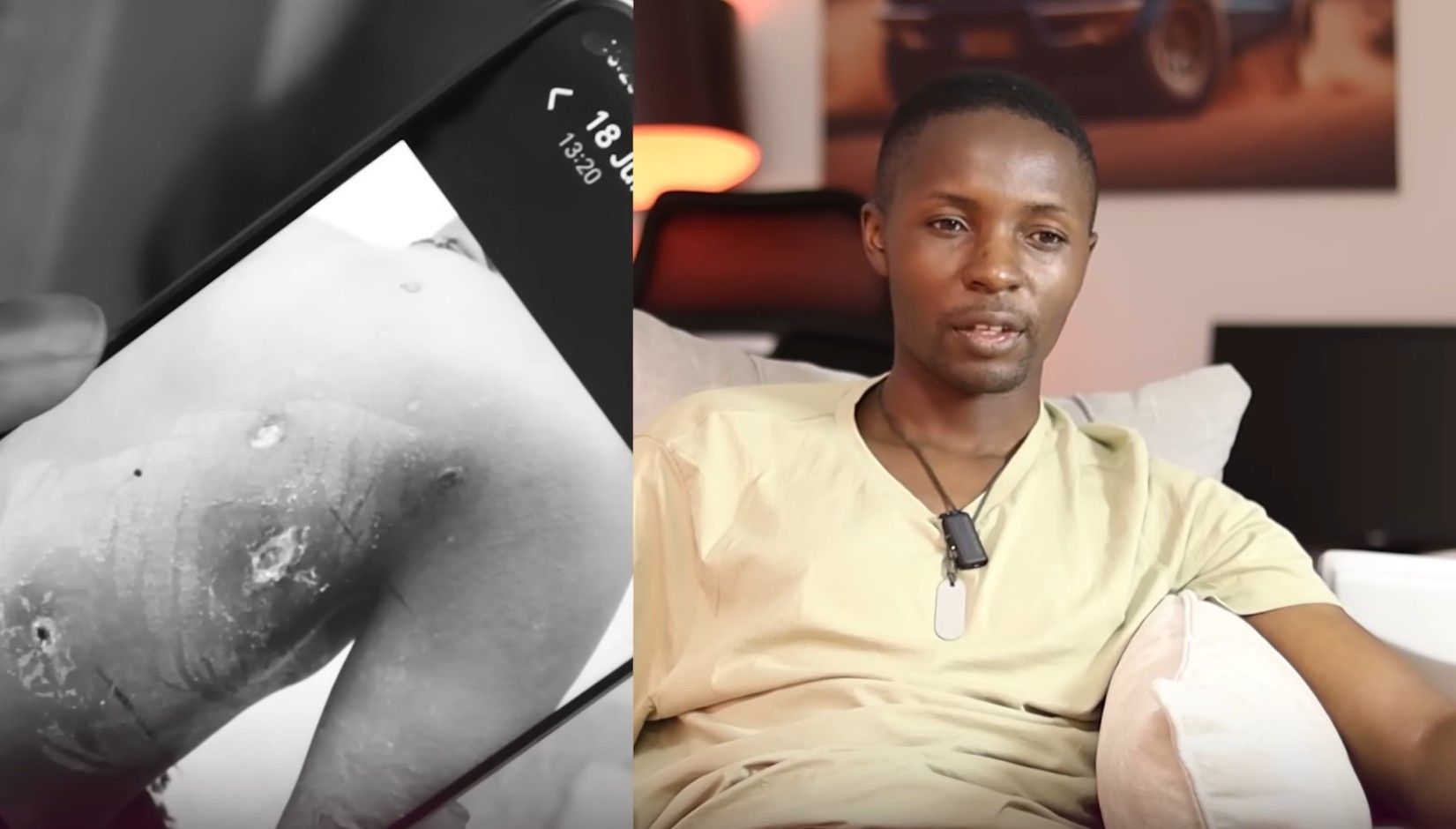
In the hospital, Stephen made as many calls as he could - to his parents, to anyone who might help. Russian staff noticed. They announced he was being transferred to a different hospital. He understood what that meant: once moved, he would be monitored more closely and sent back to the front when healed. He had a short window to act.
The Dog Tag in the Front Pocket
Stephen was transferred to Moscow by train - told he was going to St. Petersburg. He was not going to St. Petersburg. On the train, each soldier only learned their destination one to two hours before arrival - never in advance. When the train reached Moscow, each soldier's unit sent someone to the station to collect them. One by one, the other soldiers were taken away. Stephen told the handlers his unit was in Orenburg - which was what his dog tag said. So he stood at the station waiting for a collection party from Orenburg that was never going to come. In that window of being left unsupervised, he opened WhatsApp - which in Russia requires a VPN to function, something he had learned to use during his time there - and sent a message: "I'm stuck, please help." People responded. One sent 100 rubles. Another sent more. He also had a small amount on his Russian bank card. Enough for a taxi.
He went directly to the Kenyan Embassy in Moscow. He was carrying one piece of evidence: the military dog tag issued to him by the Russian armed forces. It bore his name, his origin, his battalion, every posting he had passed through. He had worn it on a chain around his neck through six months of combat and three surgeries. Getting it out of Russia required a small deception. At passport control, the officer noticed the chain. Stephen said it was a zip - a fastener. He had tucked it into his front pocket so it looked the part. They moved on.
"That tag holds everything about me in Russia. My name, where I came from, which battalion, which unit. Everything."
At the Embassy, he gave a statement. Staff helped book a flight. The ticket cost 88,000 rubles - approximately 170,000 Kenyan shillings. His mother, a pastor in Nairobi, took out a loan to pay it that same day.
The Embassy had issued him a temporary travel document. At the airport check-in counter, he presented it alongside his ticket - but the agent flagged a problem with the exit permit. Someone suggested showing his Kenyan national ID card to establish citizenship. That resolved it; he received his boarding passes. At immigration, he was stopped and questioned. He told them his passport had been lost and that he had been to the Embassy. The Embassy paperwork was enough. They processed him and waved him through.
He boarded a flight to Sharjah, then to Nairobi. On 13 May 2026 - exactly six months after he left - Stephen Omondo Wino landed in Kenya. His mother nearly fainted at the airport.
"She said she had seen photos trending online - photos saying I had died. She couldn't believe she was hearing my voice. She was just crying."
What He Carries Now
Stephen is in Nairobi recovering. He walks with difficulty. His lungs sustained damage that requires an X-ray and possibly another surgery. The ribs broken in the blast have not fully healed. He is experiencing symptoms of post-traumatic stress: involuntary flinching at the sound of aircraft, flashbacks at night, moments when the sounds of a car engine feel like a drone approaching.
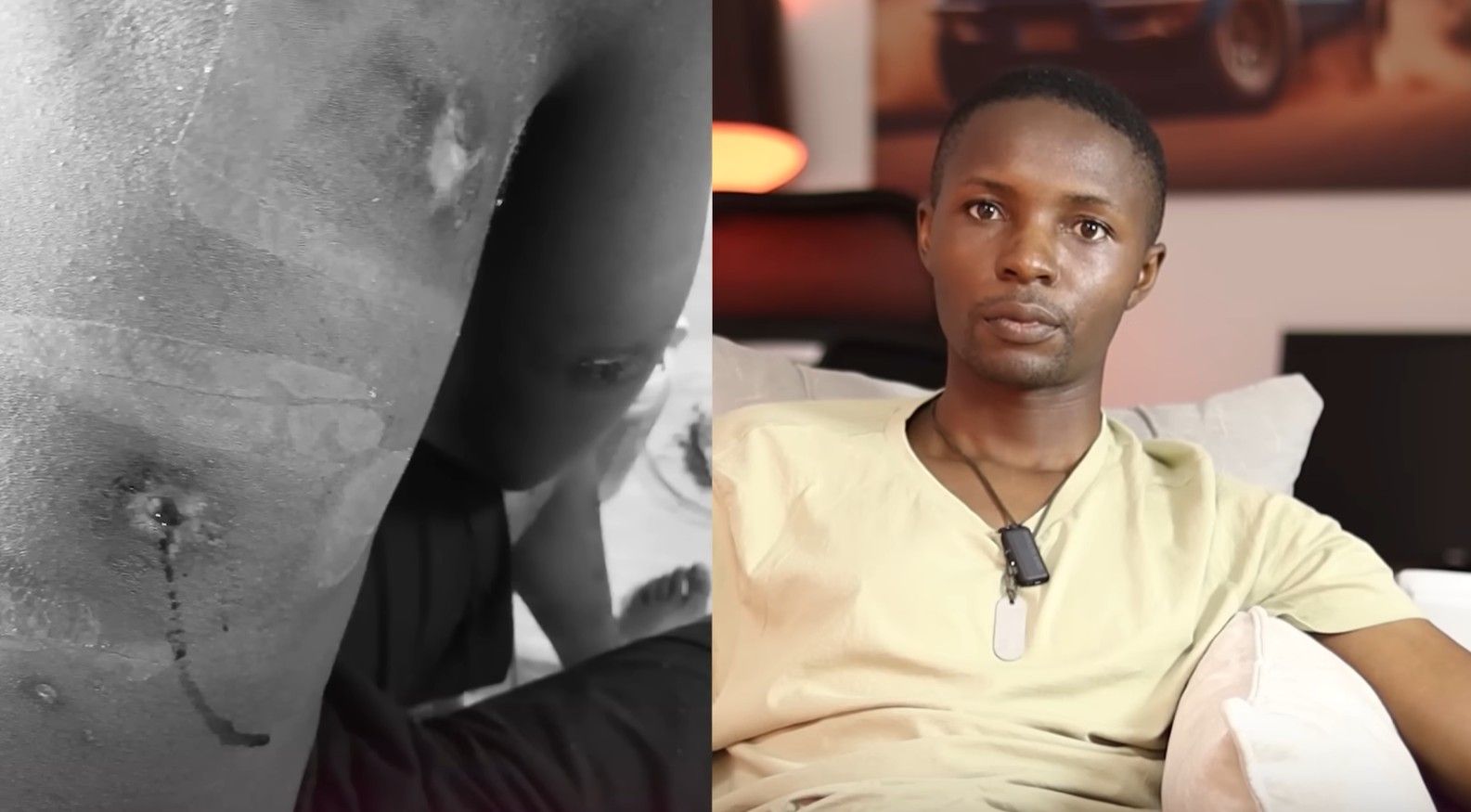
For six months of combat service, Russia promised him 350,000 rubles a month and a 2 million ruble signing bonus - roughly 4 million rubles in total. What he actually received: 500 rubles, deposited into his Russian bank account at Ufa to make the account look active. He used part of it to buy mobile data to track where they were taking him.
Stephen cannot work while recovering. He is currently trying to fundraise for the X-ray he needs before doctors can assess whether he requires further surgery. The man who clicked an ad to escape financial hardship came home in a worse financial position than when he left - injured, with no earnings from six months away, and with a new debt his family is carrying on his behalf.
He still has the dog tag. And he still wants to serve in the Kenya Defence Forces. He said so without bitterness.
"I haven't given up on that dream. I want to serve Kenya, protect Kenyans, share the knowledge and skills I came back with. If I'm given the chance, I won't let that go."
Kenyans Still Trapped
Before leaving Russia, Stephen made contact with other Kenyans who had passed through the same recruitment pipeline and were not as fortunate.
David Kipsang had his left leg amputated following a blast. He is in a Russian hospital and is looking for any route out.
Eno was shot in the leg, received basic treatment, and was sent back to the front.
Ben was shot in the arm. He is in a Russian hospital, still trying to find a way to leave.
A fourth Kenyan, whose name Stephen could not recall, is currently on the front line in Ukraine.
Stephen made it out. He made it out wounded, with shrapnel still in his body and three surgeries behind him - but he made it out. David, Eno, Ben, and the fourth man whose name he could not recall have not.
To David, Eno, Ben, and anyone else reading this from inside the Russian military system: there is a way out. The Ukrainian government operates a safe surrender pathway for Russia's army servicemen also available to foreign nationals. Men who have used it made it out alive. Read more here.
Source: Youtube channel "Tales by Titus254"
Part 1:
Part 2: