September 29, 2026
Russian University Is Hiring Staff to Escort Foreign Recruits Into Military Contracts
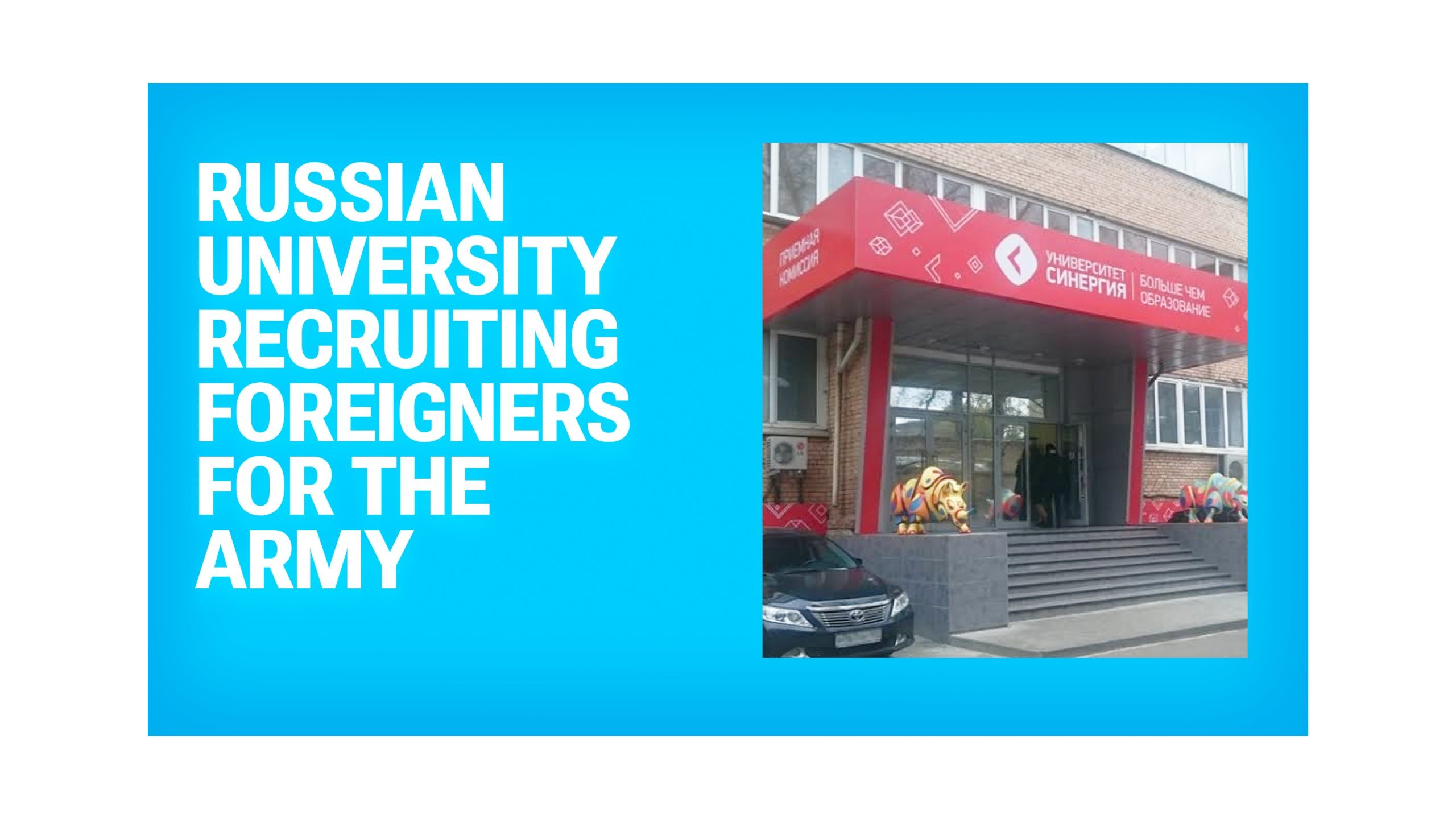
Synergy University, a private Russian university, is hiring staff to escort foreign nationals through the process of signing contracts with Russia's Ministry of Defense, according to reporting published September 25 by Novaya Gazeta Europe's news desk, based on tips from job seekers who were contacted through the Russian recruitment site HeadHunter.
The Job Offer
Novaya-Europe reported that recruiters calling themselves representatives of a "Defenders of the Fatherland Synergy" program contacted HeadHunter job seekers directly. The role on offer is a "coordinator for accompanying foreign partners," requiring Spanish, English, or French. Spanish-speaking coordinators are assigned to escort citizens of Latin American countries; English- and French-speaking coordinators are assigned to citizens of African countries.
The job description sent to candidates lists the coordinator's duties as meeting "clients" at the airport, giving them an "orientation briefing" en route, translating questions from "employees," and helping them fill out documents in a foreign language. The posting describes the work as travel-based with irregular hours, including "night departures," and offers a salary of 120,000 rubles. The office is located near the Sokol metro station in Moscow.
Matching the University's Own Listings
Novaya-Europe found that the text of one of Synergy's own HeadHunter job postings matches the description sent by the recruiter word for word, and that the university's office is located in the same district named in the ad. At the time of the report, the university's HeadHunter page carried at least two such "escort" postings, plus at least two openings for "migration accompaniment coordinators," who are tasked with helping "workers" secure visas and file paperwork with "embassy departments and special services." Postings for these coordinator roles have been appearing on Synergy's page since at least April 2026; in February of that year, the university had also advertised for call-center operators for the office of an unnamed "patriotic project."
A University Already Tied to the War
Synergy's leadership announced in 2025 the launch of a Coordination Center for Retraining "SVO" Veterans, developed jointly with the "Defenders of the Fatherland" fund and intended to bring private universities together to build social-adaptation programs for veterans of Russia's war of aggression in Ukraine. At the time, Synergy Corporation president Vadim Lobov said around nine thousand war veterans were studying or had studied at the university; by June 2026, the center reported more than 20,000 people enrolled for free.
Lobov has regularly publicized the university's ties to military organizations and its support for war participants, including a February 2026 meeting with members of the "BARS" volunteer detachment, who presented him with a letter of thanks. Synergy has trained drone specialists since at least 2023, and in the fall of 2022 it launched a "Business Mobilization" movement bringing together businesspeople willing to help supply equipment and gear to Russian troops.
A Civilian University Turned Into War Infrastructure
Synergy's involvement in the war didn't start with this hiring push. The same institution that operates as an ordinary degree-granting university has spent the past several years building out functions tied directly to Russia's military effort: a center that has enrolled tens of thousands of "SVO" veterans, a drone-specialist training track, and a "Business Mobilization" network supplying equipment to Russian troops and occupied-territory administrations. Read together, these are pieces of a broader pattern in Russia's war economy, in which civilian institutions - universities, staffing agencies, cultural centers - are folded into the state's military aggression rather than standing apart from it. Synergy's recruitment-coordinator postings extend that same conversion outward: a private university's ordinary hiring pipeline repurposed to help supply foreigners for Russia's war of aggression against Ukraine.