June 18, 2026
"Cursed Be the Day I Signed That Contract": First Central Asian to Surrender Via "I Want to Live" Describes Coercion, Abandonment, and Escape From Russia's Front Line
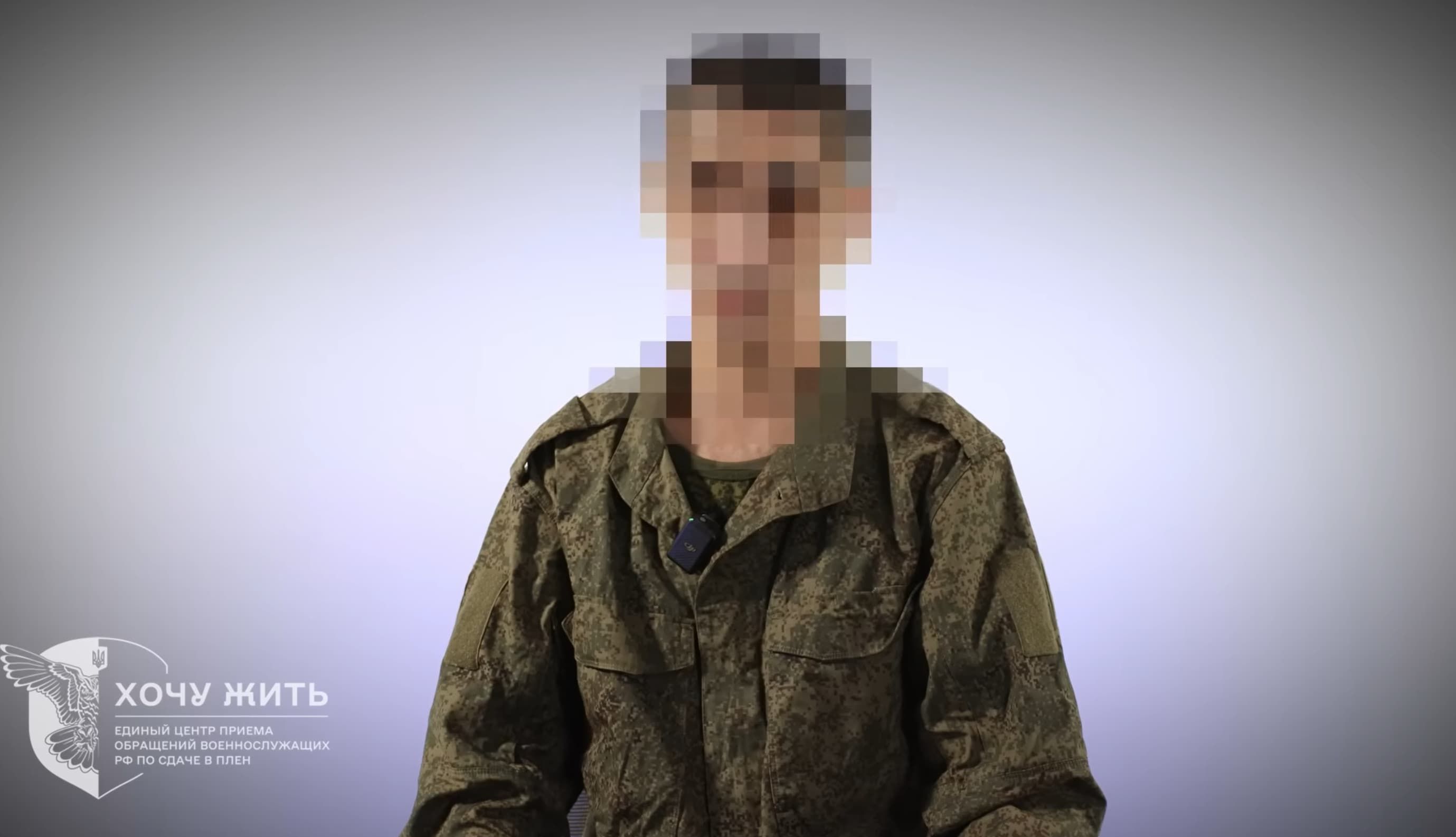
The "I Want to Live" project has published a video interview with a Tajik national — the first Central Asian to surrender to Ukrainian forces using the project's surrender protocol. His account, recorded after his capture, documents the full arc of Russia's Central Asian recruitment pipeline: from a migration raid to a detention center, a coerced contract, 19 days of combined training, a first combat mission, abandonment by his commander, 10 days alone on the front line, and a coordinated surrender guided by a Ukrainian drone delivering a phone with a route map.
From blacksmith to frontline assault unit
The man grew up in Tajikistan, finished school in 1991 as the Soviet Union collapsed, and trained as a blacksmith — a trade his brother taught him. He eventually began traveling to Russia for work, as economic necessity drove millions of Central Asians to do. Life in Russia was manageable before the Crocus City Hall attack of March 2024 - after which, he says, his nationality became a liability. "Before that there was limited discrimination, we were treated equally with Russians. After Crocus, they started squeezing my nation out."
The raid, the detention center, the offer
On December 10, 2025, he was stopped in a minibus on his way to work. His documents were not in order - he had not had time to renew them. He and approximately six compatriots were taken to a police station, held overnight, and given a summary deportation verdict at a hearing they were not permitted to attend. Transferred to a migrant detention facility, he immediately saw recruitment posters for the "special military operation" on the walls.
"At the entrance, immediately, there were SVO posters everywhere." A prison official announced that anyone wishing to sign a contract should come to a designated office. "The next day, people started going to that office."
His primary motivation: Russian citizenship. Years of labor migration, years of permit applications, years of being treated as a second-class resident. The contract seemed like the only available path. "At that moment, that was the only option to get citizenship." Four of the six detained compatriots refused: "Go home. What do you need this war for? Think for yourselves." He and one other signed.
Training, deployment, abandonment
He signed on February 3. Seven days of training in Voronezh. Twelve more days at a base near Belosk in the Luhansk direction. Then directly from the training ground to a forward position, equipped, loaded into a pickup, and driven to the location from which his first combat mission would depart.
Six men were sent out: two Arabs, one African, two Tajiks. Four AK magazines each, two grenades, some rations. They set off at 4:00 a.m. FPV drones appeared overhead almost immediately. His sergeant radioed: find the Filipino soldier and get to the bunker. The Filipino had been sheltering behind a tree — wounded in the leg. He helped him limp to the bunker. There he was bandaged himself: shrapnel wound in the right arm, through-and-through wound in the left arm.
After his second mission, his commander stopped responding. "Wait, wait, wait, wait." Ten days passed. No food, no water, no instructions. He found a garbage dump nearby and dug through it for expired ration packs. When it rained, he collected water in bottle caps. When he finally reached his commander by radio and demanded to know why he had paid 300,000 rubles for "safety" only to be left alone to forage through trash, the commander cut the connection.
"I said: where is the safety you promised me? He said: I told you. And he cuts the connection. I said: go to hell. And I cut mine."
The choice
Alone, wounded, abandoned, he met another soldier in a similar situation. When he said he wanted to cut off his own hand to get evacuated, the other man told him: there is another option. There is a project called "I Want to Live."
He had been told in the barracks that Ukrainian forces tortured and mutilated prisoners. "Don't surrender. Better to finish yourself off." His companion told him to disregard it: the project is run by the Ukrainian government, it operates under the Geneva Convention, it is legitimate.
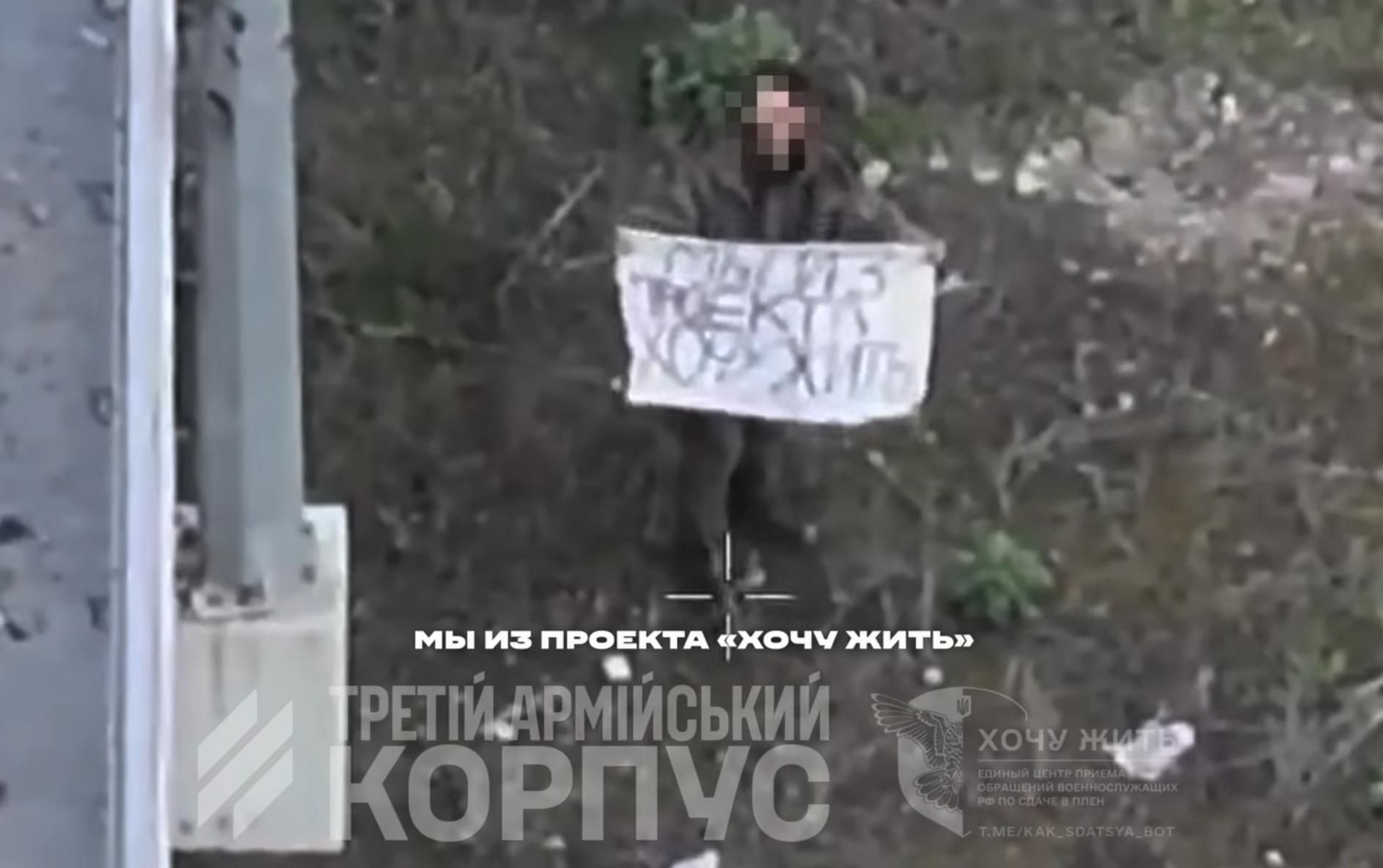
Over approximately 10 days, using internet access, the companion negotiated with the project coordinator. A Ukrainian drone delivered a package containing a phone with a route map. At 4:00-5:30 a.m. they moved. A Ukrainian drone accompanied them. They were directed to a bridge, told to wait. They had prepared a sign reading "I Want to Live - I want to surrender through this project." He held it up. The drone left. An hour later it returned and dropped a parcel: food, water, and a note — "Wait for further instructions. We know who you are."
Eventually a Ukrainian military Humvee arrived. They were taken to a nearby location, allowed to wash — "they told us we smelled like dogs, which was correct, we hadn't washed in 20 days" — given clean clothes, fed dinner, given tea, and put to sleep. In the morning they were transferred to SBU officers, who greeted them with pizza and Coca-Cola.
What he saw
Walking out through the combat zone, he passed through fields of bodies. "Bodies, bodies, bodies, bodies, bodies. Some with half a torso, some with no head, some with no arms. There were bodies beyond counting." Asked what they died for: "For invading someone else's land. They wanted to take someone else's land and they fell on that same land. As deserved. Absolutely as deserved."
He described the Russian command approach as having no tactics, no preparation, no strategic thinking. "They simply send you in one direction and that's it. Everyone understands in the end: it's a one-way ticket. Because you simply won't make it through. The FPV drones won't let you. The Baba Yaga won't let you. You won't make it. That's definitive."
On the "I Want to Live" project itself: "A wonderful idea. A very necessary project, a very useful project. For those who realize on the front line that this is simply the end — it is a way out of the meat grinder."
His message to Central Asian migrants
His words to compatriots still in Russia are unambiguous: "Do not sign under any pretext. Go home. There are options to go to Europe. Do not sign under any pretext, guys." And more broadly: "Regardless of citizenship — Russians, Chinese, whoever is signing up for this — don't sign. It's a one-way ticket."
The reality he describes is consistent with what Novastan, Human Rights Watch, the FIDH, and Ukraine's Coordination Headquarters have all documented: Central Asian migrants in Russia face ethnic profiling, arbitrary detention, fabricated charges, administrative pressure, and the systematic elimination of alternatives — until the only path that appears available is a military contract. Promises of citizenship, salary, and safety are routinely broken. Pay is withheld or stolen. Training is inadequate. Commanders abandon their units. The front line is not a posting — it is a death sentence issued one mission at a time.
If you are a foreign national currently in Russia and facing pressure to sign a military contract — do not sign. Leave Russia if you can. If you have already signed and want to find a way out safely and with dignity — contact the "I Want to Live" project and surrender safely. As this man's testimony shows, surrender is not the end. For him, it was the way to save his life.
Source: I Want to Live Youtube