June 22, 2026
Sign or Die: The Sun Investigation Reveals Putin's Foreign Recruits Are Threatened at Gunpoint - 80% of Peruvian Families Report Beatings and Coercion
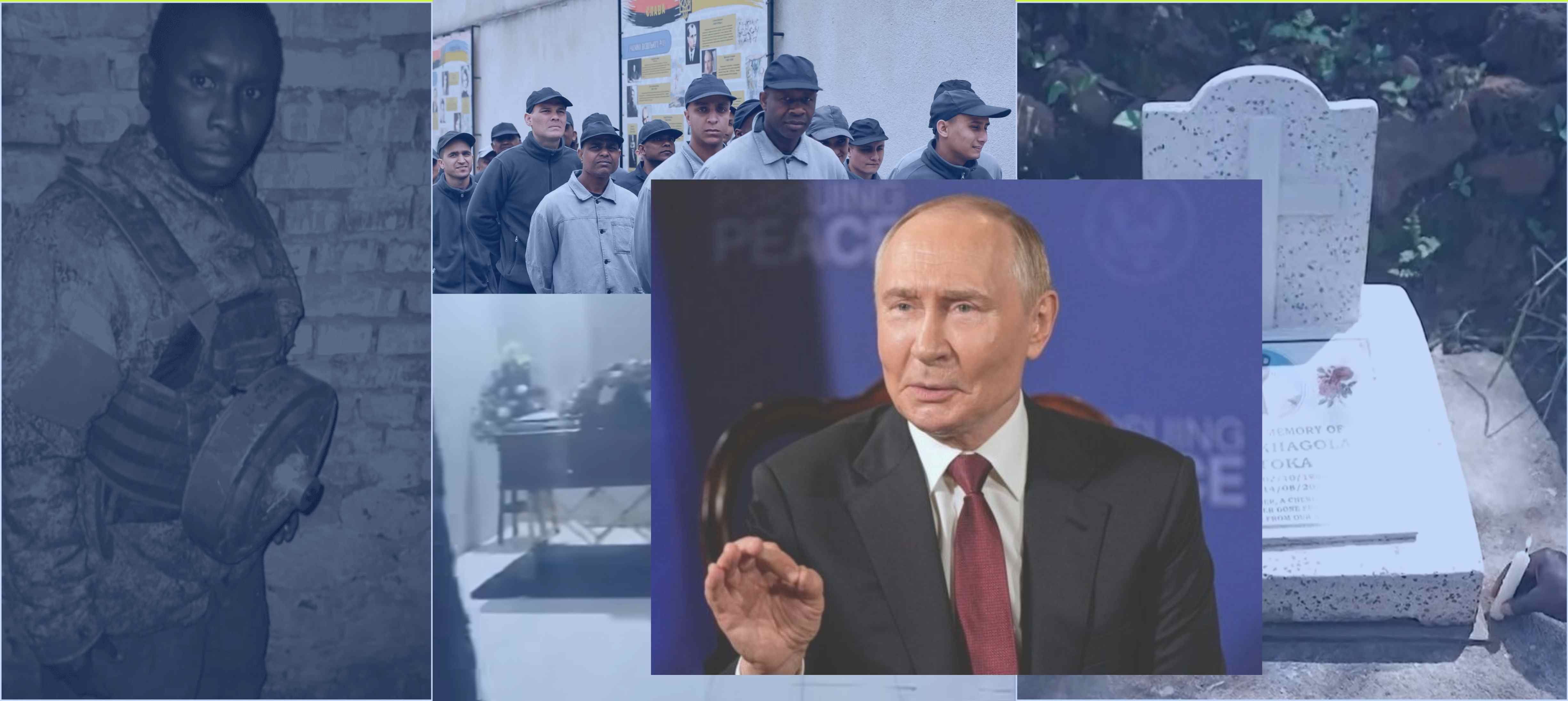
A major investigation by The Sun, drawing on interviews with researchers and a lawyer representing victims' families, documents how Vladimir Putin is escalating his recruitment of foreign fighters as Russian forces continue sustaining catastrophic losses in Ukraine.
The scale
Kyiv estimates nearly 30,000 foreign fighters from approximately 130 countries are serving in Putin's army - not including an additional estimated 15,000 North Korean troops deployed under the official Pyongyang-Moscow alliance. Ukrainian intelligence revealed in April that Russia plans to recruit an additional 18,500 foreign nationals by year's end - a sharp escalation signaling how badly Moscow needs to patch its battlefield losses.
"If you don't sign, you're dead"
Marcelo Tataje, a lawyer representing Peruvian families whose relatives were allegedly tricked into Russia's army, described the coercion directly: "They just pointed a gun to his head and said: 'If you don't sign, you're dead.' That's what most of the victims say."
Over 80% of the families Tataje represents report their loved ones were beaten, forced to sign contracts at gunpoint, or threatened with prison sentences of up to 15 years. Many were first contacted by Kremlin-controlled social media accounts promising Russia as "the new American dream" - with promises of $20,000 just for arriving in the country. The reality: salaries around $3,000 to fight, against false promises of taxi driving or chef work that conceal the actual military assignment.
Tataje reports at least 15 new Peruvian cases daily, with the list of dead growing constantly. Only 18 Peruvians have managed to escape Russia and return home - some via what Tataje described as "movie-like" escapes, jumping from accommodation windows at night and fleeing to the Peruvian embassy.
Why Russia recruits abroad instead of mobilizing
Political scientist Dr. Jedrzej Czerep, who researches Russia's recruitment across Africa, explained the underlying strategic logic: "Russia doesn't want to go into an open mobilization. That would cause too much tension, and that could potentially meet resistance." Instead, Russia "prefers to look specifically for low-skilled foreign soldiers to be sent to the most deadly aspects of the fighting - mass assaults, human waves that are being thrown into combat."
Russia expert Emily Ferris confirmed the same dynamic: "What they really need at the front at the moment is manpower. They're trying to avoid an internal mobilisation campaign because of how unpopular it was in 2022." She noted these recruits are typically civilians with no military training at all - "not really well trained soldiers."
Czerep was blunt about why this strategy works for the Kremlin: the deaths of foreign nationals "do not cause any unrest inside of Russia."
The economics of the trap
Czerep highlighted the financial calculus driving recruitment: "If you compare salaries of policemen or of soldiers in countries like Kenya, the money that they are being offered in the Russian army on the front lines is something like 10 or 20 times bigger." Signing bonuses alone range from $1,000 to $25,000, plus monthly payments around $2,000, insurance, and the promise of eventual Russian citizenship or residency.
For many, despite the obvious risk, a ten-month contract is calculated as worth the gamble - particularly when the signing bonus alone can transform a family's economic situation.
Racism documented on camera
Czerep documented a disturbing pattern of racist treatment toward non-European recruits, visible in footage filmed by Russian soldiers themselves: "If you watch those videos filmed by Russian soldiers showing African or other non-European soldiers fighting alongside them, you see racist slurs all over. They really don't care if those guys survive or not… we just see the tip of the iceberg."
On the video: Russian servicemen mock an African national who has an anti-tank mine strapped to his body
The clearest documented case: Kenyan national Francis Ndung'u Ndarua, who according to his mother Anne Ndarua was tricked into signing with the promise of an electrical engineering job. One week later, viral footage showed him with a landmine strapped to his chest while a Russian soldier behind the camera racially abused him, taunting that he would be used as a "can-opener" for Ukrainian frontline positions. Czerep confirmed this was not an isolated case.
Reaching the top of politics
The scandal has implicated political elites. Duduzile Zuma-Sambudla, daughter of former South African President Jacob Zuma, resigned as an MP after allegedly deceiving 17 South Africans and two Botswanan men in July 2025, falsely promising they would be trained "lawfully" as bodyguards in Russia.
The first deaths that broke the silence
Czerep traced the earliest cases that triggered international attention - including a Zambian national killed fighting in the battle for Bakhmut in 2022, alongside a Tanzanian national in the same unit. Neither family had known their relative was fighting in Russia's war. These cases, Czerep noted, marked the beginning of African media actively investigating and exposing the recruitment networks - including the local African intermediaries and businessmen working on behalf of Russian operatives to recruit on the ground.
The complicating truth
Czerep was careful to note that not every foreign recruit is a victim of deception - many sign on fully aware they are joining the Russian military for the war, drawn purely by the financial incentive. This complicates accountability efforts, as some recruits who get into trouble may later reframe their own decision as having been deceived. But Czerep stressed that exposure of the risks and the documented deaths, torture, and forced combat has not stopped the flow of new recruits willing to take the gamble.
Ferris placed the entire strategy in historical context: "This is designed to fight an attritional war where you just need people to plug gaps along the front line and just hold the fort down" - a meatgrinder approach Russia has relied on for centuries.
Kenya's response remains uncertain
Kenyan intelligence suggests more than 1,000 of its citizens have been recruited into Russia's military. Parliamentary hearings are underway with intelligence services, and diplomatic exchanges between Kenya and Russia continue, with Kenyan authorities demanding explanations. Czerep noted it remains unclear whether this pressure will lead to a complete halt in recruitment within Kenya, or whether authorities have the resolve to pursue every element of the scheme.
If you or a relative have been approached with a job offer involving travel to Russia - exercise extreme caution.
If you are already in Russia and facing pressure to sign a military contract, or have already signed and want a safe way out - Ukraine offers it. Read more on this page.
Source: The Sun