June 16, 2026
"Once You Enter the Camp, There Is No Going Back": TheCable Analysis Exposes Russia's African Recruitment Machine as Trafficking by Design
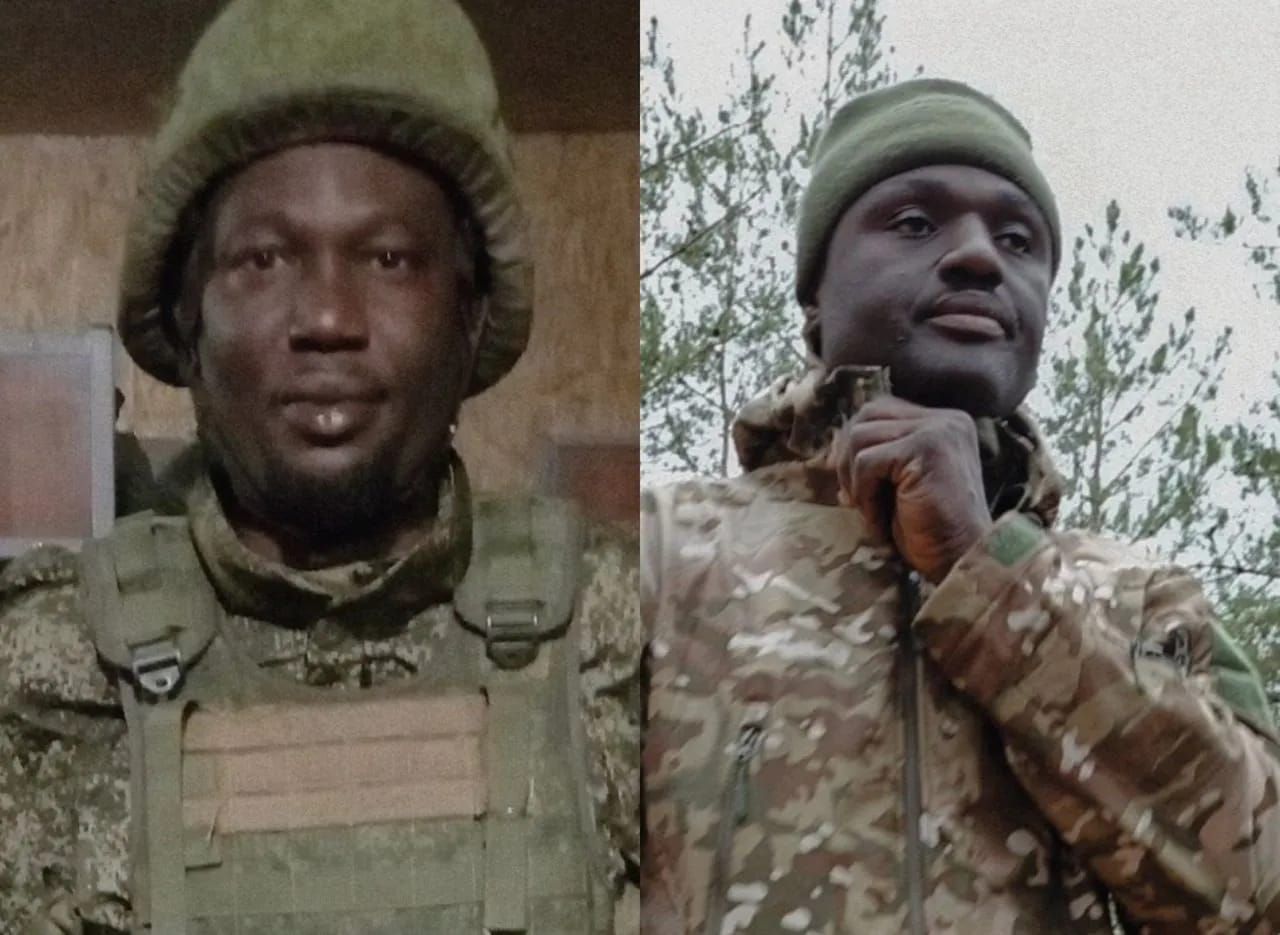
Writing in TheCable, Pan-African researcher and social critic Oumarou Sanou has published a searing analysis of Russia's recruitment of African nationals for its war against Ukraine - documenting the machinery through named victims, survivor testimony, and the gap between Moscow's denials and its own propagandists' admissions.
The latest casualty
Ayebusiwa Olabode Victor, born 1992, from Ilutitun in Ondo State, Nigeria, was killed near Hrafske in Kharkiv Oblast - identified by Ukraine's Defence Intelligence. He had signed his contract in late February 2026, barely one week after Nigeria's Ministry of Foreign Affairs publicly warned citizens against being lured into foreign wars. He is neither the first nor the last. Before him, the bodies of two other Nigerians were recovered in Luhansk. At least 215 Nigerians have signed contracts with the Russian Ministry of Defence - at least 25 are already dead or missing.
A broader INPACT investigation puts the continental figure at over 1,400 Africans recruited between 2023 and 2025, with at least 316 killed on Ukrainian soil - Nigerians, Ghanaians, Kenyans, Ugandans, and South Africans.
The denial versus the admission
The Kremlin insists it does not recruit Africans. In December, a Russian official in Accra told audiences that African students in Russia were "safe." On February 10, Russia's Ambassador to Nigeria Andrey Podyelyshev dismissed recruitment reports as "misleading."
But Moscow's own propagandists tell a different story. Kremlin-aligned commentator Mikhail Zvinchuk, tied to the Russian defense ministry, openly described the scheme on state television: fake job adverts on Facebook and WhatsApp, easy visas, one-way tickets, and employment that evaporates on arrival. Passports are confiscated "for processing." Within days, the victim is broke, his visa cancelled, and offered a choice between deportation with debt, prison, or a contract with the army written in a language he cannot read.
The testimonies
Bankole Manchi, a 36-year-old mechanic from Lagos, was promised the equivalent of ₦500,000 a month and signed papers he did not understand. Routed through Addis Ababa to Moscow and handed to two strangers, he woke up in a military camp filled with men from Nigeria, Ghana, Brazil, and China - most unable to speak to one another. "Once you enter the camp, there is no going back," he said. He left with a gunshot wound to the leg.
A Ugandan, promised supermarket work, was marched to the front under armed guard before escaping toward Ukrainian lines.
The named dead in Nigeria alone include: Adekunle Adaramola, a former Air Force man; Adam Anas; Akinlawon Tunde Quyuum; Abugu Stanley Onyeka; Balogun Ridwan Adisa — all baited with "security jobs," all conscripted after three weeks of training, all dead. The details vary. The pattern never does.
The Russian Houses connection
Sanou connects the recruitment pipeline to the Russian Houses — cultural centres run under the state agency Rossotrudnichestvo — which he describes as nodes in the broader ecosystem. Unlike the British Council or the Goethe-Institut, the Russian Houses operate under an opaque franchise model allowing private actors — some linked to Russia's mercenary networks — to act in Moscow's name while granting Moscow deniability.
In Ghana, university partnerships allegedly accompanied the enlistment of 272 nationals, 55 of them now dead. "When language classes and scholarships double as recruitment funnels, education itself has been weaponised," Sanou writes.
The deeper indictment
Russia has sold itself across Africa as the anti-imperial alternative to a guilt-laden West. Its disinformation ecosystem has won real disciples. But, as Sanou argues, a power that grinds African men into front-line fodder forfeits any claim to anti-imperialism. "It is practising the oldest imperialism of all: treating other men's lives as cheap and expendable."
The deepest vulnerability, he concludes, is not military but economic. When legitimate pathways to a decent life are scarce, a promise of overseas work is almost impossible to refuse. The scandal is not that Moscow has interests — all states do — but that African lives are treated as expendable within them, and that African governments have largely responded to the dying with silence.
"To keep looking away as the bodies return is to consent to a second slave trade conducted under a diplomatic flag. By the time we admit it, the denials will no longer matter."
Source: The Cable