Pocho Wilson Pinto Peña
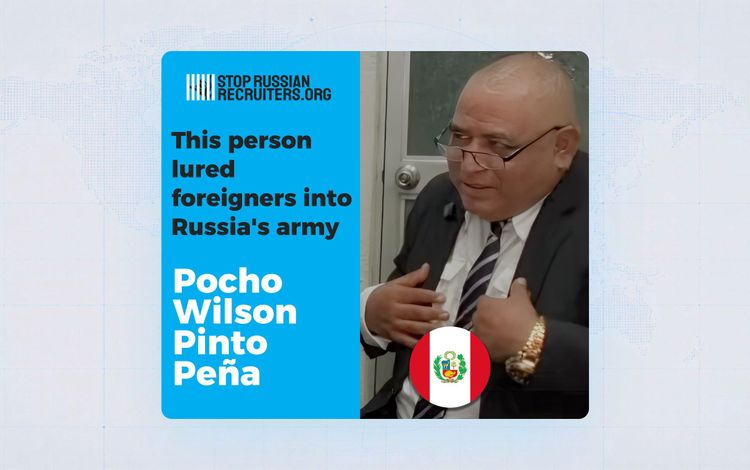
Full name: Pocho Wilson Pinto Peña (known as "Pocho Pinto")
Legal status: Held in 14 months of pretrial detention (not convicted yet)
Who is Pocho Pinto
Pocho Wilson Pinto Peña is a retired Peruvian military man whom prosecutors in Lima accuse of recruiting, coordinating, financing, and arranging travel to Russia for four Peruvians in March 2026, promising security jobs at a military base far from the front. One of the four, Julio Salazar, was trained, made to sign a contract in Russian, and died at the front in April, prosecutors say. Pinto was detained on October 1, 2026, and a judge ordered 14 months of pretrial detention on October 10. He has not been tried or convicted and denies deceiving anyone. He says he only passed on a contact number to former comrades who knew what they were signing up for.
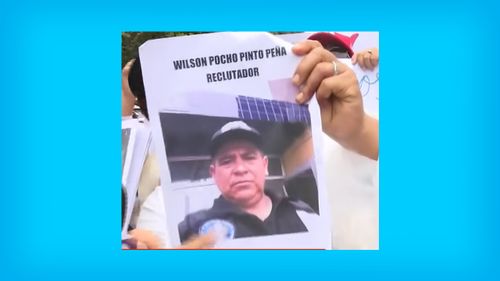
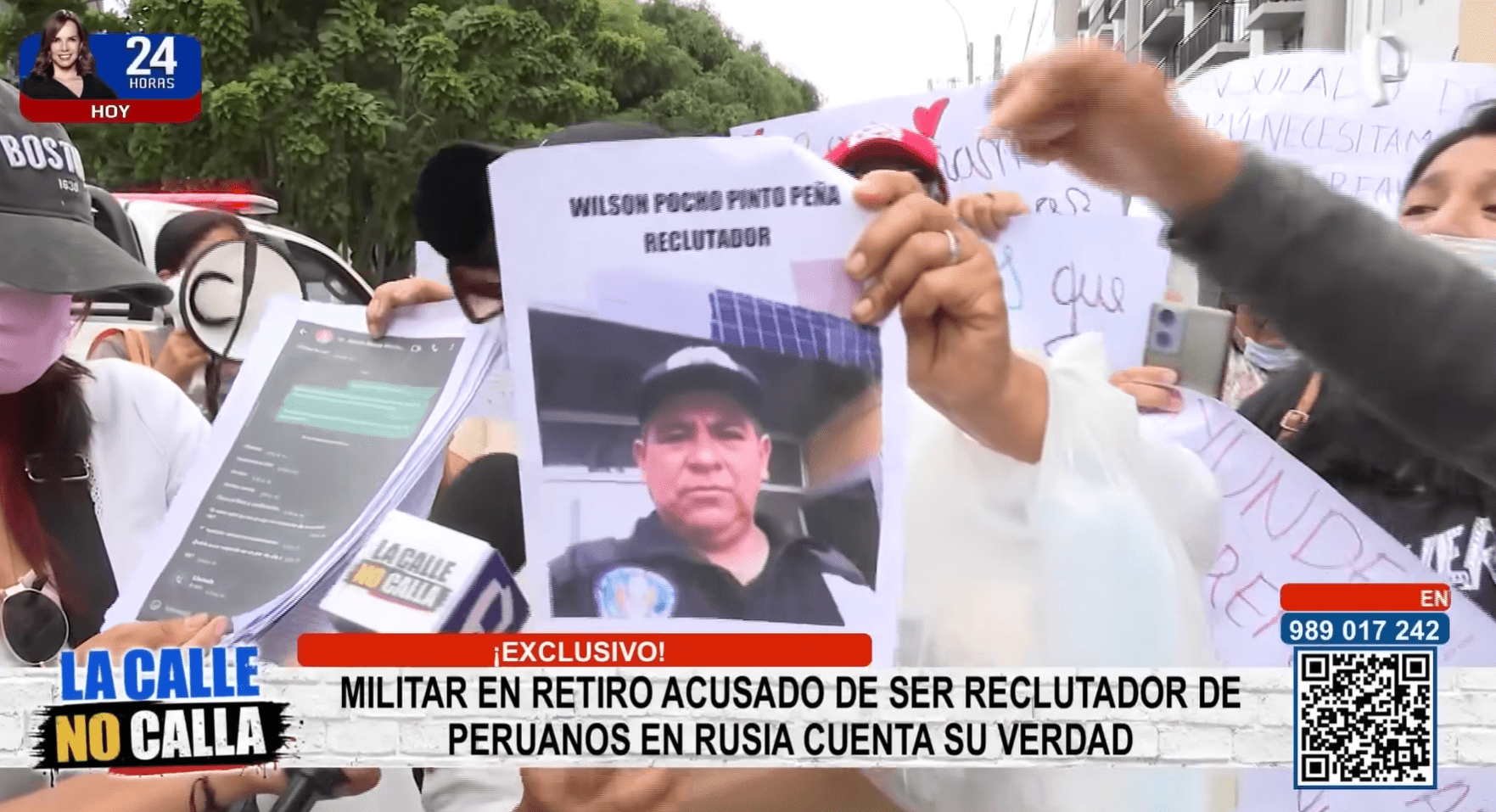
Pinto describes himself as a retired soldier with more than 14 years of service in the Middle East, including Iraq and Afghanistan, according to Panamericana Televisión, which interviewed him in April 2026. The programme said he holds five passports and IDs attesting to that work, plus letters from the US embassy, and that he works under a pseudonym and a security code in the world of international intelligence - all described by the broadcaster from what he showed it, not independently verified. He told Panamericana that most of the people he put in touch with were fellow retired soldiers, including men who served with him in Iraq and Afghanistan, and that the practice of private firms hiring retired Peruvian soldiers for conflict zones goes back some 20 years. He first drew public attention in April 2026, when mothers and other relatives who had been gathered outside the Russian embassy named him as a recruiter.
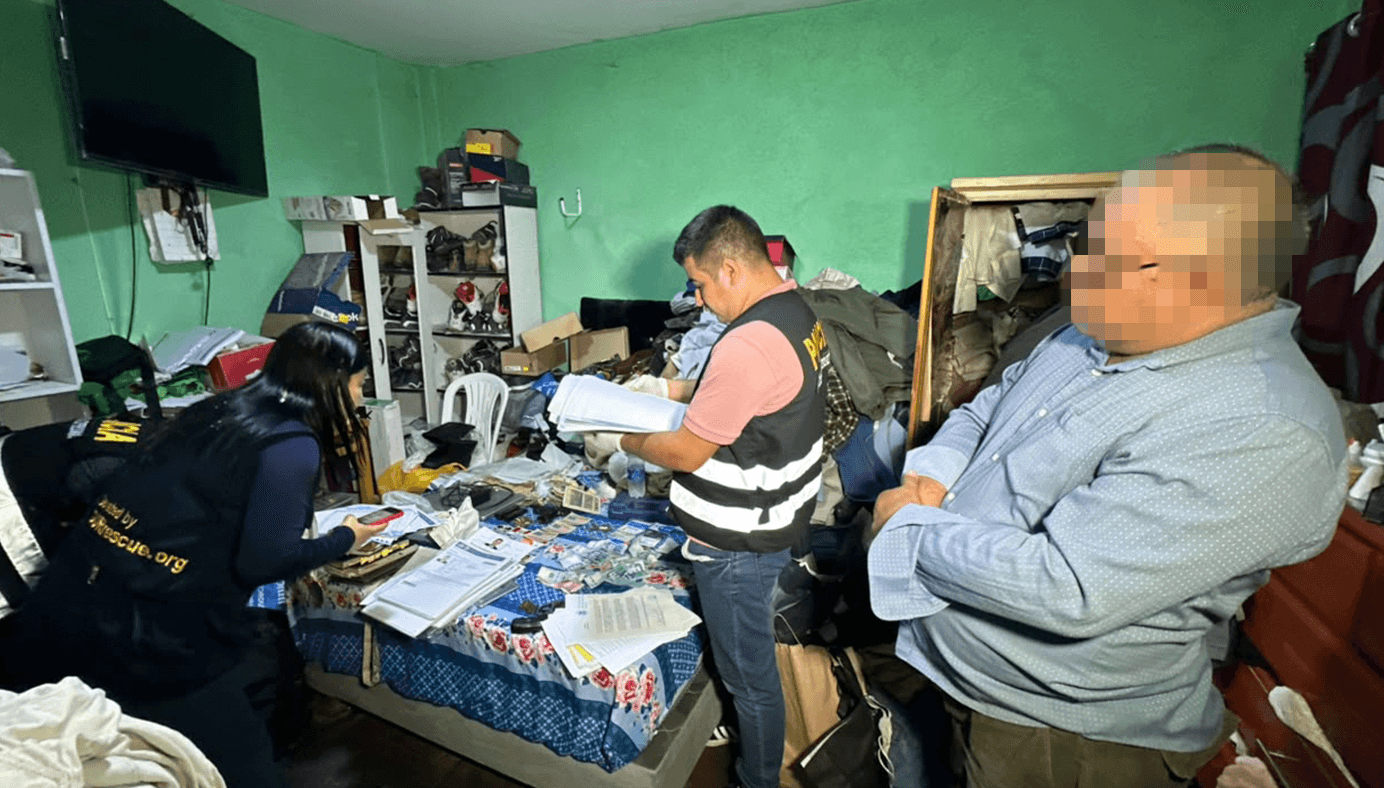
According to the Ministerio Público, Pinto recruited, coordinated, financed, and arranged the international travel of Salazar and three other Peruvians in March 2026, for what they were told would be work as security or guard staff at a military base in Russia. The offer, prosecutors say, was about $2,300 a month, a $20,000 bonus after one year, and the chance of Russian citizenship, and Pinto told the men explicitly they would not go to a war zone or the front line. The planned route ran from Lima through Paris, Istanbul, and Moscow to Ufa, in Russia's southern Urals. Peruvian media reported that such offers circulated on social media, mainly Instagram, followed by meetings in malls, restaurants, or parks, and that the National Police have three complaints and suspect there may be as many as 50 victims. Police raided two homes in Comas, northern Lima, on October 1 and seized phones, USB drives, a firearm, credit cards, and cash in soles and dollars, with support from the US-registered nonprofit Aerial Recovery.
Pinto's own account, given to Panamericana in April, is different. He denied being a recruiter, said he receives no money from the company or from the men, and said he only supplies a contact number to former classmates who ask. In his description, recruits pass a screening, a full medical exam, and weapons training, sign a contract within about 12 to 13 days, and receive a $20,000 bonus five or six days later, then $2,500 to $3,500 a month with housing, food, and internet. "Todos los que van van con experiencia," he said - everyone who goes has experience - and he called it "impossible" that any of them were deceived into the front line. He showed the programme 21 videos of Peruvians he said he had referred, in which the men give their full names and ID numbers and thank the Russian army. In one, a man introduces himself as Julio Santiago Salazar Ríos: "I am very grateful to the Russian army for having accepted me." Another, who gives his name as Larry Manuel Rama Guzmán, says from Russia that he "knew where he was going." Pinto said he went with the wives to the Russian embassy when they asked him to, and that he had "nothing to hide." He also said questions about who ends up on the first, second, or third line were beyond his area. "That is a military matter, it is confidential," he said. His full account is available on YouTube.
The prosecution names one of the victims: Julio Salazar, who was trained at military facilities, made to sign a contract in Russian that he did not understand, sent to the front line, and killed in April 2026. Percy Salinas, a lawyer for affected families, told RPP radio in April that eight Peruvians had died and described a network of Colombian, Mexican, and Peruvian recruiters targeting former soldiers and police; that figure has not been independently confirmed.
Pinto was detained on October 1, 2026, in an operation led by provincial prosecutor Luisa Inés Quispe Asmat of Lima North's human-trafficking prosecutor's office, with the National Police's anti-trafficking directorate. A judge first granted seven days of preliminary detention. Prosecutors then asked for 18 months of pretrial detention; on October 10, the court ordered 14, finding "serious and well-founded" grounds against him, according to the prosecution. He is investigated for aggravated human trafficking for the purpose of labour exploitation. Pretrial detention is a precaution, not a verdict: Pinto has not been tried, is presumed innocent, and his defence has not publicly responded to the ruling.