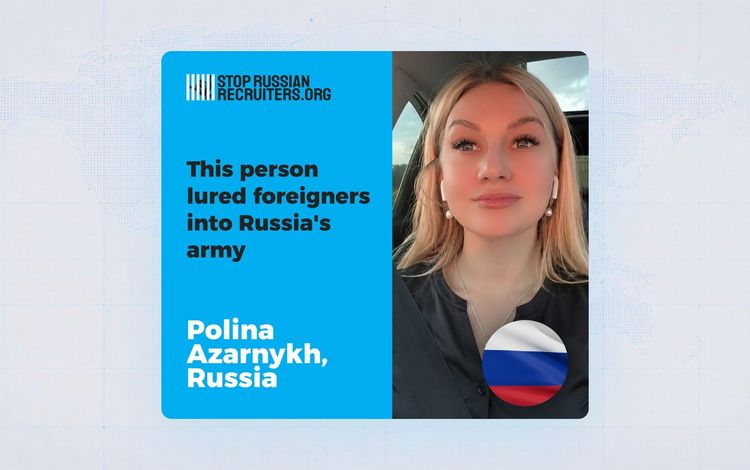
Polina Alexandrovna Azarnykh
- Born
- March 3, 1985
Name in Russian: Полина Александровна Азарных
Nationality: Russian
Passport number: 2004484171
Russian Tax ID: 363202590594
Legal status: Sanctioned in the UK - designation GIM0051
What She Did
Azarnykh led a recruitment network that targeted Egyptian and Yemeni nationals for service in Russia's armed forces. Her operation was documented in "The Russian Trap" - an award-winning investigative report by Masrawy journalist Sara Abo Shady. Following the investigation, Azarnykh was placed on the UK sanctions list.
Azarnykh, a former teacher from Voronezh, ran a Telegram channel called "Friend of Russia" - featuring a profile picture of Vladimir Putin - through which she recruited young men from Arab and African countries into Russia's armed forces. The channel reached up to 21,000 subscribers. BBC Eye Investigations identified nearly 500 invitation documents she issued over a single year to men from Egypt, Syria, Yemen, Morocco, Iraq, Ivory Coast, Nigeria, and other countries.
Her pitch was consistent: a one-year contract, a sign-up bonus of around $5,000-$8,000, a monthly salary of roughly $2,500, and Russian citizenship after six months. She took recruits' passports on arrival, promising to process citizenship. She offered to keep men out of combat roles - for an additional $3,000 fee paid from their own sign-up bonuses.
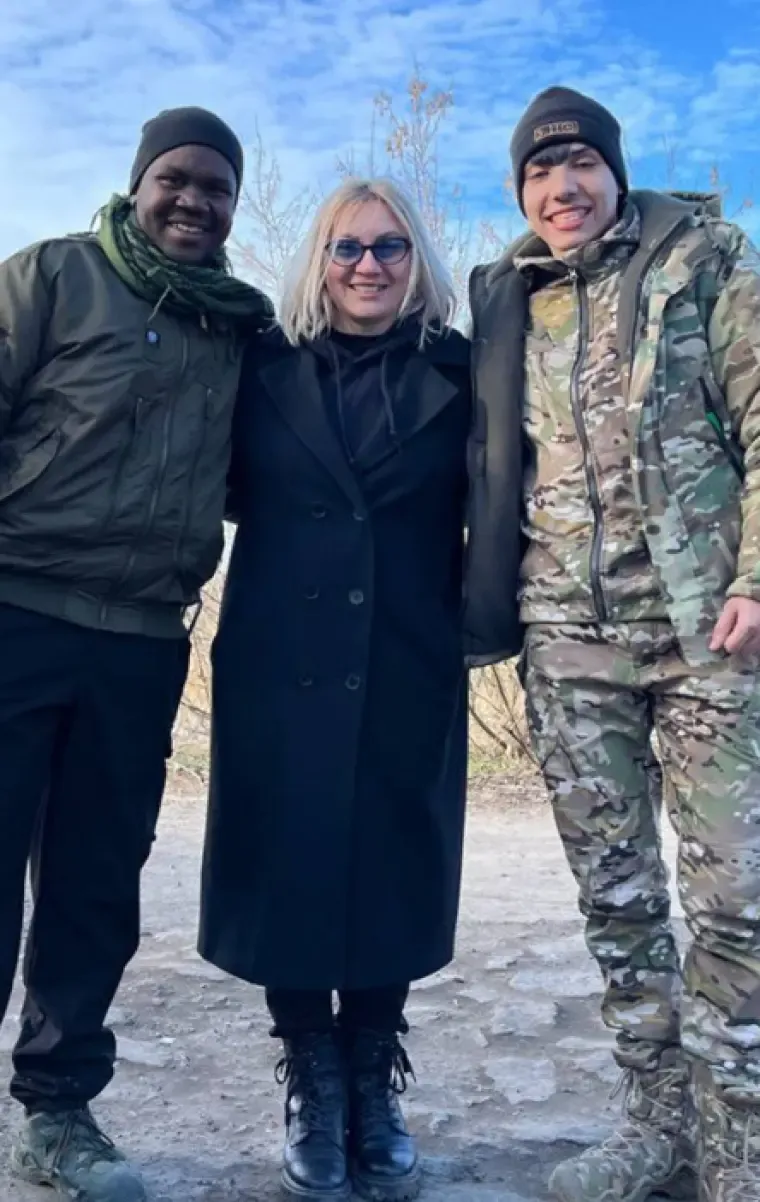
She did not deliver. Recruits received as little as 10 days of training before being sent to the front line. Those who refused missions were threatened by commanders with jail or death. When one Syrian recruit named Omar refused to pay her the $3,000 non-combat fee, she sent him a video of his passport on fire. When a mother whose son was serving spoke out publicly, Azarnykh sent her a voice message threatening both the son's life and the woman's family.
A 2022 Russian decree allows military contracts to be extended automatically until the end of the war - something recruits say she never disclosed.
"Polina would take the men, knowing that they were going to die," said Habib, a Syrian who served in Russia's military and worked alongside her. "She sees us as numbers or money - she doesn't see us as people," said Omar, one of the Syrian recruits she enlisted.
Twelve families told the BBC of men recruited through Azarnykh who are now dead or missing. Among them: a 21-year-old Egyptian from Dakahlia killed by a mine explosion 40 days after enlisting; an Egyptian student in Yekaterinburg whose family learned of his death a year after the fact, through a Telegram message containing photos of his body; and Saeed Ramadan, an Egyptian volunteer wounded in a drone strike on his reconnaissance unit whose fate remains unknown after contact was lost following his return to active duty.
Before pivoting to military recruitment, Azarnykh ran two companies - LLC INTEREDU and OOO RASHEN TURS - that helped Arab students travel to Russia for university. Both were dissolved by Russian authorities after being classified as unreliable entities due to inaccurate filings. She subsequently built her network by maintaining presence in Egyptian and Arab student groups on Facebook and Telegram, where she was already known as a facilitator of student visas.
According to Habib, she received $300 from the Russian army for each person recruited. She also charged recruits directly - 300,000 rubles (~$4,000) per contract organised.
Her own words to recruits, in a video from October 2024: "You all understood well that you were going to war. You thought that you could get a Russian passport, do nothing and live in a five-star hotel? Nothing happens for free."