October 28, 2026
Africans Captured in Russia's Army Are Left Out of Prisoner Exchanges, Ifri Study Finds
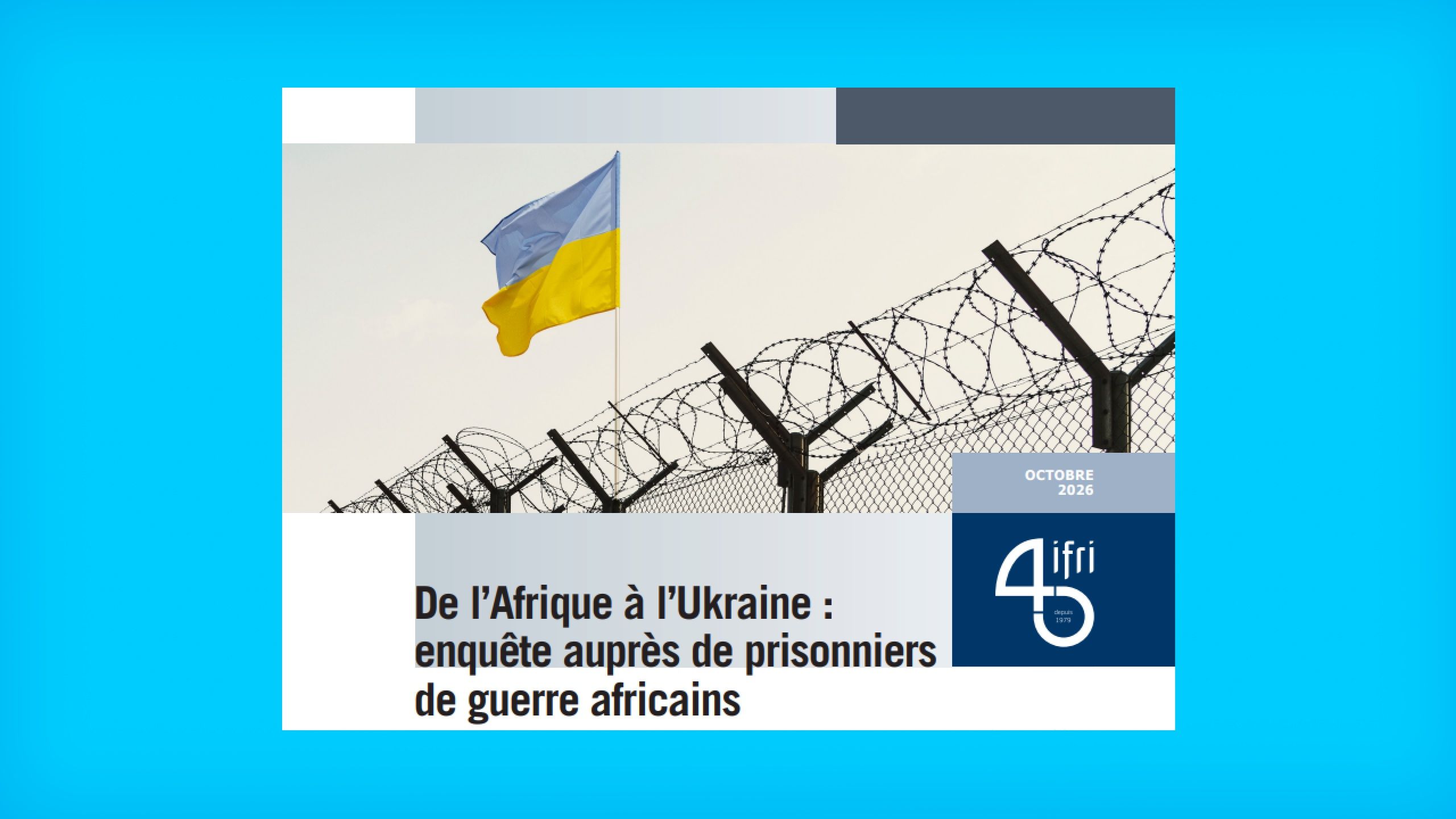
African fighters held as prisoners of war in Ukraine are not included in prisoner exchanges between Kyiv and Moscow and, with few exceptions, are not being claimed by their own governments, according to a study published in October 2026 by Thierry Vircoulon. The author writes that the future of these prisoners of war is therefore highly uncertain. The study appeared days before the Russia-Africa Summit in Moscow on October 28-29, which, the author notes, will not have recruitment on its official agenda but may see it raised in the corridors by some African representatives.
See also: African prisoners of war in Ukraine appeal to Russia-Africa summit
Ten Interviews in a Prisoner Camp
The study is based on ten interviews held in June 2026 at a prisoner-of-war detention centre in Ukraine, arranged by representatives of Ukraine's Coordination Headquarters for the Treatment of Prisoners of War. Most of the men arrived in Russia in 2024 and 2025 and were captured at the front in the winter of 2025-2026. Vircoulon says the purpose of the interviews was explained to them, some refused to take part, and all those who agreed asked to remain anonymous.
The report opens with the case of T.W., a nurse in Kampala, Uganda. In September 2025 he met a young Russian woman who was ill at his hospital, and they kept in touch on social media. In November she invited him to study and work in Russia and offered to pay for his flight. He got his visa in three days and landed on December 7, but instead of the woman, a man met him at the airport and took him straight to a Russian army recruitment office. On January 4, 2026 he was deployed with a group of five. On January 8 he was wounded by a drone and left for dead, and on January 14 he was captured by Ukrainian forces. He spent ten days at the front.
Promised Ordinary Jobs, Offered Only the Army
According to the study, almost all the prisoners interviewed were low-income urban workers such as nurses, electricians and teachers. Recruiters promised them well-paid jobs abroad as a way to a better life. The jobs offered were low-skilled ones such as driver, guard or construction worker, but on arrival the only job on offer was military service. Two Ugandans were approached by Russians who presented themselves as business travellers and tourists in Uganda.
The recruits' travel was mostly paid for, local travel agencies often acted as intermediaries, and Russian consulates issued visas within days. The men travelled alone or in groups, via Dubai, Addis Ababa or Istanbul. On arrival they were met at the airport and quickly taken to sign an enlistment contract in Russian, with no translation. Those who refused were threatened with prison on various pretexts, such as debts for their ticket or an irregular stay after their visa was cancelled. The study cites a report that a South African who refused to enlist died in prison in Russia.
Among Africans who came to Russia to study and ended up in the army, some were attracted by the salary and the promise of citizenship and signed a one-year contract. Others, African residents accused of crimes and arrested by Russian police, were forced to enlist and chose the army over prison. Vircoulon distinguishes two groups among those who signed in Russia: volunteers and men who enlisted against their will.
Training, Then the "Kill Zone"
The study says Africans recruited in Russia receive about two months of military training, while those recruited in their own country get at most three weeks. Recruits of the same nationality are generally kept apart and are sometimes deprived of their phones and identity papers. A group of 11 Kenyans was split in two after the first training camp. Control rests on isolation and intimidation, and mock killings were even mentioned, according to the study. Some recruits reportedly managed to escape from the camps.
After training they dig trenches and shelters, then are sent to the front line in groups of five men at most to report enemy movements by radio, and to take part in assaults that the study describes as "meat assaults". Hit by drones, artillery and mines, they can be cut off from their unit with no communication, food or medicine, and wounded men who cannot be reached by drone are abandoned. Among those interviewed, the longest deployment before capture was three months and the shortest was ten days. Most had seen their partners killed or seriously wounded, and had been wounded themselves. The study concludes that Africans recruited as civilians are used as cannon fodder to help the Russian army hold a front line now 1,250 kilometres long.
The Numbers in the Study
The study gives these figures, attributing them to Ukrainian authorities or to African governments:
- 2,982 Africans from 37 countries have been recruited by the Russian army, according to Ukraine's Coordination Headquarters.
- 486 Africans had been killed in combat as of August 2026, according to Ukrainian authorities, with Kenyans, Cameroonians, Ghanaians and Gambians the largest groups.
- Over 28,000 foreigners have been recruited into the Russian army and more than 5,000 have died at the front since the war began, according to Ukrainian authorities, figures for which the study points readers to stoprussianrecruiters.org [Ukrainian authorities recently made public new data indicating that over 45 000 foreigners have been recruited into Russian army - ed.]
Vircoulon notes that Ukraine's death count contrasts sharply with the estimates of African governments, which come from oral statements or press releases. Kenya's government estimate is 252 recruited, 10 dead and 16 missing. Ghana's is 272 recruited, 62 dead and 15 missing. Zimbabwe's is 81 recruited and 18 dead, and Cameroon's is 16 dead.
Left Out of the Exchanges
Although they are considered prisoners of war, the Africans interviewed are not part of the exchanges between Kyiv and Moscow, and the study cites a member of the Coordination Headquarters saying that no African POW has been included in one so far. Some of those who enlisted in Russia present themselves as Russian citizens and hope to be exchanged and to receive the pay and compensation promised in their contracts. All of them reject the label of "mercenary", which they know is infamous and could destroy their chances of release.
In Ukrainian custody, the study says, the prisoners are visited by the International Committee of the Red Cross and human rights organisations, can write to their families, and journalists are allowed to visit.
Three Governments Spoke Up, Russia Gave Little
Only South Africa, Ghana and Kenya have publicly asked Russia to stop recruiting on their territory and to return their citizens, the study says. Kenya's foreign minister went to Russia, met wounded Kenyans and secured the return of about thirty, and Moscow repatriated 15 South Africans. Most other governments prefer discreet contacts with Moscow and Kyiv.
According to Vircoulon, Russia then went no further than that first gesture. It has refused to pay for the repatriation of Africans, living or dead, and the only body repatriated so far is that of a South African who died in prison. Russian authorities say the recruitment is unofficial and carried out without their knowledge, while insisting that the foreigners in their army are volunteers, and the study says Moscow has not suspended the military contracts of Kenyans, South Africans and Ghanaians despite their governments' requests. It adds that there is evidence recruitment is continuing elsewhere in Africa, including Zimbabwe and Madagascar.
Ukraine, for its part, has opened eight of its 14 diplomatic missions in sub-Saharan Africa since 2022 and says it is ready to help African governments stop recruitment by sharing intelligence.
Estimates of Foreign Deaths
An annex lists four estimates of how many foreigners fighting for Russia have been killed. The BBC and Mediazona found at least 3,586 to 3,589 names verified through official notices, press, social media, monuments and photographs of graves, a documented minimum for 2022 to mid-2026. A report by the International Federation for Human Rights (FIDH) and Truth Hounds, published in April 2026, put confirmed deaths at at least 3,388 and estimated losses at more than 5,000, with losses including dead, wounded, missing or captured. The Organized Crime and Corruption Reporting Project (OCCRP) reported at least 1,399 based on Ukrainian data for an earlier and narrower period. Ukrainian authorities put the figure at more than 5,000 for 2022 to October 2026.
Students, the Other Trap
In its conclusion the study warns that foreign students in Russia are a significant potential pool of recruits. Russian authorities said in 2024 that they hosted 35,000 African students out of 355,000 foreign students in total, and they aim to reach 500,000 foreign students by 2030. Vircoulon says African universities and students need to be aware of the risk and that a prevention policy designed for them has yet to be created.
A Safe Way Out
Africans and other foreign nationals lured into Russia's armed forces have an option to safely escape the battlefield with Ukraine's "I Want to Live" project. See our FAQ for recommendations for victims of Russian military recruitment and their families.